Decorating a living room can feel like a daunting task, especially when you’re faced with a sea of options. The idea of layering a rug on top of carpet might be one of those trends you’ve seen but never tried. You might be craving a fresh look for your space that adds warmth, texture, and personality, all while being practical. If this sounds like you, then this post is made just for you.
Whether you’re a seasoned home decor enthusiast or someone just looking to spice up your living room, layering rugs can elevate your space effortlessly. You care about creating an inviting atmosphere that reflects your style, and layering rugs offers both beauty and comfort. I’ve curated a list of 18 unique ideas that work effectively in living rooms, designed to inspire you and help you transform your space into a cozy retreat.
You’ll discover practical tips on how to play with patterns, incorporate natural textures, and even make bold color choices. Each idea brings a fresh perspective on making your living room stylish and functional. So, let’s dive in and explore these ideas that are sure to bring new life to your carpeted floors!
[link-whisper-related-posts]Key Takeaways
– Layering rugs can add depth and texture to your living room, creating a warm and inviting space.
– Experiment with patterns and colors to express your personal style while ensuring visual harmony.
– Use area rugs to define cozy zones within open spaces, making them feel more intimate and organized.
– Incorporate natural materials like jute or woven fibers for a touch of earthiness and visual interest.
– Regularly switch up your rug layering with the seasons to keep your decor feeling fresh and aligned with current trends.
1. Play with Patterns
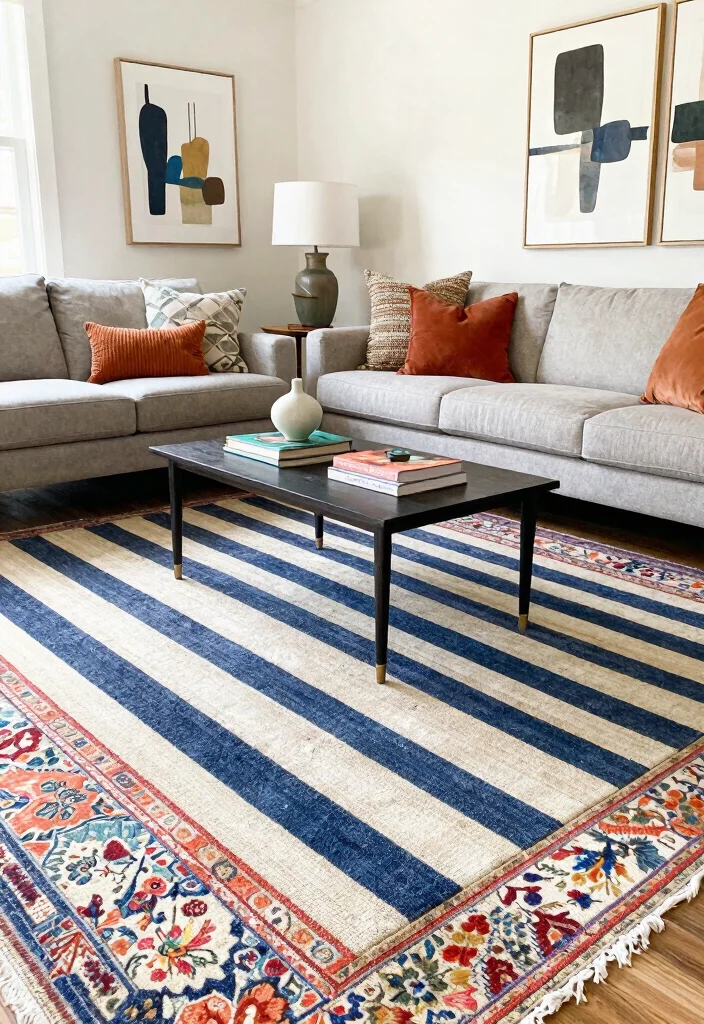
Mixing contrasting patterns in your rug layering can create an exciting focal point in your living room. By combining stripes with florals or geometric designs, you can achieve a look that feels both dynamic and engaging. For instance, laying a bold patterned rug over a simple jute or flat-weave rug adds complexity while ensuring your space doesn’t feel chaotic.
To pull off this style, stick to a unifying color palette that ties the patterns together. This will maintain a visually cohesive look, allowing your room to breathe while showcasing your unique style.
Consider these tips to enhance your pattern play:
– Pair bold patterned rugs with solid-colored bases for balance
– Layer complementary patterns to keep the visual flow
– Use contrasting rug shapes to add interest
– Incorporate a pop of color from the patterns in your decor
This technique not only adds visual excitement but also enriches the overall aesthetic, making your living room feel more inviting and curated.

Elevate your home with the sleek, contemporary design of our Solid Square Pattern Rug, perfect for any room

Maintain Your Rug with Ease: Vacuum regularly and spot clean as needed. For best results, avoid using a vacuum with beater bars to protect the rug’s fibers. Not Machine Washable.

Ultra Fluffy Living Room Rug: 8x10 living room rugs is made of high-quality microfiber and memory foam. Soft and comfortable touch, you will feel like walking on the clouds whether you are standing, sitting or lying. While enjoying the warmth and comfort, this rug will not shed, making it an ideal choice for the bedroom, living room or nursery.
2. Create Cozy Zones
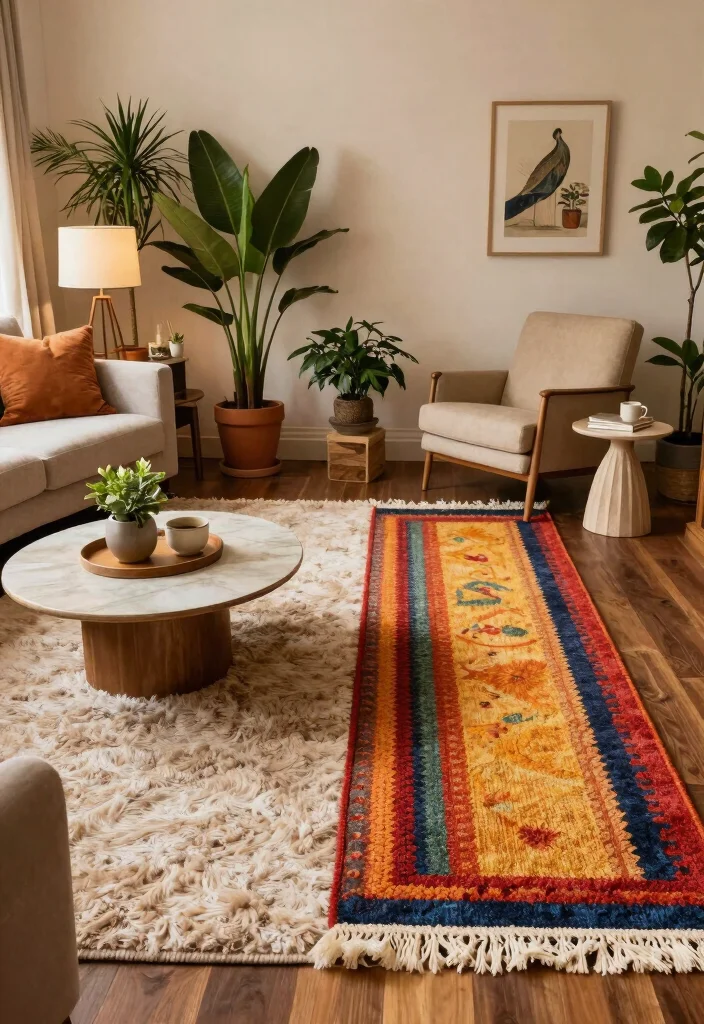
Layering rugs is a fantastic way to define spaces within your living room, creating cozy zones meant for relaxation or entertainment. For example, placing a plush rug beneath your coffee table can delineate the seating area beautifully, while a soft runner can guide you to a reading nook or game corner. This setup not only boosts functionality but also enhances the inviting feel of your space.
When implementing this idea, aim to use rugs that can handle foot traffic, especially in busy areas, while being soft enough for comfort. This will ensure that your zones are both practical and comfortable.
Here are some effective suggestions:
– Use rugs to clearly separate different areas while maintaining a harmonious vibe
– Choose durable materials for high-traffic zones
– Opt for contrasting colors to define each area
– Layer rugs of similar heights for safety and style
This approach brings clarity to your living space while keeping it warm and welcoming.

Wilton Woven Polypropylene Rugs: This outdoor rug is built for everyday heavy-duty use. Standard flat-woven and printed rugs hold yarns with backing adhesive, while tufted styles rely on glue that easily causes fiber shedding and backing delamination. Our Wilton rugs are fully woven on double looms, interlocking warp, weft and pile yarns as one piece. Piles are secured to the base without adhesive, drastically reducing loose fibers and layer separation. Featuring tight dense stitching, these rugs remain firm and keep their original shape under heavy foot traffic and pet clawing

Rug measures 22 x 60" (approximately 0.5" thick), made of durable 100% Jute, a shiny vegetable fiber spun into coarse threads.

Machine Washable & Easy Care – This washable cotton rug can be vacuumed, shaken, or machine washed on a gentle cycle with cold water. Cotton material may shrink or wrinkle after washing. If needed, use low heat ironing to restore shape
3. Incorporate Natural Textures
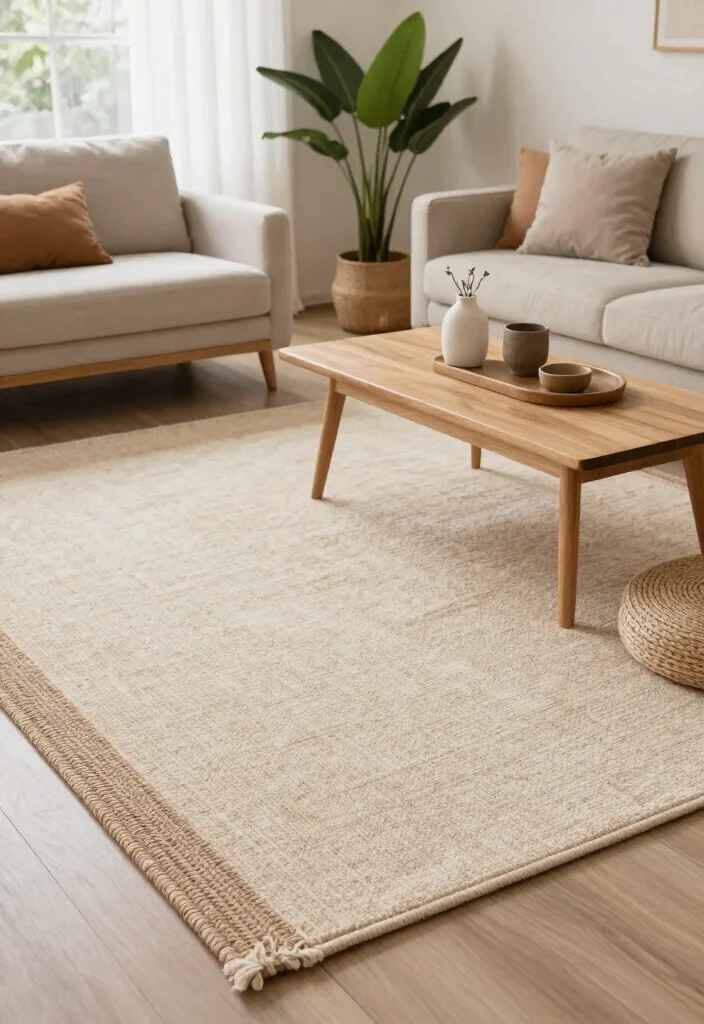
Embracing rugs made from natural fibers can infuse your living room with an earthy, organic vibe. Think about using jute, sisal, or wool rugs layered over softer carpets to enhance texture and depth. These materials are not only visually appealing but also practical, offering durability while creating a warm, inviting atmosphere.
To make the most of this approach, consider using a natural fiber rug as a base for a vibrant area rug on top. This juxtaposition adds richness and variety to your space.
Keep these ideas in mind:
– Pair a jute rug with a colorful patterned area rug for contrast
– Choose natural materials for their sound-absorbing qualities
– Use light-colored natural rugs to brighten darker carpets
– Incorporate a variety of textures to enhance visual interest
This layering method not only celebrates the beauty of natural materials but also elevates the overall comfort of your living room.

Modern Farmhouse Checkered Rug: Inspired by timeless checkerboard patterns with the natural look of jute, this washable rug complements modern farmhouse, neutral, rustic, and contemporary décor. Distressed charcoal black and natural tones add cozy texture to entryways, kitchens, and covered outdoor spaces
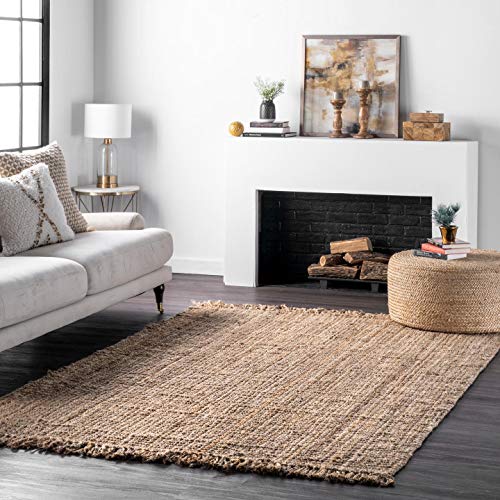
100% Jute, made in India

The Malibu Collection is an indoor/outdoor area rug featuring geometric patterns in airy, neutral palettes, with playfully fringed edges; from renowned interior designer Amber Lewis in collaboration with Loloi
4. Go Bold with Color
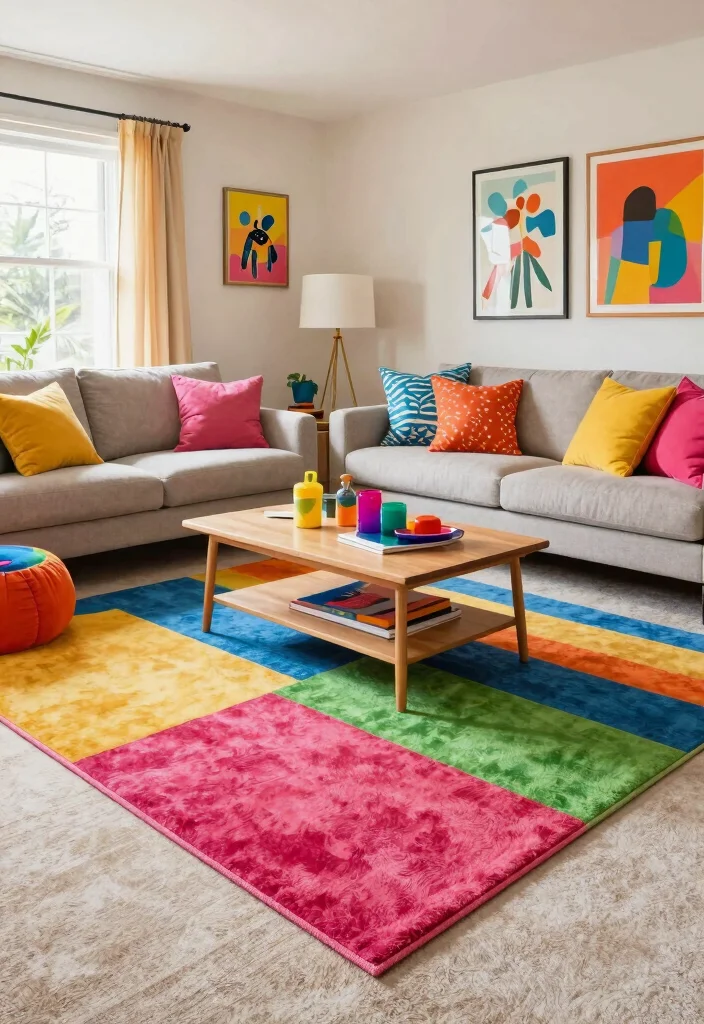
Embrace bold, vibrant colors in your rug layering to create a lively and spirited living room. A bright area rug can serve as a striking statement piece, instantly uplifting your decor and reflecting your unique style. Layering a colorful rug over a neutral carpet adds warmth and personality, making a fun statement in your space.
For a cohesive look, select rugs that incorporate colors already present in your room. This will tie the design together and enhance the overall aesthetic.
Consider these helpful tips:
– Choose a bold rug that features colors from your existing decor
– Layer a bright rug on a neutral base for an eye-catching contrast
– Use color to energize the space, making it more inviting
– Ensure color harmony by referencing a color wheel for guidance
With this approach, you can effortlessly showcase your style while creating an inviting atmosphere in your living room.
Fun fact: Layering a bold color rug over a neutral carpet can visually widen a small living room by up to 20%. Choose colors that echo what you already have in the room to tie the space together and make the rug on top of carpet living room pop.

PET FRIENDLY & NON-SLIP BACKING-3x5 area rug featuring simple of colors while promising a luxurious feel underfoot. The blend of a hexagon pattern and a stylish design. Non-slip TPR backing makes the covering for bringing your space together. Make the most of your time at home with our pet-friendly and easy-to-clean area rugs. Elevate the floors of your home with this show-stopping and detailed rug

MACHINE WASHABLE DESIGN - This moroccan tribal washable rug supports full machine washing on gentle cycle; simply toss it into washing machine for deep cleaning after daily use; air dry flat to keep texture and vivid pattern intact, ideal for households with kids and pets to remove stains, pet hair and spills easily

Vintage Botanical Elegance: Echoing the refined artistry of 19th-century textile traditions, this high-density area rug boasts a graceful botanical design brimming with timeless charm. In delicately balanced symmetry, bright gold, brown, yellow and orange red hues bloom across its stain-resistant, fade-proof surface, forming a serene floral tapestry. Inspired by Victorian-era aesthetics, the rug’s intricate vines and oriental motifs evoke a fresh, spring-like feel—infusing your living space with elegance, lightness and sophistication while delivering long-lasting durability and underfoot comfort for years to come
5. Textured Layering
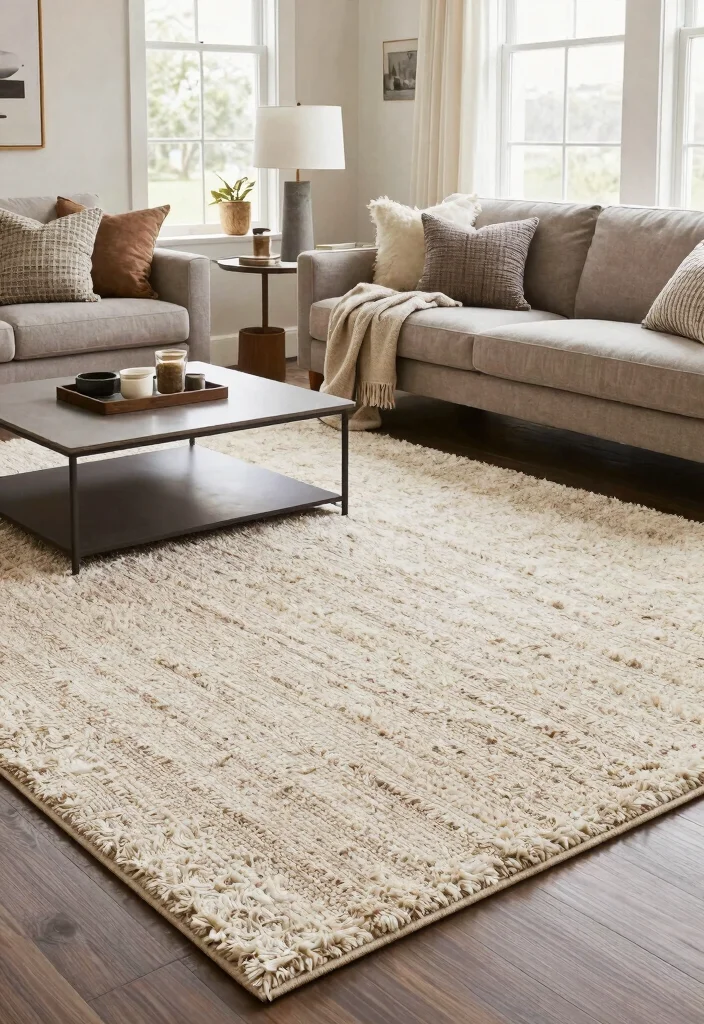
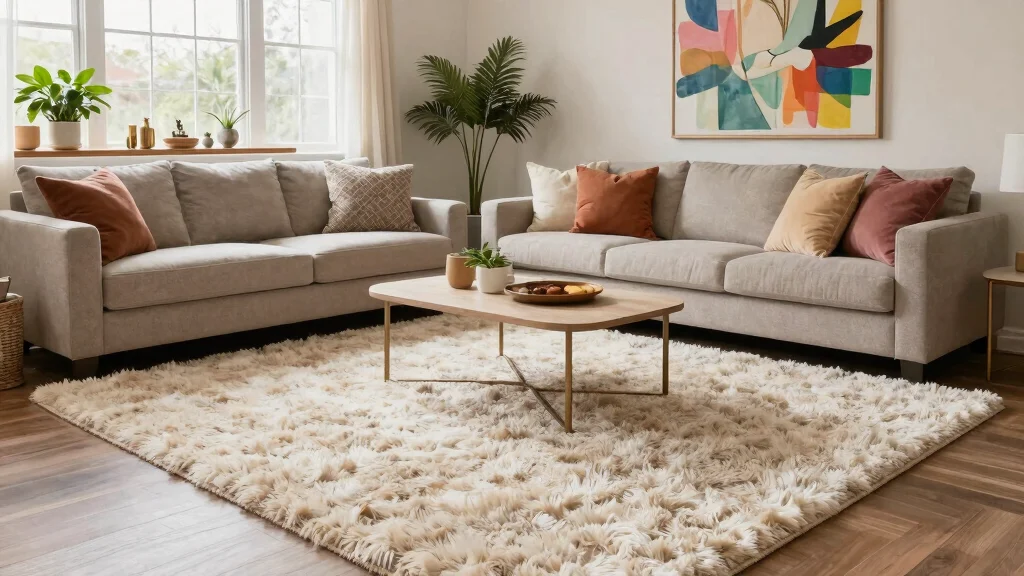
Combining various textures is a brilliant way to add depth and character to your living room. For example, layering a plush shag rug over a smooth flat-weave rug invites comfort and warmth into the space. This method not only enhances the visual appeal but also provides a tactile experience that feels inviting underfoot.
When choosing your textures, think about the emotions you want to evoke. Warmer textures are perfect for cozy areas, while sleeker options work well in more formal settings.
Here are some ideas for effective textured layering:
– Mix shaggy rugs with flat-weave for a cozy yet modern feel
– Pair soft, warm textures in relaxation zones
– Incorporate plush pillows and throws to complement your rugs
– Experiment with height variations for added interest
This layering technique creates an inviting and stylish environment that encourages relaxation and warmth.

Material: 80% Wool, 20% Cotton, Made by skilled artisans in India

CHEERY AND ATTRACTIVE: The bold colors and patterns of this floral rug instantly brightens your space
6. Use a Runner for Define Spaces
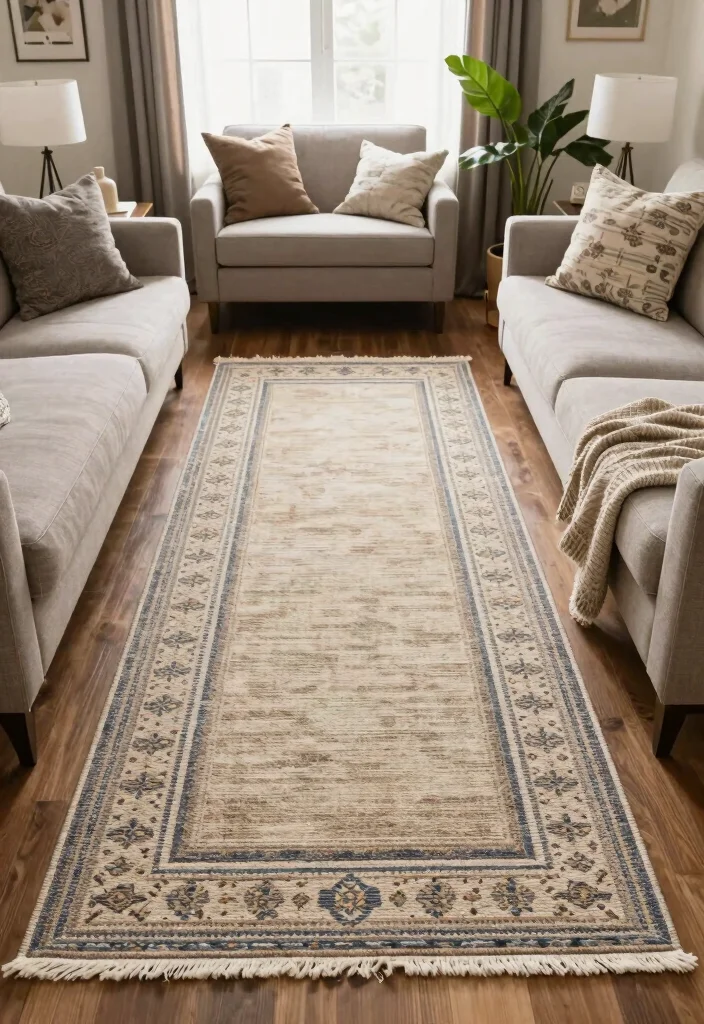
Incorporating a runner rug into your layered look can be both chic and functional. They work perfectly in narrow spaces or as a stylish bridge between areas, such as from the entryway to the living room. When placed over a larger area rug, runners provide a guide, leading visitors through your space while also adding a stylish touch.
For a seamless appearance, choose a runner that features colors or patterns that harmonize with both the base and surrounding rugs. This will enhance the overall flow of your design.
Here are some practical tips for using runners:
– Place runners in unconventional spots like under coffee tables or in front of sofas
– Use runners to create a pathway without overwhelming the area
– Select runners that visually elongate your space
– Ensure runners have non-slip backing for safety
This approach allows you to maintain a stylish yet practical layout, enhancing both aesthetics and functionality.
Runners are practical, not just pretty: they define spaces and guide traffic from the entry to the living room. In a rug on top of carpet living room, a runner that harmonizes with both rugs ties the look together—easy, intentional, and stylish.

Timeless Vintage Charm: Featuring an intricate distressed print in low-saturation tones, Sasttie area rugs 8x10 instantly add a "lived-in" elegance to your space. The classic faded design easily blends with farmhouse, boho, or modern decors, effortlessly elevating your living room or bedroom

Design features a modern, geometric pattern that adds a bold, contemporary touch to any space.

Design features a modern, geometric pattern that adds a bold, contemporary touch to any space.
7. Layering with Vintage Finds
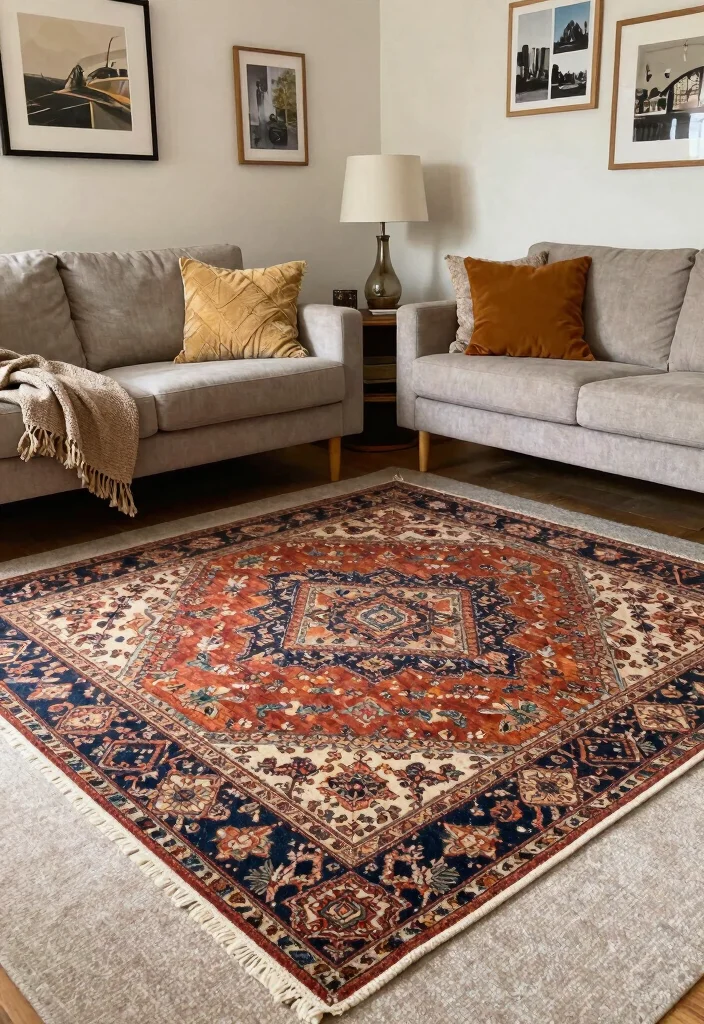
Incorporating vintage rugs into your layered look adds a unique charm and a story to your living room. Each vintage piece has its own history, offering depth and character that new rugs often lack. Layering a small vintage rug over a modern, neutral carpet creates a beautiful contrast that highlights both elements.
When selecting vintage rugs, seek out unique patterns or colors that can serve as conversation starters. Embrace their imperfections, as they often contribute to the overall charm of the space.
Consider these tips for effectively layering vintage pieces:
– Use vintage rugs as accent pieces against modern backgrounds
– Mix bold vintage patterns with contemporary decor for an eclectic vibe
– Be mindful of the care needs of vintage textiles
– Showcase unique vintage finds to enhance your decor
This method not only celebrates individuality but also enriches your living space with character and warmth.

100% NATURAL JUTE : This rug has been carefully handmade using 100% natural jute fibers, which can result in slight variations in color and weave. These variations add to the rug's individuality and uniqueness.

Natural Materials: Our area rug is handmade from 60% Jute, 40% Cotton and expertly made in India with quality craftsmanship. Due to the handmade nature of this rug, there may be slight variations in color and size making this rug unique to your home.
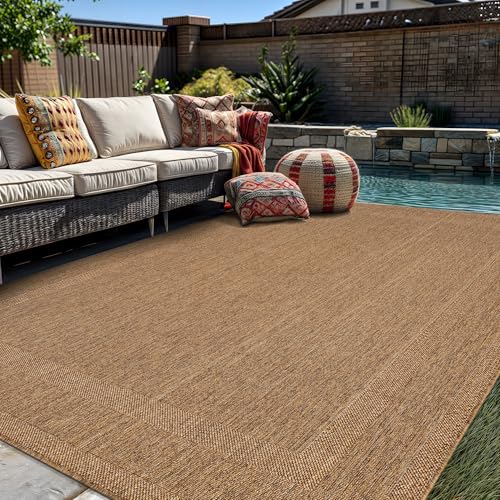
100% Polypropylene, Machine Made Construction – Crafted from durable polypropylene fibers, this indoor outdoor rug offers dependable performance with a natural jute look outdoor rug appearance suitable for patios, porches, decks, balconies, entryways, and indoor living spaces.
Dimensions & Size Guide
When it comes to layering a rug on top of carpet in your living room, understanding dimensions is key to creating a stylish and functional space. Choosing the right size can enhance the room’s look while ensuring comfort and usability. Let’s break down the essential dimensions, space planning tips, and a quick reference table to help you find the perfect fit.
Standard Sizes & Measurements
Common area rug sizes typically range from 3×5 feet to 9×12 feet. Here are some standard sizes and their ideal uses:
– 3×5 feet: Best for small seating areas or entryways.
– 5×8 feet: Great for smaller living rooms or to define a cozy corner.
– 6×9 feet: Ideal for medium-sized spaces and perfect under a coffee table.
– 8×10 feet: Perfect for larger seating areas, allowing all furniture to sit on the rug.
– 9×12 feet: Best for expansive living rooms, offering a grand feel.
For a proper fit, it’s crucial to leave about 12 to 18 inches of carpet visible around the edges of the area rug. This creates a frame that enhances the layered look without overpowering the space.
Quick Reference Table
Size/Dimension – Best for: [use case], Minimum space needed: [measurement]
– 3×5 feet – Best for: small seating areas, Minimum space needed: 4×6 feet
– 5×8 feet – Best for: cozy corners, Minimum space needed: 6×9 feet
– 6×9 feet – Best for: medium living rooms, Minimum space needed: 7×10 feet
– 8×10 feet – Best for: larger seating areas, Minimum space needed: 9×12 feet
– 9×12 feet – Best for: expansive living rooms, Minimum space needed: 10×14 feet
Space Planning Tips
1. Measure Your Area: Begin by measuring the area where you want to place the rug. Use a tape measure to get accurate dimensions and make sure to note any furniture that will sit on or around the rug.
2. Consider Furniture Layout: Plan your furniture layout before purchasing a rug. Ensure the rug will accommodate your seating arrangement comfortably. Ideally, all main furniture pieces should sit on the rug or at least the front legs of larger items.
3. Check Traffic Flow: Think about how people will move through the space. If you have a busy living area, avoid placing the rug in high-traffic zones where it can bunch or shift.
4. Think About Style: The size of the rug can greatly influence the room’s style. A larger rug can create a unified look, while a smaller rug can create distinct areas. Be mindful of how the rug complements both the carpet and your overall decor theme.
5. Avoid Common Mistakes: One mistake people often make is choosing a rug that is too small. A rug that is too tiny can make the room feel disconnected. Also, don’t forget to account for the thickness of your carpet when selecting a rug, as this can affect how the rug lays flat.
Pro Tip: The most important measurement to consider is the area around the rug. Aim for 12 to 18 inches of carpet visible on all sides to create balance and a polished look. This subtle detail can significantly enhance your layered rug design. 💡

Sleek and functional .25" thickness allows for convenient placement in entryways, underneath furniture, and will not obstruct doorways

100% Polypropylene, made in India

Natural Materials: Our area rug is handmade from 100% Jute and expertly made in India with quality craftsmanship. Due to the handmade nature of this rug, there may be slight variations in color and size making this rug unique to your home.
8. Seasonal Switch-Up
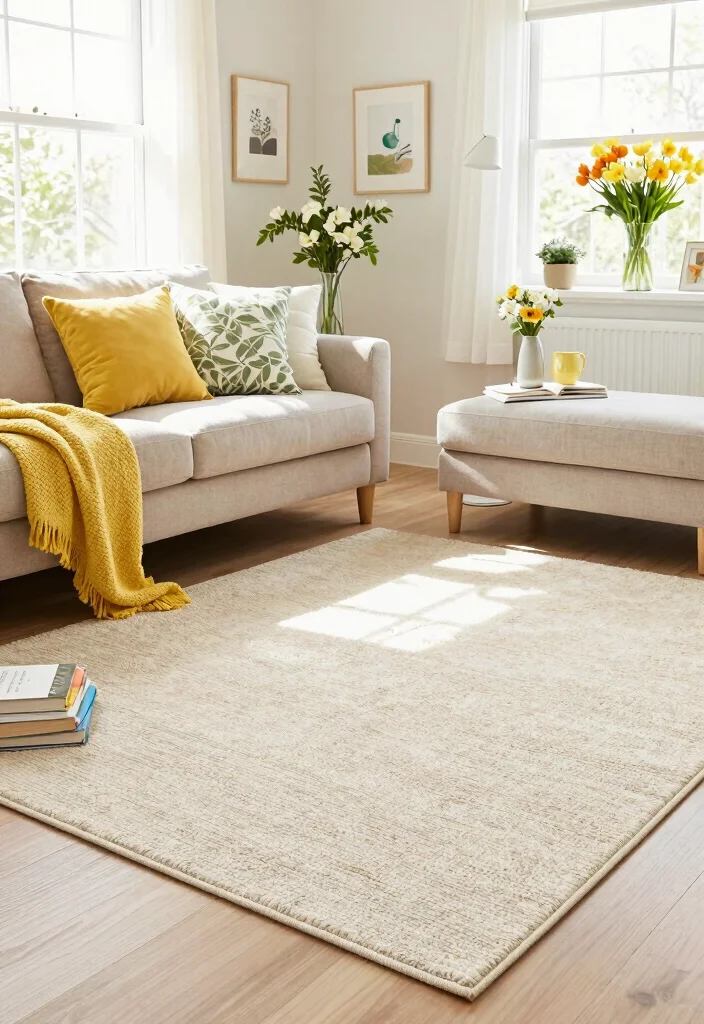
Changing your rug layering with the seasons can keep your living room feeling fresh and stylish all year round. Light, airy rugs are ideal for spring and summer, while thicker, textured options suit fall and winter beautifully. This seasonal switch not only alters the look of your space but also enhances its feel, bringing in seasonal warmth.
To implement this idea, try layering a lightweight cotton rug on top of a thicker carpet during spring, and switch it out for a shag or wool rug come winter. This will reflect the changing seasons while keeping your decor dynamic.
Here are some tips for seasonal rug changes:
– Store off-season rugs properly to preserve quality
– Rotate rugs regularly to extend their lifespan
– Incorporate seasonal decor elements like throws and cushions
– Ensure storage areas are clean and dry for protection
This approach allows you to maintain a vibrant and adaptable living space that reflects the beauty of each season.

Designed to withstand everyday wear, this 5 Ft Round area rug is the perfect size for bedrooms, nurseries, and playrooms, or anywhere you want to add a layer of plush comfort.

The fluffy circle area rug has a non-slip design with thousands of durable grip points on the back to enhance friction, so that the fuzzy rug can be more firmly fixed to the floor, prevent from touching the hard floor, bringing you more safety and comfort

Designed to withstand everyday wear, this 8' x 10' area rug is the perfect size for living rooms, bedrooms, and home offices, or anywhere you want to add a layer of cozy, high-pile comfort.
9. Layering Height Variation
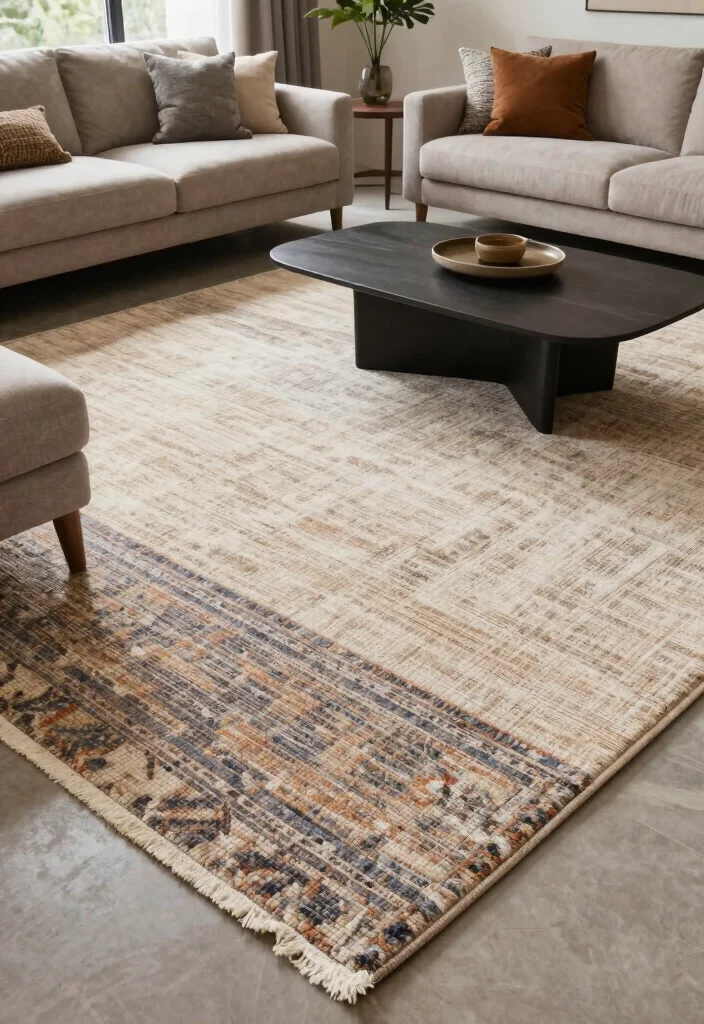
Creating an engaging visual by layering rugs of varying heights can elevate your living room’s appeal. Mixing a thick pile rug with a flat-weave option introduces depth and interest to your space. This method not only serves an aesthetic purpose but also enhances comfort, making your environment feel more inviting.
Consider how height contrasts can help create a dynamic atmosphere within your room. The combination of different textures can also provide varying tactile experiences underfoot.
Keep these ideas in mind:
– Layer a plush rug in the center with a flatter one underneath to define spaces
– Use height variation for a relaxed, playful vibe
– Incorporate decorative pillows to enhance the layered experience
– Test various height combinations to see what feels best
This technique encourages a welcoming atmosphere while allowing you to express your style through thoughtful layering.
10. Go Monochromatic
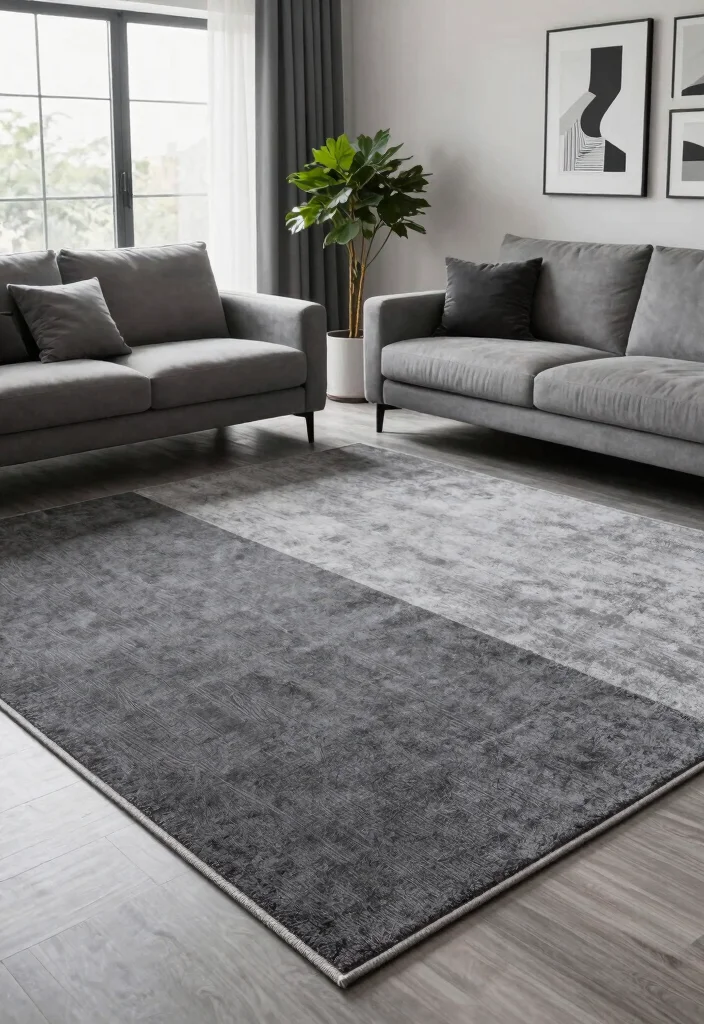
Sticking to a monochromatic scheme while layering rugs can create a sophisticated and serene atmosphere in your living room. Using different shades of the same color adds visual interest without overwhelming the space. For example, a dark grey carpet layered with a light grey rug provides depth while maintaining a calming effect.
This technique allows you to experiment with textures while keeping the color palette cohesive, resulting in a polished look.
Consider these tips for effective monochromatic designs:
– Use various textures to avoid a flat appearance
– Incorporate subtle patterns within your color scheme for added depth
– Coordinate furniture and accessories to match your theme
– Select a few key pieces to complement without clutter
This approach emphasizes elegance and simplicity, making your living space feel serene and sophisticated.
11. Layering for Comfort
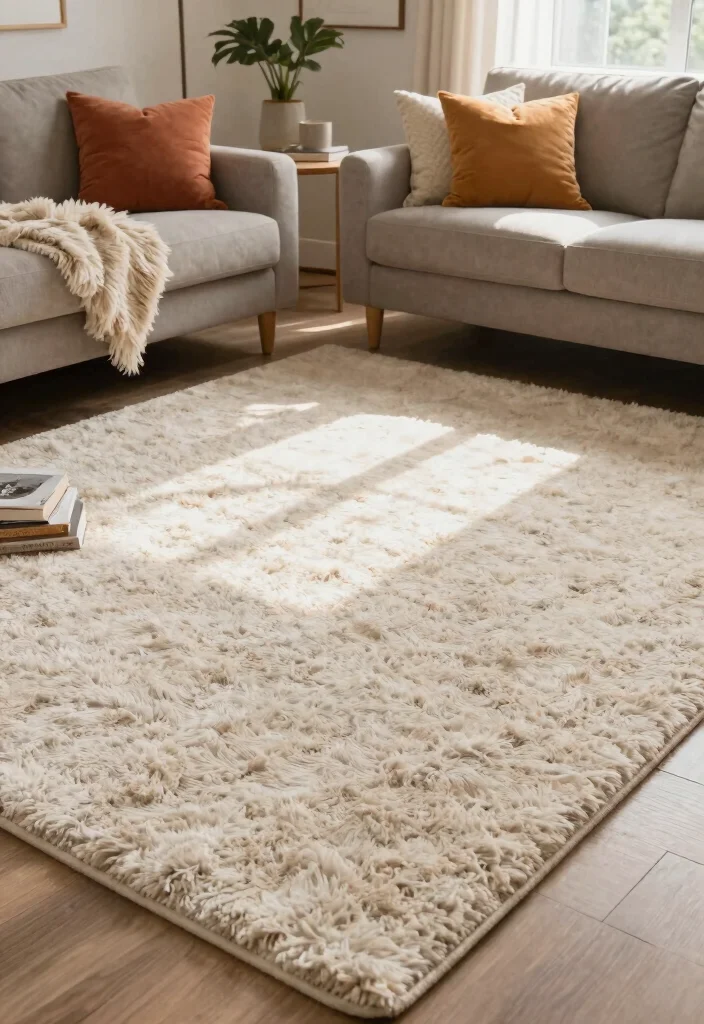
Comfort is essential in any living space, and layering rugs can significantly enhance that in your living room. Soft area rugs layered over plush carpets create an inviting atmosphere, perfect for family gatherings or movie nights. Choose rugs that feel luxurious underfoot, like a fluffy shag layered above a cozy carpet, to elevate comfort levels.
This setup not only fosters a warm environment but also makes the space feel welcoming and relaxing.
Consider these suggestions for comfort-focused layering:
– Use rugs in play areas for kids to provide softness during playtime
– Choose textures that promote feelings of warmth and comfort
– Include soft blankets and pillows for added coziness
– Ensure rugs are securely positioned in high-traffic areas
This thoughtful approach results in a living room that invites relaxation and connection.
12. Unexpected Combinations
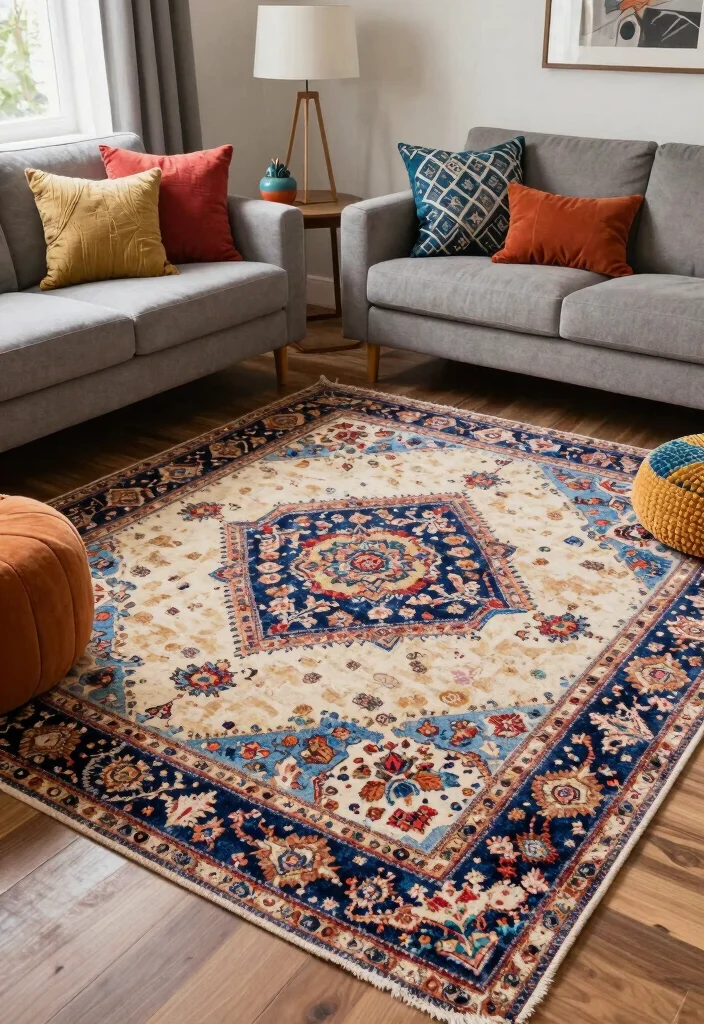
Layering rugs doesn’t have to adhere to traditional norms; sometimes the most unexpected combinations yield the most captivating results. Consider placing a contemporary rug over a traditional patterned carpet to create an eye-catching contrast that reflects your unique style. This adventurous approach adds personality and excitement to your living space while allowing you to play with color, pattern, and texture.
To make this technique work, ensure that at least one color from the base carpet appears in the top rug to unify the look. This will help create a balanced and harmonious design.
Here are some tips for successful unexpected combinations:
– Embrace creativity with color and pattern choices
– Use accessories that resonate with your combination for cohesion
– Choose rugs with similar care requirements for easier maintenance
– Test various placements to find what feels right
This method not only showcases your flair but also adds an element of surprise to your decor.
Layering rugs is about contrast, not chaos. In a rug on top of carpet living room, try a contemporary rug over a traditional carpet and pull one shared color from both to unify the look.
13. Underfoot Drama
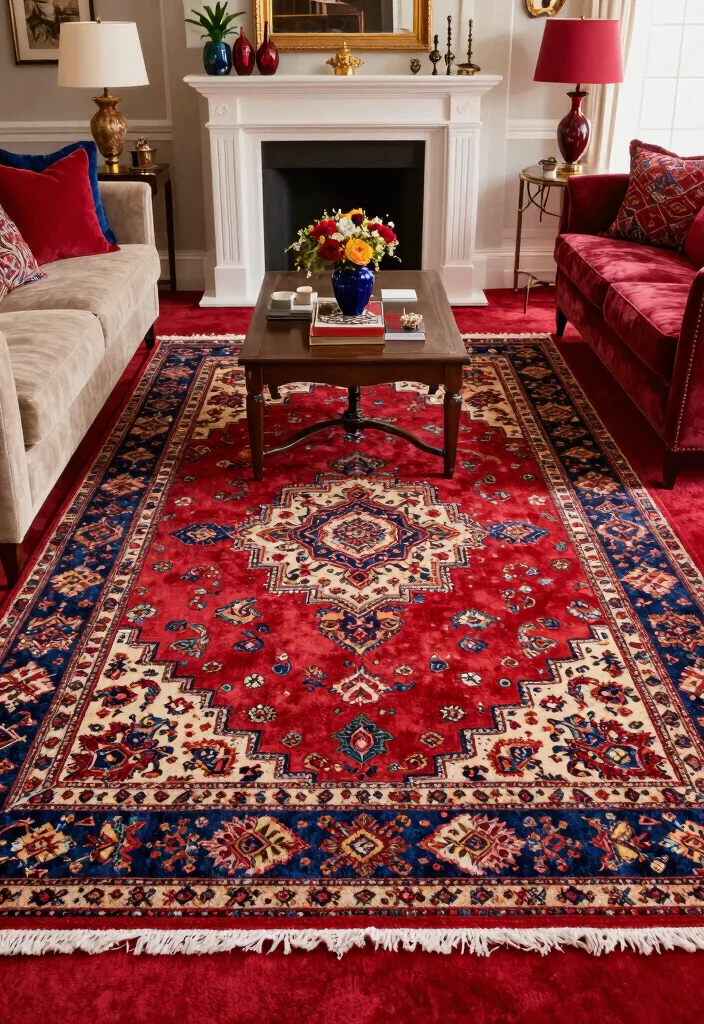
Layering rugs can create dramatic underfoot moments that elevate your living room’s aesthetic. A richly patterned rug placed atop a solid carpet can become a stunning visual centerpiece. This dramatic effect can influence the entire room’s atmosphere, making it feel vibrant and alive. To achieve this look, focus on contrasting colors and patterns that resonate with your personal style.
Balance is crucial, so ensure that the chosen patterns and colors complement one another without clashing. This will help maintain visual harmony throughout the room.
Consider these tips for added drama:
– Use bold designs to energize your space
– Illuminate rugs with spotlights or lamps for added effect
– Experiment with different placements for optimal visual impact
– Choose patterns that evoke a sense of movement
This approach not only enhances the aesthetic but also makes your living room feel dynamic and inviting.
14. Play with Layering Shapes
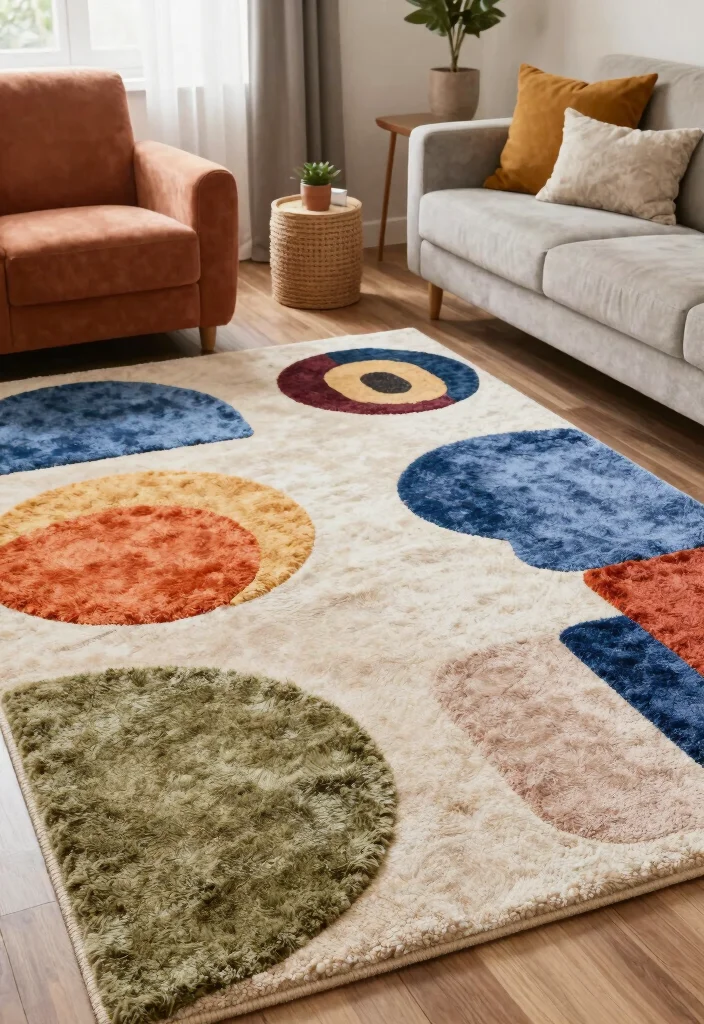
Breaking away from traditional rectangular rugs introduces a playful element into your living room. Consider layering round rugs over rectangular ones or mixing various shapes for a quirky touch. This creative layering method can soften your space, creating a more relaxed and inviting atmosphere.
While playing with shapes, maintain a consistent color palette to ensure a cohesive look throughout the room. This will enhance the overall design while allowing for interesting contrasts.
Here are some tips for effective shape layering:
– Use curved shapes to guide movement and create flow
– Mix shapes to add visual interest and enhance the dynamic feel
– Arrange furniture to complement layered shapes
– Ensure that each shape interacts harmoniously within the space
This technique can result in a fun and lively living area that reflects your personality.
15. Layering with Purpose
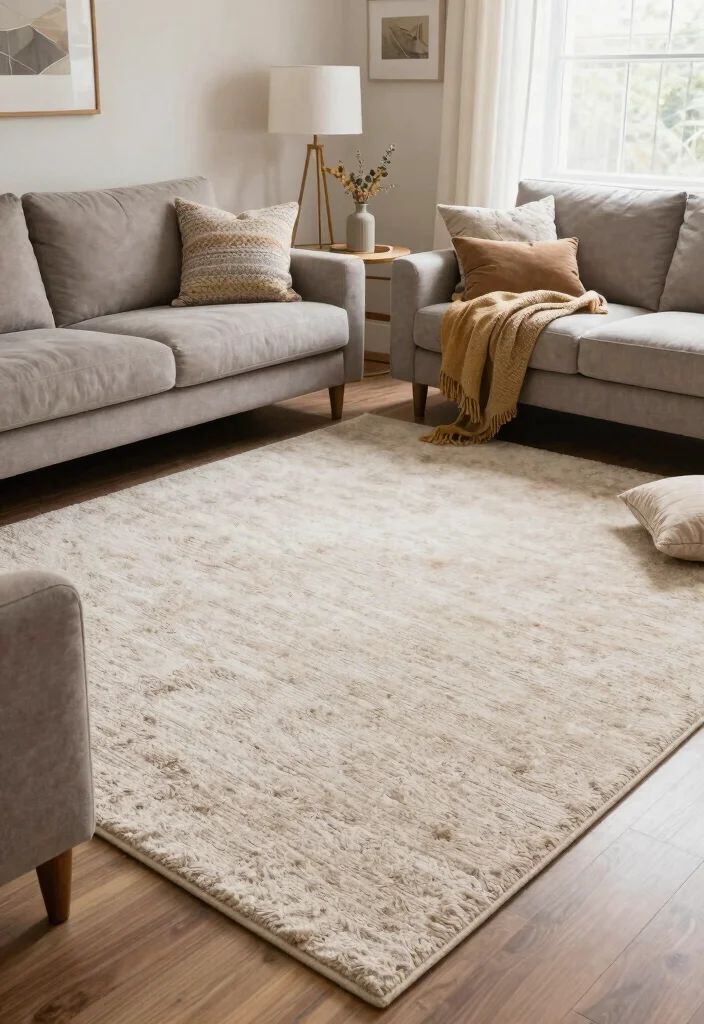
Layering rugs can serve a dual purpose of style and functionality. For example, using a thicker rug for warmth during colder months, layered over a carpet, creates a cozy, inviting space for gatherings. Choosing rugs with specific functions enhances comfort while maintaining aesthetic appeal.
Consider a durable rug layered over softer surfaces to create a practical play area for kids or pets, blending style with practicality.
Here are some tips for purposeful layering:
– Ensure the upper rug is easy to clean in high-traffic areas
– Create a balance of aesthetics and functionality in your living space
– Coordinate with cushions and throws that complement the layered look
– Adjust your layering approach based on seasonal changes
This thoughtful method allows you to enjoy both beauty and practicality in your design.
16. Elegant Layering for Formal Spaces
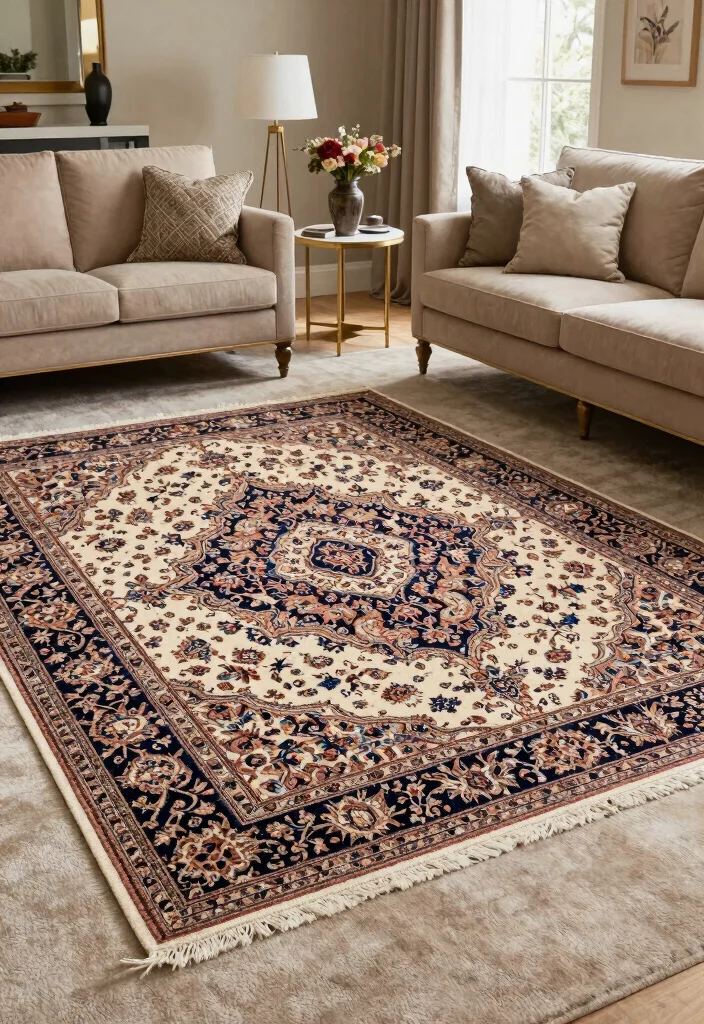
For a more formal living room, achieving elegance through sophisticated rug layering is key. Consider placing a classic Persian or Oriental rug atop a low-profile, neutral carpet. This combination adds depth and richness to your decor while maintaining a refined look that feels polished and welcoming.
Focus on selecting the right colors and patterns that complement each other for a seamless appearance in your formal space.
Here are some tips for elegant layering:
– Choose rugs within a similar color family for a cohesive feel
– Opt for more subdued patterns to retain a sophisticated vibe
– Incorporate elegant furniture to enhance the formal look
– Pay attention to sizing to ensure the rug defines the space without overwhelming it
This method creates a timeless aesthetic that elevates the overall elegance of your living room.
17. Layering in Open Spaces
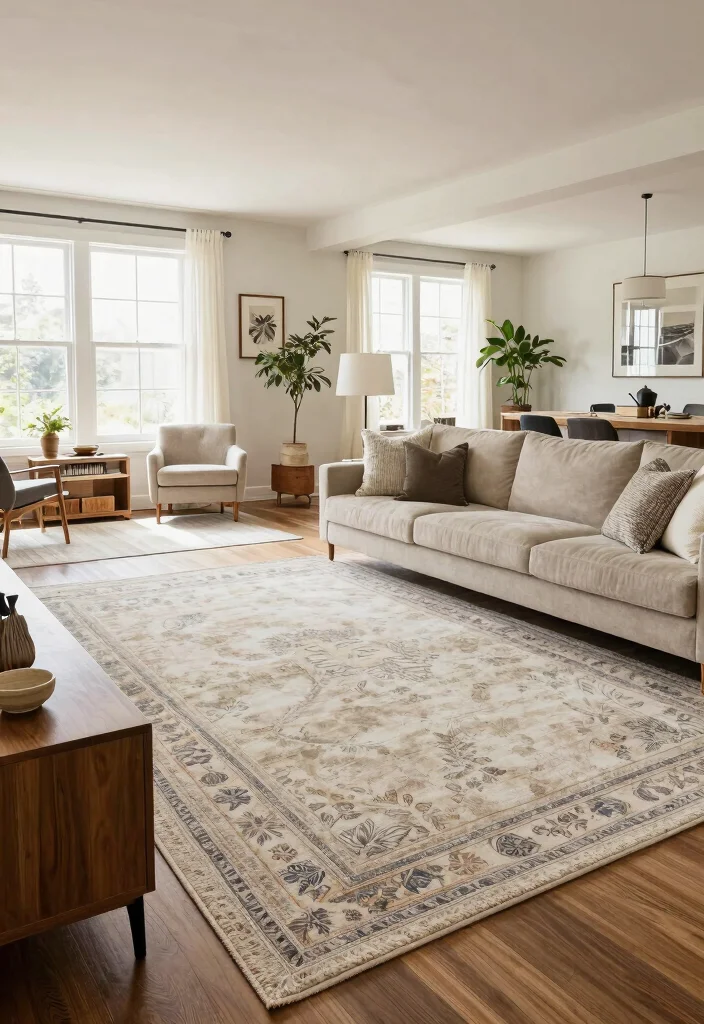
In open-concept living areas, layering rugs can help define spaces and add visual interest. Use a large area rug to anchor the seating area, then layer smaller rugs in other zones to create distinct areas for various activities. This technique maintains a sense of flow while establishing individual spaces that feel inviting.
When layering in open spaces, select sizes and shapes carefully to avoid clutter. This will help maintain an organized and harmonious layout.
Consider these tips for effective layering in open areas:
– Choose sizes and shapes that complement the flow of the room
– Use color blocks in rugs to accentuate different zones
– Experiment with various arrangements to see what feels best
– Ensure each area has a clear purpose and aesthetic
This approach helps create a cohesive and inviting environment that enhances the open feel of your living space.
18. Minimalist Layering
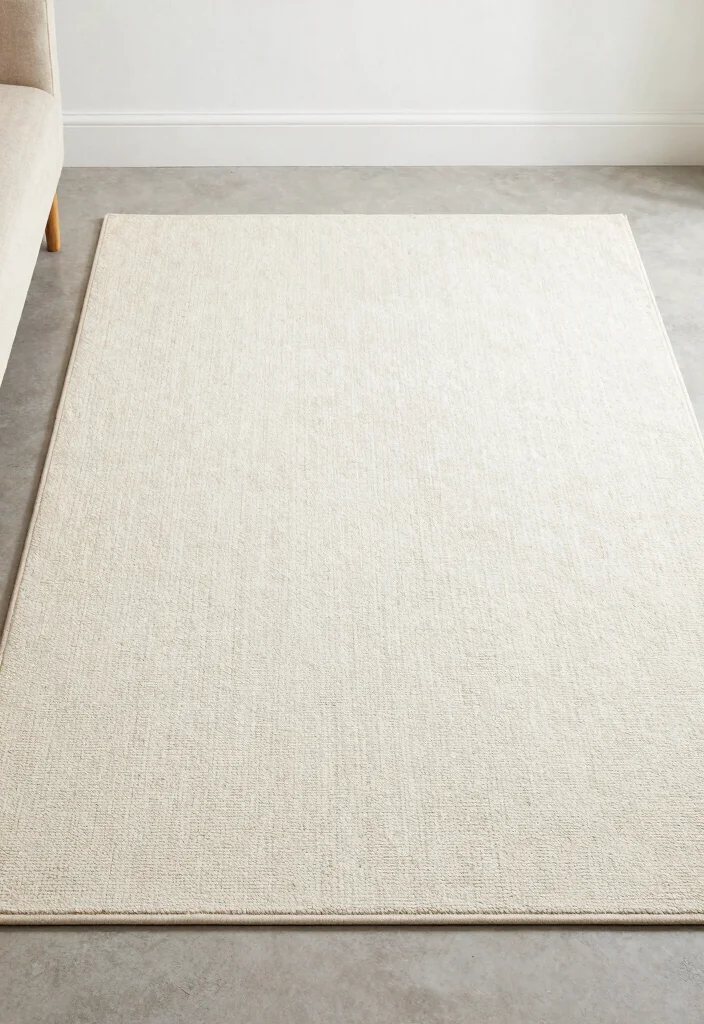
For those who favor a minimalist approach, simple rug layering can create a clean and modern look. Stick to neutral colors and minimal patterns to maintain an airy atmosphere. Using rugs with subtle textures layered over a solid carpet can achieve a sleek yet inviting feel.
The key is simplicity, focusing on quality rather than quantity to create a serene environment.
Here are some tips for successful minimalist layering:
– Avoid cluttering the space with too many decor pieces
– Let the rugs serve as the focal point of the room
– Use a few carefully chosen accessories to complement the rugs
– Regularly declutter to keep the environment tidy
This approach emphasizes clean lines and functionality, resulting in a serene and sophisticated living space.
Conclusion
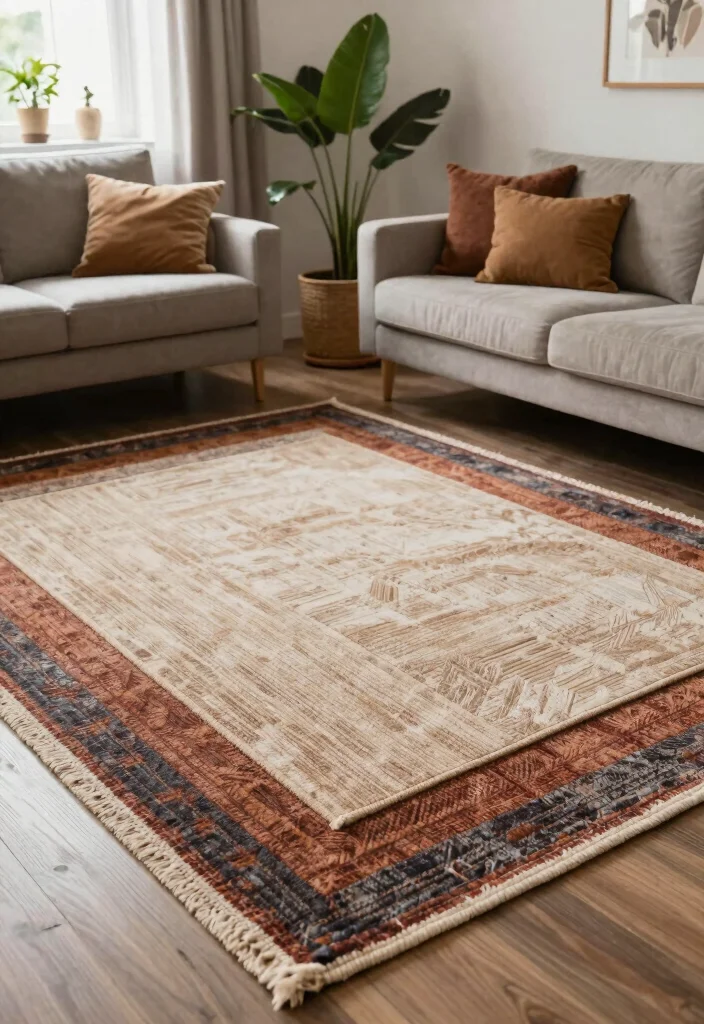
Layering rugs in your living room not only enhances the aesthetic appeal but also adds comfort and functionality. From bold patterns to minimalist designs, there are endless possibilities to express your style and create cozy spaces.
Experimenting with different textures, shapes, and colors can transform your living room into a true reflection of your personality. Embrace these ideas and let your creativity shine as you design a layered rug look that works beautifully for your home!
Note: We aim to provide accurate product links, but some may occasionally expire or become unavailable. If this happens, please search directly on Amazon for the product or a suitable alternative.
This post contains Amazon affiliate links, meaning we may earn a small commission if you purchase through our links, at no extra cost to you.
Frequently Asked Questions
What are practical tips for layering rugs in a living room with carpet?
Layering rugs can warm up a space and define zones—without flipping your floor plan.
Start by planning your layout: measure the seating area and choose a top rug that extends 12–24 inches beyond the sofa on all sides.
A larger top rug anchors the space and makes it easy to walk around.
Put a non-slip rug pad between the carpet and the bottom layer to keep everything in place and protect the carpet fibers.
Pick colors and textures that contrast just enough to create depth but stay cohesive with your carpet.
This approach works well for a rug on top of carpet living room and is a popular layering rugs trick in living room decor.
Quick checklist: top rug size, underlayer with interest, align with furniture, safety and maintenance.
Will layering rugs damage my carpet or make the room feel smaller?
Not if you do it right. Use a high-quality rug pad to separate layers and protect your carpet fibers, and avoid overly heavy underlayers that crush the pile.
Choose top and bottom rugs in complementary tones rather than matching, so the space feels organized rather than crowded.
Keep traffic paths clear and let the layers frame seating, which helps the room feel larger.
In short, smart padding plus thoughtful sizing and color are your best carpet styling tips for layering rugs in living room decor.
What sizes and shapes work best for a rug on top of carpet living room?
A practical starting point is a large top rug—think 8×10 or 9×12—paired with a softer underlayer that peeks out around the edges.
Rectangles are the workhorse shape, but round or oval top rugs can add a playful contrast if your space leans modern.
Center the arrangement under the main seating, leaving a border of visible carpet or floor.
If your sofa sits on a wall, you can place the front legs on the top rug to anchor the area.
These guidelines help you nail the rug on top of carpet living room look while staying within area rugs and interior design ideas.
How do I choose colors and textures when layering rugs for living room decor?
For a cohesive layered rug look, pick one dominant color from your furniture and wall art, then add a secondary accent color in the top or bottom rug.
Mix textures—think wool, jute, or a flatweave—with a plush underlayer to create depth without overwhelming the room.
If your carpet has a busy pattern, go for solid or subtle-toned rugs to avoid clashing; if your carpet is solid, you can experiment with bold patterns on the top rug for drama.
This is a classic interior design ideas moment that leans on layering rugs to elevate living room decor.
Are there budget-friendly ways to achieve this layered rug look?
Absolutely. Start with a budget-friendly top rug or second-hand find, then layer with a simple underlayer in a complementary texture.
Look for durable materials like wool blends or synthetic options that wear well under traffic.
A good rug pad keeps everything in place and can save on replacement costs.
You can also repurpose a larger area rug you already own as the underlayer, or shop sales for additional pieces.
With a little planning, you can achieve the stylish rug on top of carpet living room effect without breaking the bank and keep your area rugs budget friendly.
Related Topics
home decor
layering rugs
living room decor
carpet styling
area rugs
textile design
cozy interiors
budget friendly
beginner tips
modern design
seasonal decor
easy updates