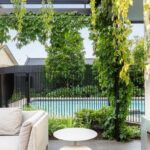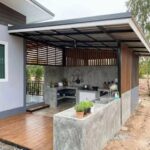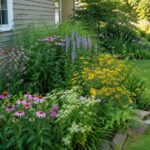
These garden design ideas run from salvage and bagged pebbles to commissioned metalwork and engineered stone walls.
I found that the raked gravel in a Zen garden needs enough depth to hold marks without shifting, while the PVC towers for lettuce and strawberries turn a narrow walkway into production space without ground to spare.
[link-whisper-related-posts]1. Native Plants Garden Design Ideas
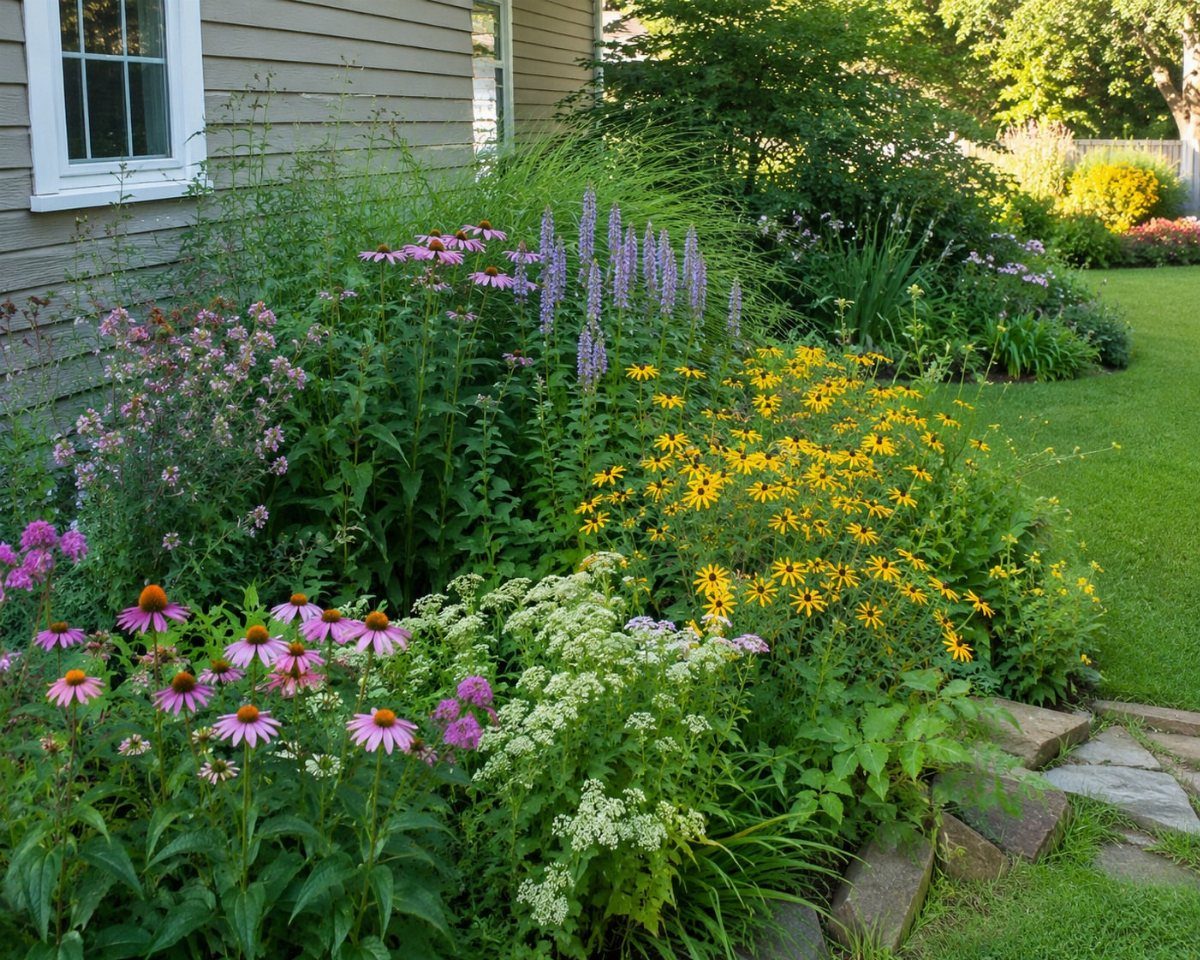
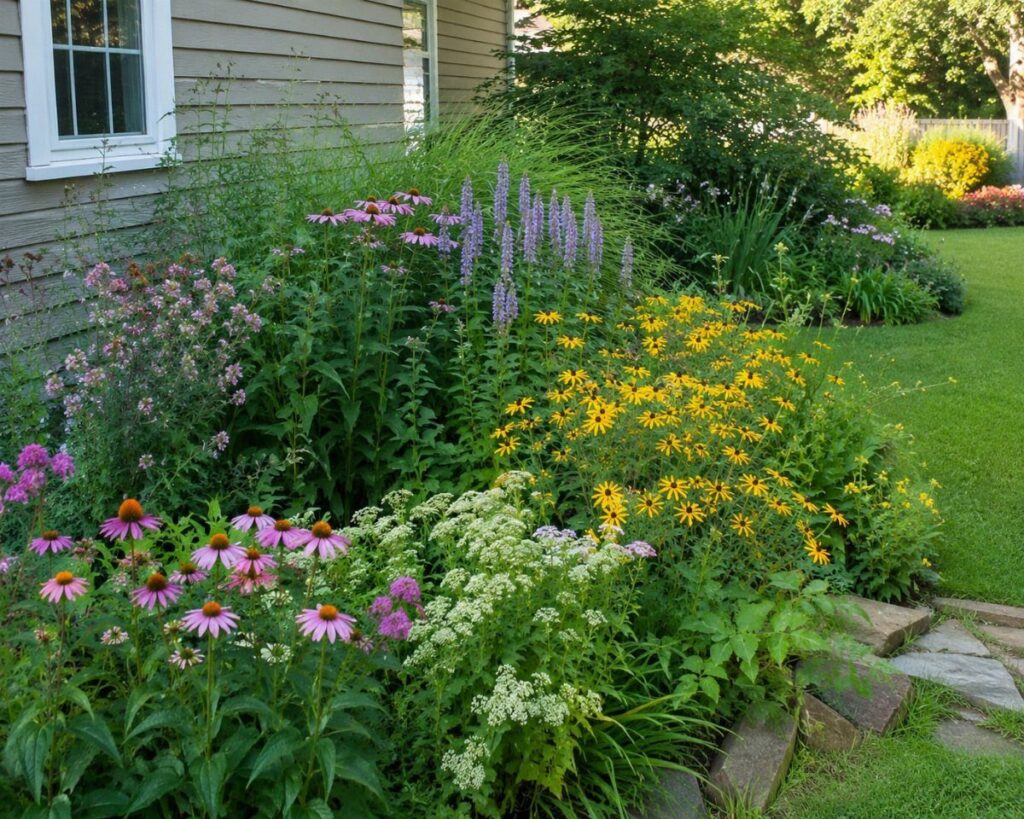
I swapped a strip of lawn for gravel planted with natives 2 summers back, and the maintenance dropped to almost nothing. Gravel keeps weeds down, drains fast, and lets you walk between plants without mud.
A meadow-minded mix of local wildflowers and grasses feeds pollinators through spring, summer, and fall. Check your state extension office for what actually grows where you live; "native" means different plants in Ohio than in Oregon.
Start with a small bed against the house where the old lawn struggled anyway, and let it spread from there.

【Excellent Performance】These hardscape lights are equipped with frosted lens and 2700K warm white LED chips, providing more even and eye friendly light distribution for your outdoor area. They create a warm, cozy, and inviting atmosphere, ideal for retaining walls, outdoor kitchens, stone steps, decks, patios, and more.

[Solar Powered] Our Siedinlar driveway lights are constructed from durable aluminum alloy and PC, equipped with 16 LEDs. An easy-access top button allows you to switch among 11 colors, enhancing your roads or gardens. Once fully charged, they can provide up to 72 hours of lighting.
2. Garden Art & Décor
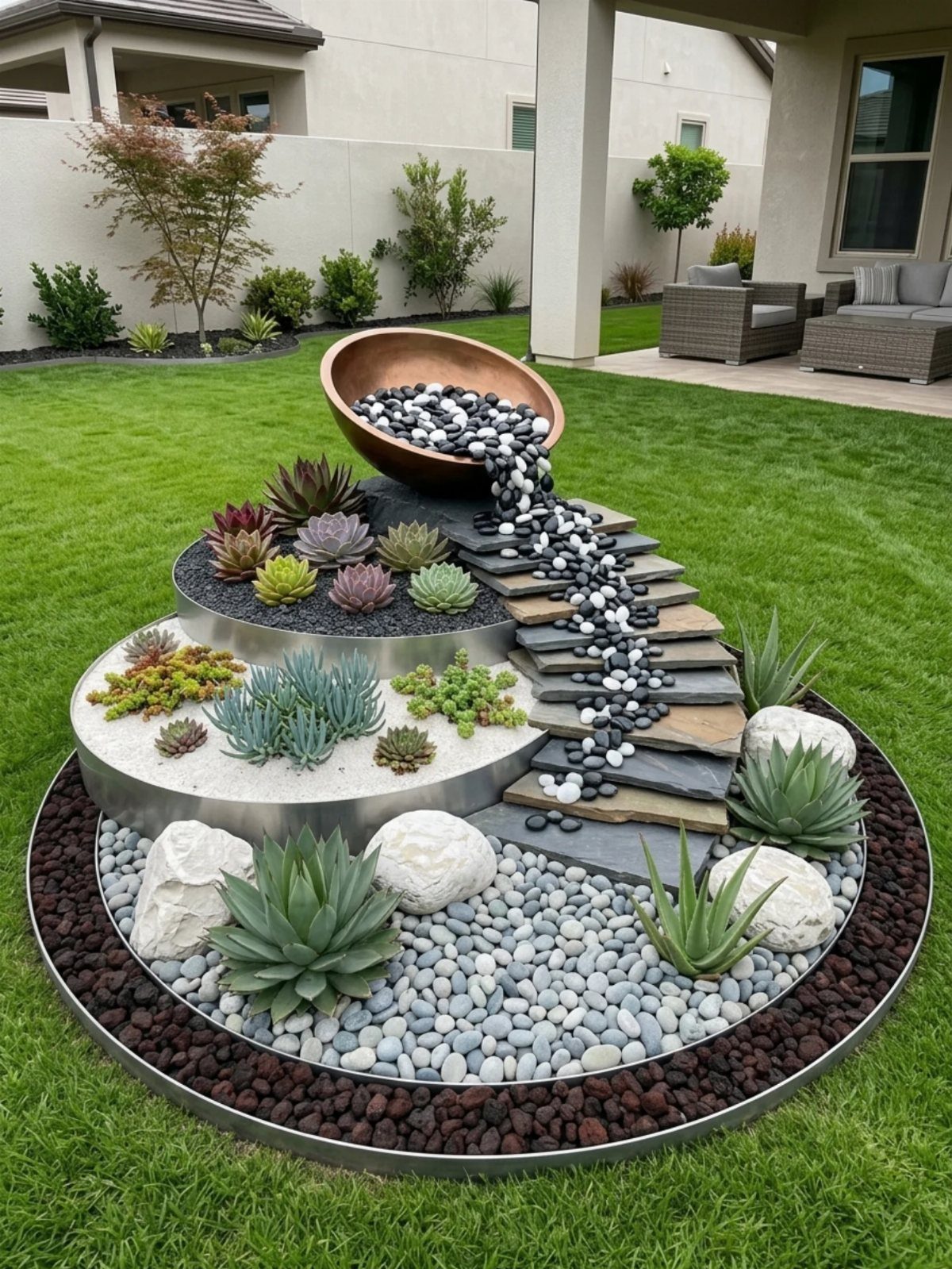
Sculpture can do the work of a fountain with no pump and no plumbing, just the illusion of movement. I have seen similar setups built from salvage yard finds, a rusted oil pan, a chipped ceramic vessel.
Place it on a slight grade so the pebbles read as flowing. Surround it with low, architectural plants that do not compete for attention.
Cost runs from a few hundred for a simple bowl and stone to thousands for commissioned metalwork. A DIY version with a secondhand container and bagged pebbles lands at a low cost.

LARGE ZEN RAKE SIZE - This big full size 6-tines saw tooth rake is 48" long, 15.7" wide and 2.4" deep, and the largest space between two teeth is 2.5".This solid beech wood zen rake is about 1.6LB(730g) weight. It is made of hard wood.It’s sturdy and natural .

【48IN Adjustable Detachable Long Handle, Fit for Adults & Kids】 This zen garden rake total length reaches 48 inch, the handle consists of detachable 15.8inch segments. You can assemble different quantities of pole sections to shorten total height for children or adult. 11.8 inch wide 4 tine rake head works great for raking gravel, pebbles and sand both for large backyard kare sansui dry rock garden and small tabletop meditation sand tray.

1. ADJUSTABLE DETACHABLE 3 SECTION HANDLE FOR ADULT & KIDS USE: This zen garden smoother features a three piece detachable handle. Assemble 2 or 3 pole segments to adjust working height. Great for adults standing in large backyard zen garden, or children for small meditation sand landscaping activities. Total max assembled length reaches 48 inch, working head width is 19.6 inch, item weight 1.3 LB for comfortable long time holding.
3. Light-Colored Paving
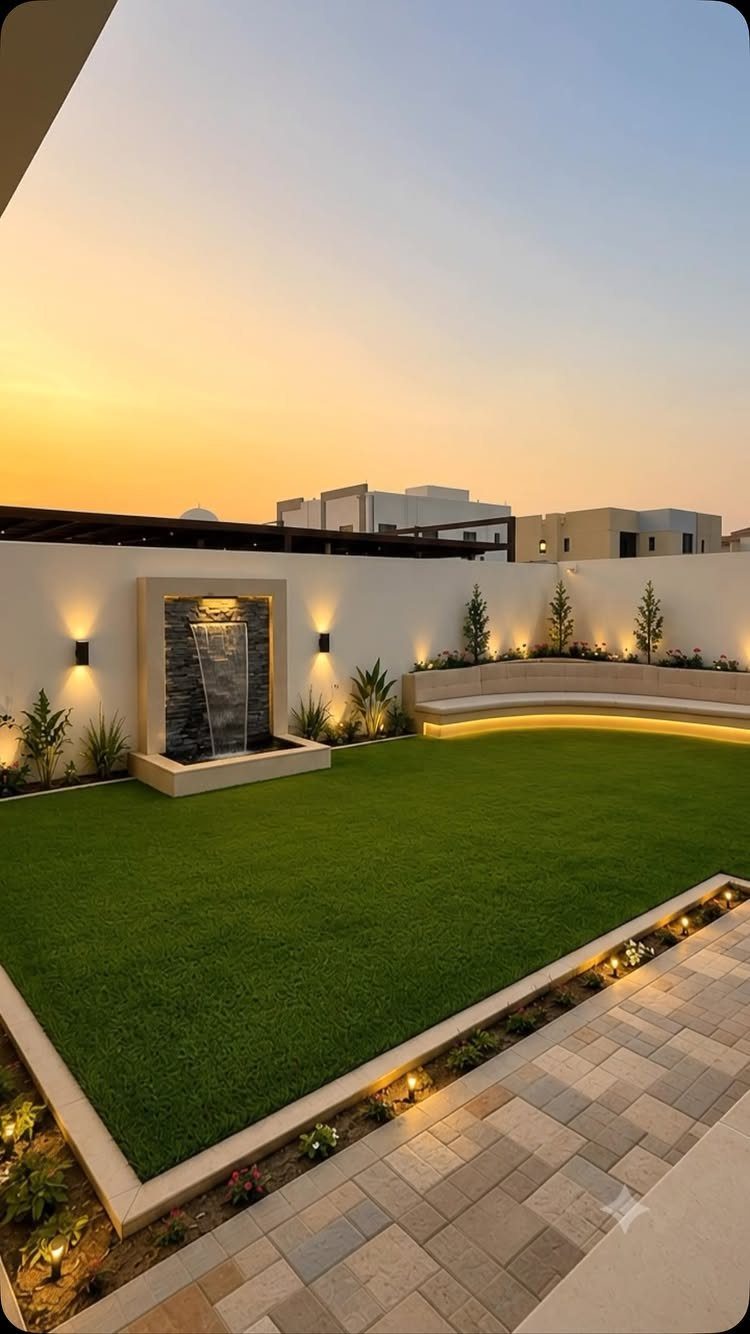
Dark paving in a small yard drinks the light and shrinks the space visually. Light-colored stone or concrete pavers bounce it back, which matters when your garden sits on the north side of the house or under neighbor trees.
Pale tiles stay visible after sunset, catching the last sky light and any landscape lighting you add. I would go with warm-toned limestone or cast concrete in a sand finish rather than bright white, which glares by day.
Paint a fence or wall to match, and the whole space lifts. Budget tip: gravel in a similar tone does the same job for less per square foot.

NATIVE BEAUTY – New England Aster, Smooth Blue Aster, Purple Coneflower, Narrow-Leaved Coneflower, Black-Eyed Susan, Dense Blazing Star (Gayfeather), Bee Balm (Wild Bergamot), Lanceleaf and Plains Coreopsis (Tickseed), Showy, Common, and Swamp Milkweed, Purple Prairie Clover, Joe Pye Weed, Spiderwort, Common, Prairie, and Maximilian Sunflowers, Little Bluestem, Switchgrass, Indian Grass, Blue Vervain, Canada Wild Rye, and White Yarrow.
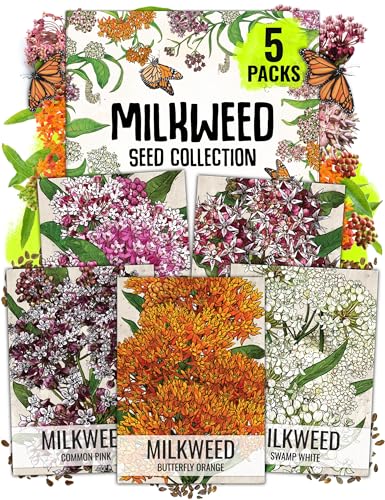
Pollinator Attraction: Milkweed flowers are known for attracting a variety of pollinators, including bees, butterflies, and hummingbirds. They produce a sweet nectar that is particularly enticing to monarch butterflies, which lay their eggs exclusively on milkweed plants.

[Long-Lasting White Flower Spikes] Produces tall spikes of tubular white flowers blooming from bottom to top, extending flowering period from mid-summer through early fall . Each spike provides weeks of garden color .
4. Whimsical Garden Design
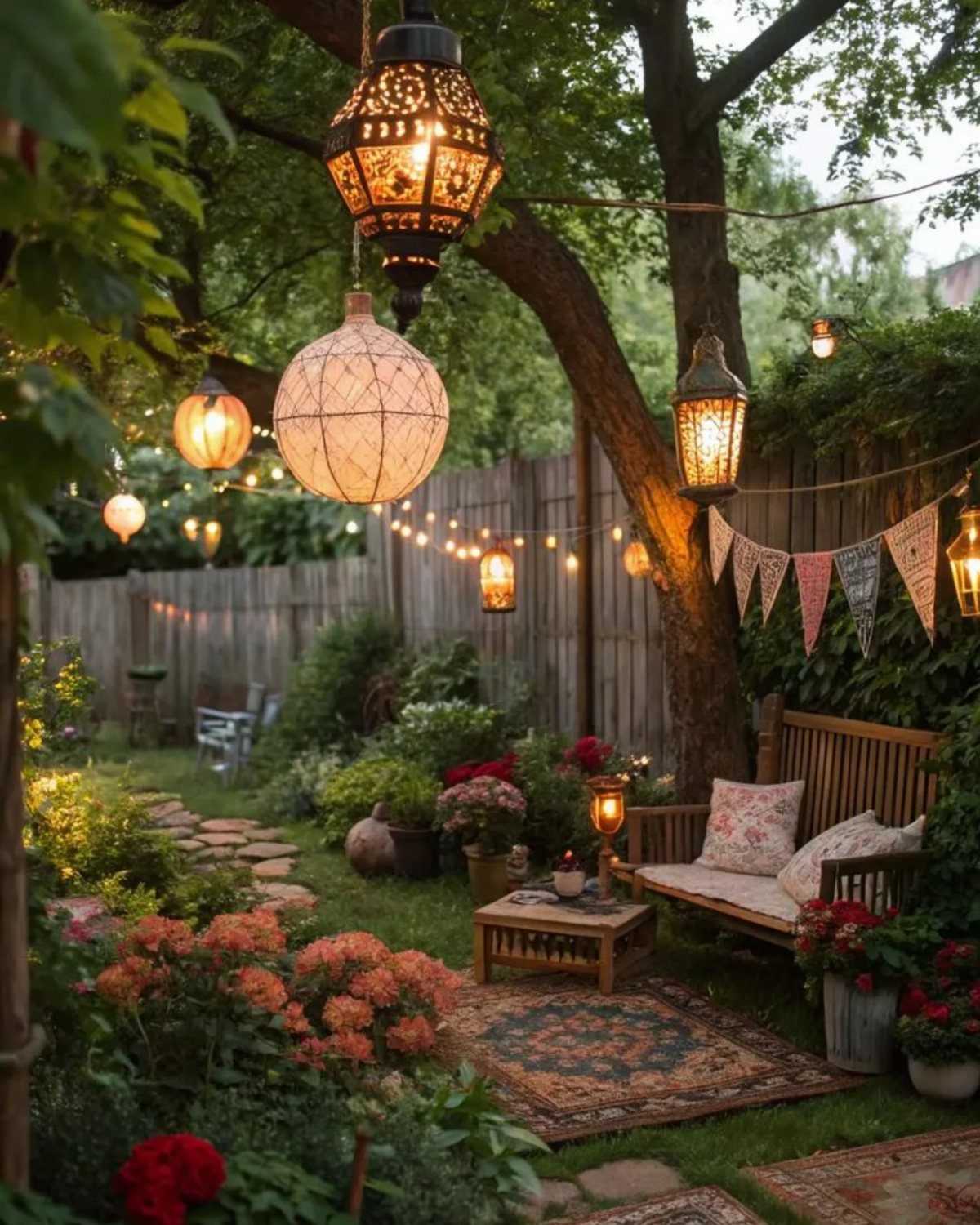
String lights and bunting over a bench with cushions turn a backyard into somewhere you stay past dusk. No single element needs to be expensive; the layering reads as intentional.
I would add one unexpected piece, a mirror hung on a fence, a painted door propped against a wall, something that breaks the garden frame and makes you look twice.
Planting should be loose, with flowers at different heights that lean and self-seed rather than standing at attention.
Soft edges where lawn meets bed, where bed meets path, keep the feeling unplanned. This suits renters because it is almost all portable; pack the lights and cushions when you move.
Indoor White Lantern Lights String Plug In 120V: Reduce the trouble of battery(others are battery operated string lights),our strings are plug in style and help you to work long time as you need.

All-in-One Mason Jar Solar Lights: 6-Pack(6 Mason Jars&6 Lid lights&6 Hangers). Standard 16 oz regular mouth Mason Jars, dimension: 3.2" Dia. x 5.3"H, each with 30 LEDs

Brighter and longer lighting time: Our solar lights are made of polycrystalline silicon solar panel which has higher light efficacy. With the same charging hours, our solar panels can save more electricity in the daytime and cast a brighter and steadier glow at night.
5. Pollinator Gardens
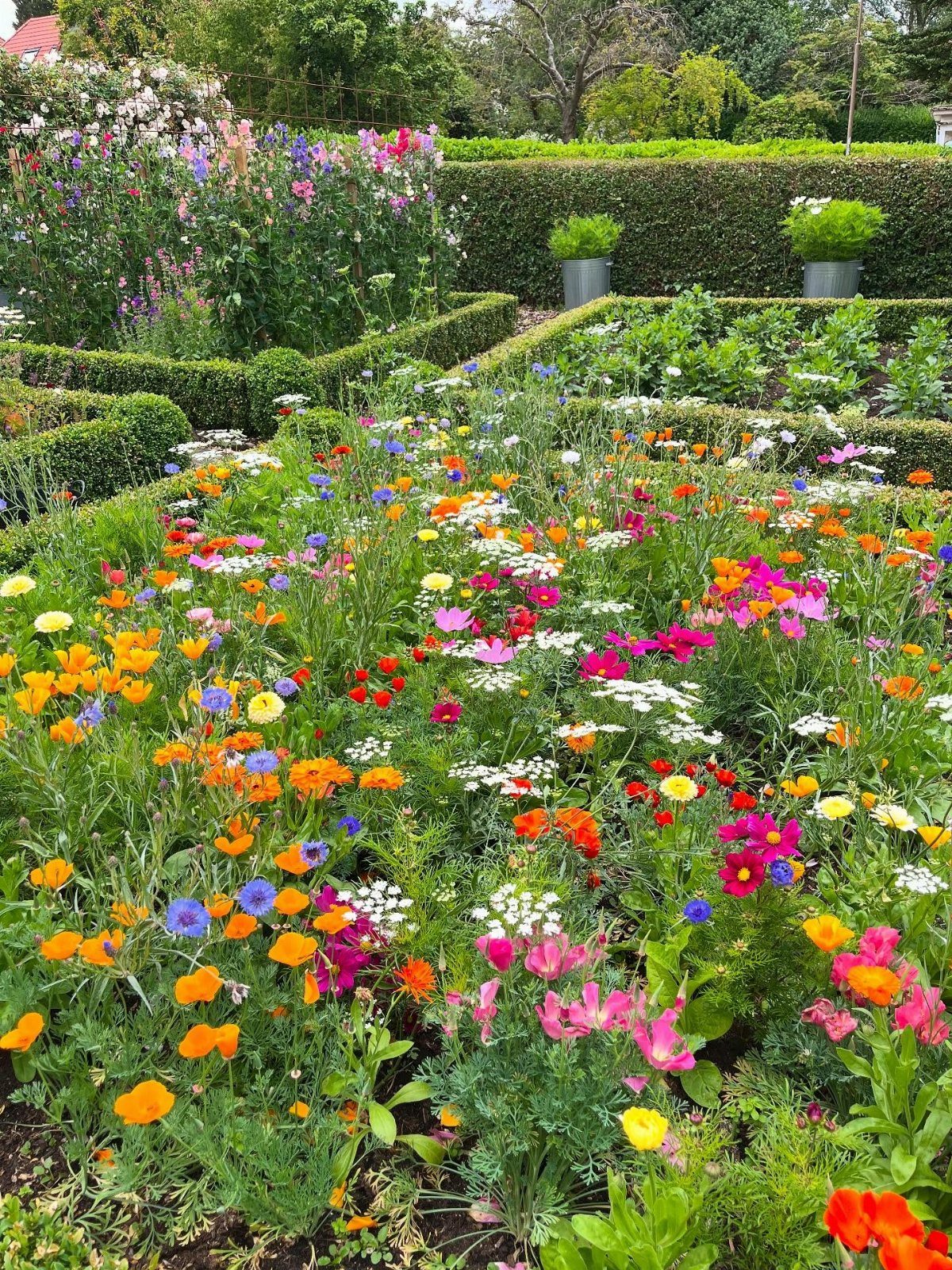
Orange poppies, blue cornflowers, pink cosmos, each blooms at a slightly different moment, so something is always open for the bees and butterflies. Low boxwood hedges keep the bed looking tended even when the mix inside reads wild.
I would add one early spring bulb, crocus or grape hyacinth, and one late aster, so the food source runs March to October in most zones. The hedge also blocks wind, which helps insects land and feed.
A pollinator garden does not need to look messy to work; the photo proves that. Start with a bed this size, about the length of a garage wall, and expand once you see what thrives in your soil.

EVERY SCULPTURE IS UNIQUE: Crafted from naturally shaped river stones, each garden sculpture features its own colors, textures and stone arrangement, making every piece one of a kind

Elegant Ceramic Hands Sculpture: This ceramic hands sculpture is inspired by the symbol of giving and protection. Shaped like a pair of gently cupped hands, the design conveys a sense of care and openness. The glossy finish enhances its detailed curves, making it a sophisticated piece of decor that effortlessly complements any space

Fine Craft: The color of this balanced stones is natural and beautiful, the details are realistic and fine craft, whether in the water or as normal home or garden statue, it can play a real effect.(Notice: The stones can’t be separated)
6. Shade Garden Ideas
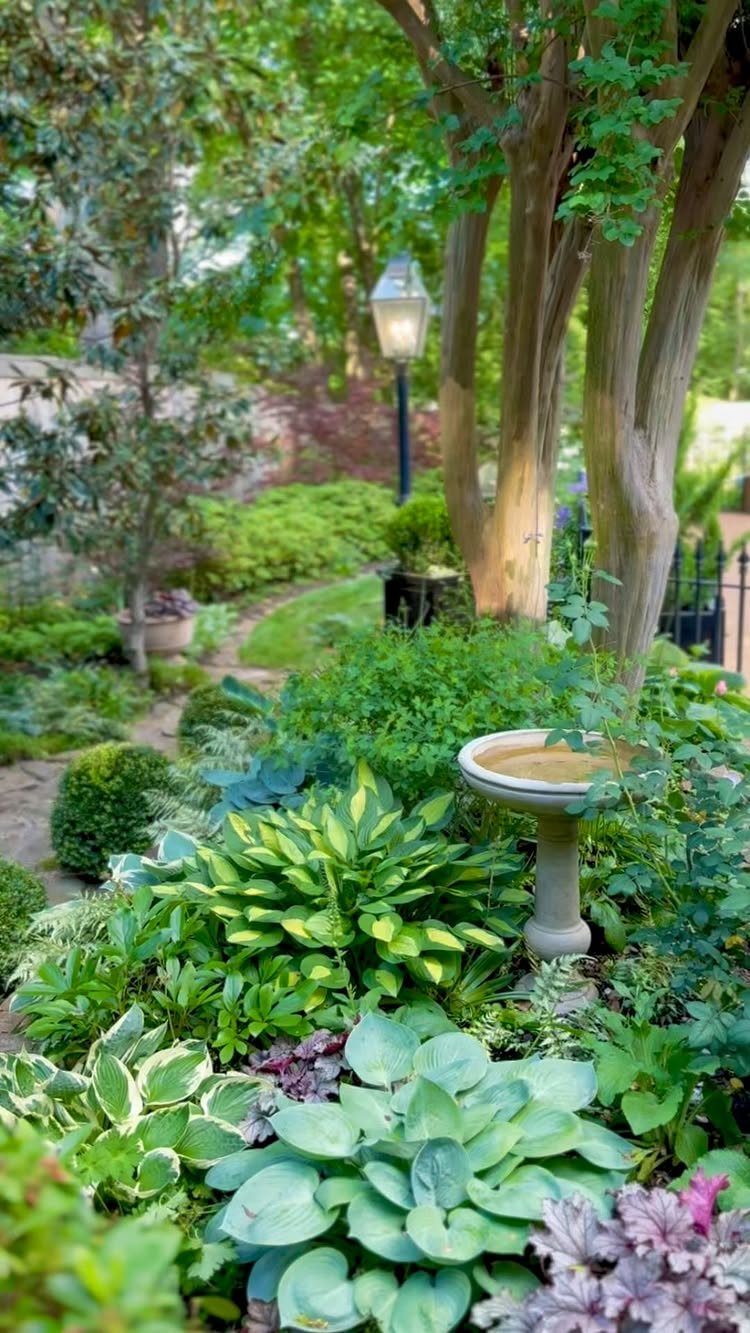
Hostas, ferns, and heuchera under mature trees solve a problem most gardeners face: the spot where grass gives up and moss takes over.
A stone birdbath is not decoration only; shallow water in shade stays cool and fresh longer, and birds visit more in summer heat.
Layer the planting with low ferns at the front, mid-height heuchera, taller hostas behind, so each leaf texture shows against the next. A classic lamp post adds structure where flowers are few.
I would check that any tree roots are surface feeders before digging; maples and oaks make different demands. Shade gardens need less water than sun beds, but new plantings still want consistent moisture their first year to establish.

【Excellent Performance】: These hardscape lights are equipped with frosted lens and 2700K warm white LED chips, providing more even and eye friendly light distribution for your outdoor area. They create a warm, cozy, and inviting atmosphere, ideal for retaining walls, outdoor kitchens, stone steps, decks, patios, and more.

[Solar Powered] Our Siedinlar driveway lights are constructed from durable aluminum alloy and PC, equipped with 16 LEDs. An easy-access top button allows you to switch among 11 colors, enhancing your roads or gardens. Once fully charged, they can provide up to 72 hours of lighting.

Solar Ground Lights: Upgrade your outdoor lighting with Joomer's solar ground lights 8 bright LED bulbs. Built to withstand the elements, these lights are IP68 waterproof and equipped with NI-MH rechargeable battery for lasting performance.
7. Edible Garden
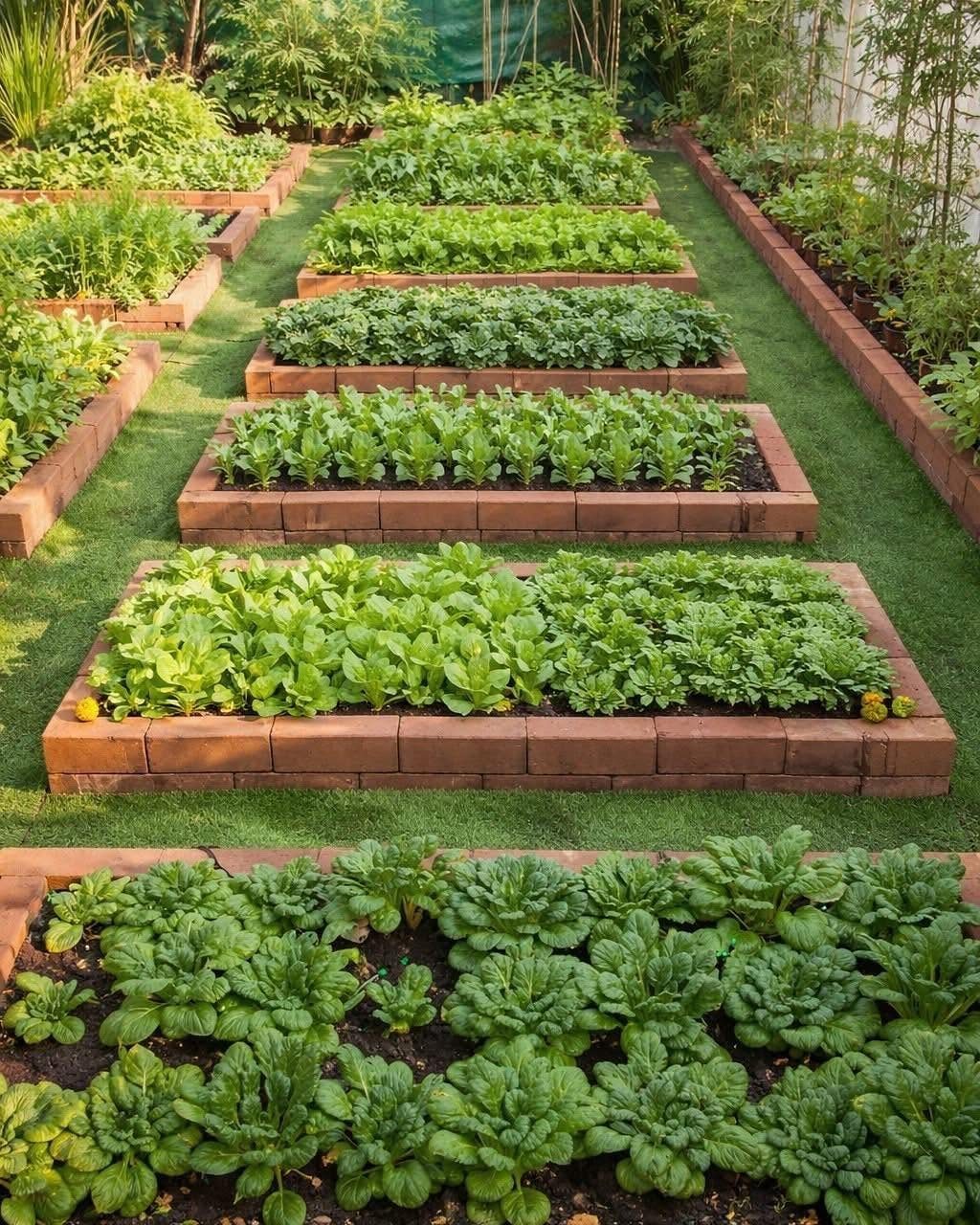
Raised brick beds on artificial turf walkways keep vegetables clean and feet dry. The brick holds heat that tomatoes and peppers love, while the turf paths need no mowing and drain fast after rain.
I would put herbs at the edges where they are easy to reach for cooking, and tall crops like tomatoes against the back where they will not shade the rest.
Most vegetables handle a deep bed; root crops want more. Start with one manageable bed and a path wide enough for a wheelbarrow, then add beds as you learn what you actually eat.

1. UPGRADED 2IN THICK WOOD HEAD FOR LARGER GRAVEL & PEBBLE: This updated zen garden smoother comes with a thicker 2 inch diameter wooden working head. Sturdy solid wood construction makes it ideal for leveling heavier large gravel, pebbles and coarse crushed stone. Not only for fine white sand, it handles bigger backyard dry rock landscape materials easily. Total max assembled length 48 inch, item weight 2.5 LB.

Packaging Details: The package contains 6 zen garden tools in four forms. Different forms can meet your different needs and your decoration requirements

Packaging Details: The package contains 4 zen garden tools in four forms. Different forms can meet your different needs and your decoration requirements
8. Zen Garden with Rocks and Sand
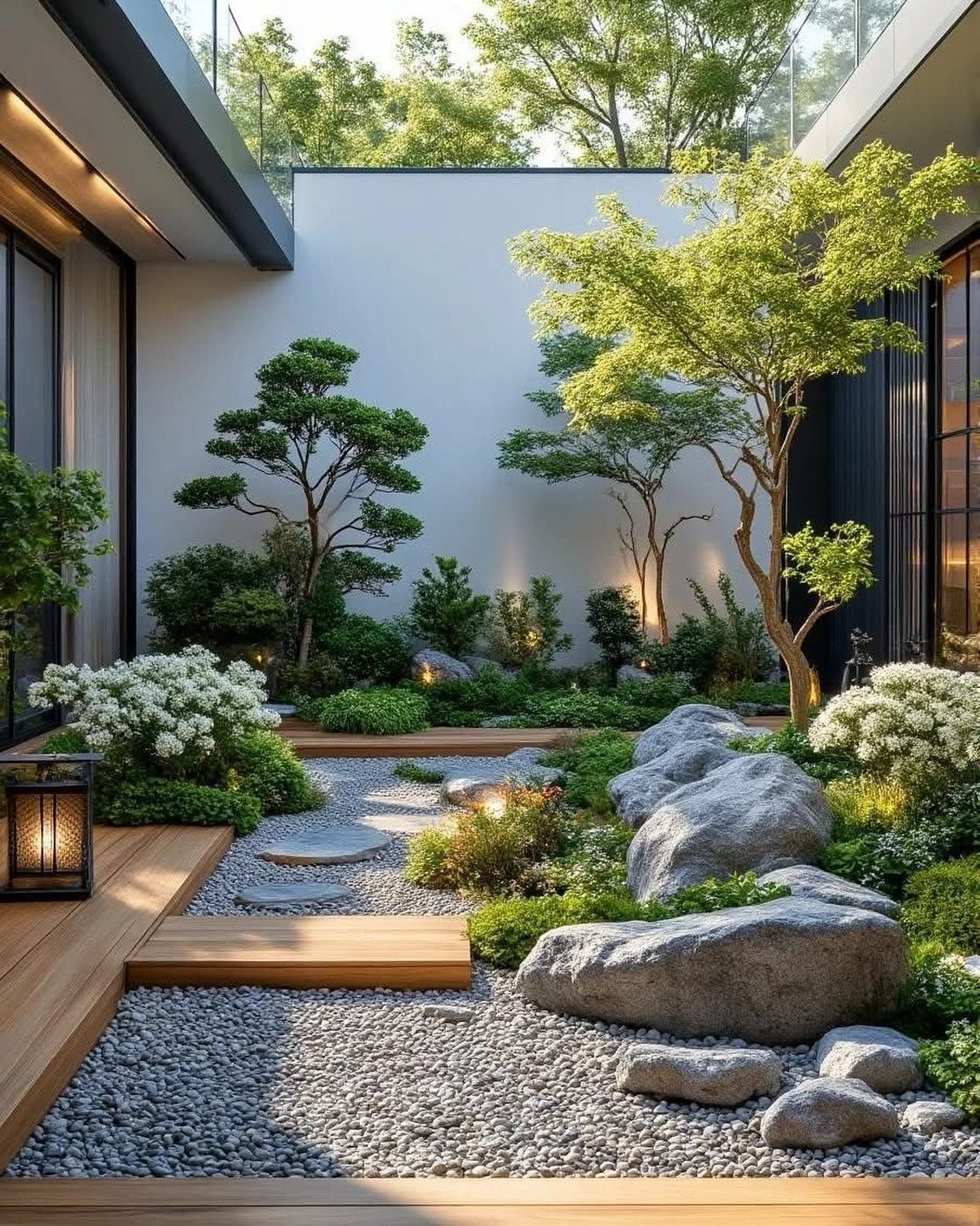
A Zen garden lives in the contrast between stillness and motion: raked gravel around anchored stones, a wooden deck as viewing platform, one lantern for evening.
I would keep plantings minimal and structural, a single maple or clipped cloud prunes rather than flowers. Gravel over compacted base drains well and stays walkable; enough depth holds the rake marks without shifting.
The maintenance is the practice: raking every few days, or after rain. This suits a flat site with good drainage and someone who wants the garden to be a ritual, not a backdrop.


Easy-Growing Wildflowers: This Early-Blooming, Carefree Wildflower Seeds Mix Includes 14 Of North America’s Most Beautiful Wildflower Varieties; This Gorgeous Blend Will Quickly Delight Pollinators And People Alike
9. Creating a Secret Garden
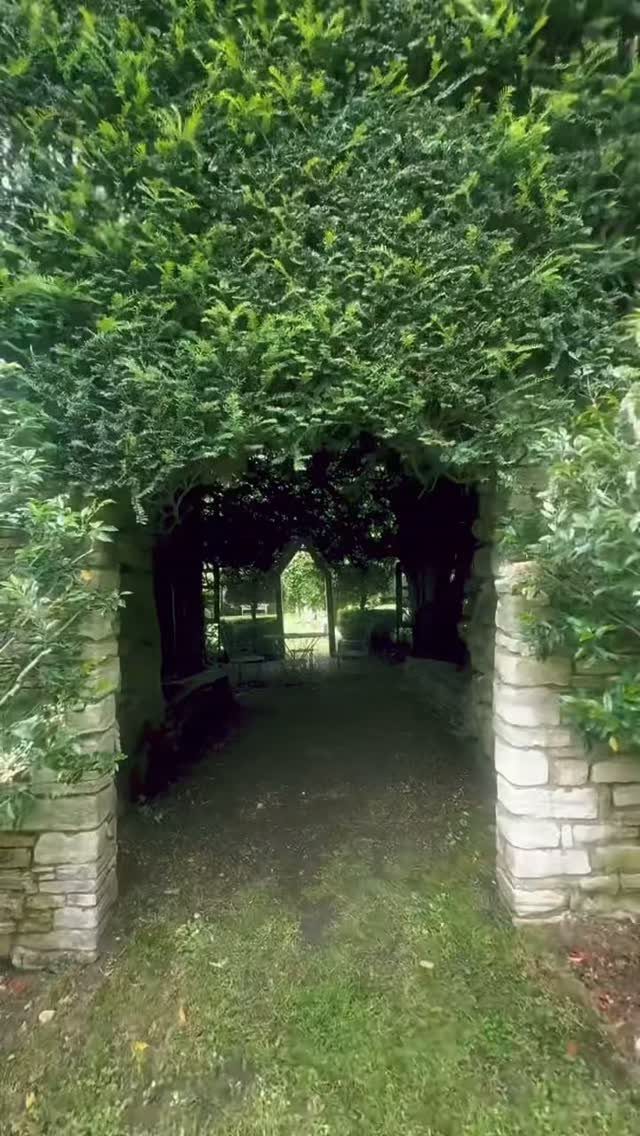
A stone arch overgrown with hedge turns a path into an event: you duck through and the garden opens behind it.
The tunnel needs enough shade between bright outside and bright destination, enough time for your eyes to adjust and your pace to slow.
I would use hornbeam or beech for the arch, something that clips tight and holds leaves late into fall. The gravel path inside needs edging to keep the hedge roots from swallowing it.
This demands patience; the arch fills in over time, faster only if you buy mature plants and spend accordingly. Best for a back corner where the surprise pays off, not a front walk where every visitor sees it daily.
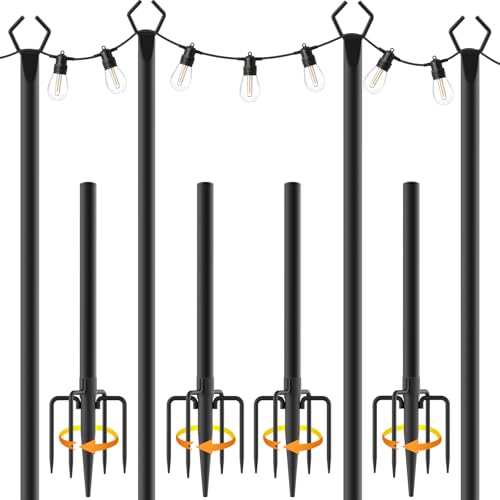
No height restrictions:Made of high quality metal, it will not bend or wobble. The poles for string lights is not limited by its own length, and the excellent load-bearing properties allow you to install it on high fences and walls. Get rid of the general height limitation. You can also hang more number of strings of lights. Also can be applied to banners, lanterns, wind chimes, all kinds of light decoration, etc.

High-quality Materials: Our nylon lantern string lights are made of high-quality materials, which are sturdy, durable and long-lasting than normal paper lantern.

Spring festival decor oriental-style lantern: 2 red, 2 blue, 2 yellow, 2 green and 2 orange, elegantly designed for interior wall, mantelpiece, table and bed room and exterior garden patio christmas decoration
10. Wood and Stone Garden Design
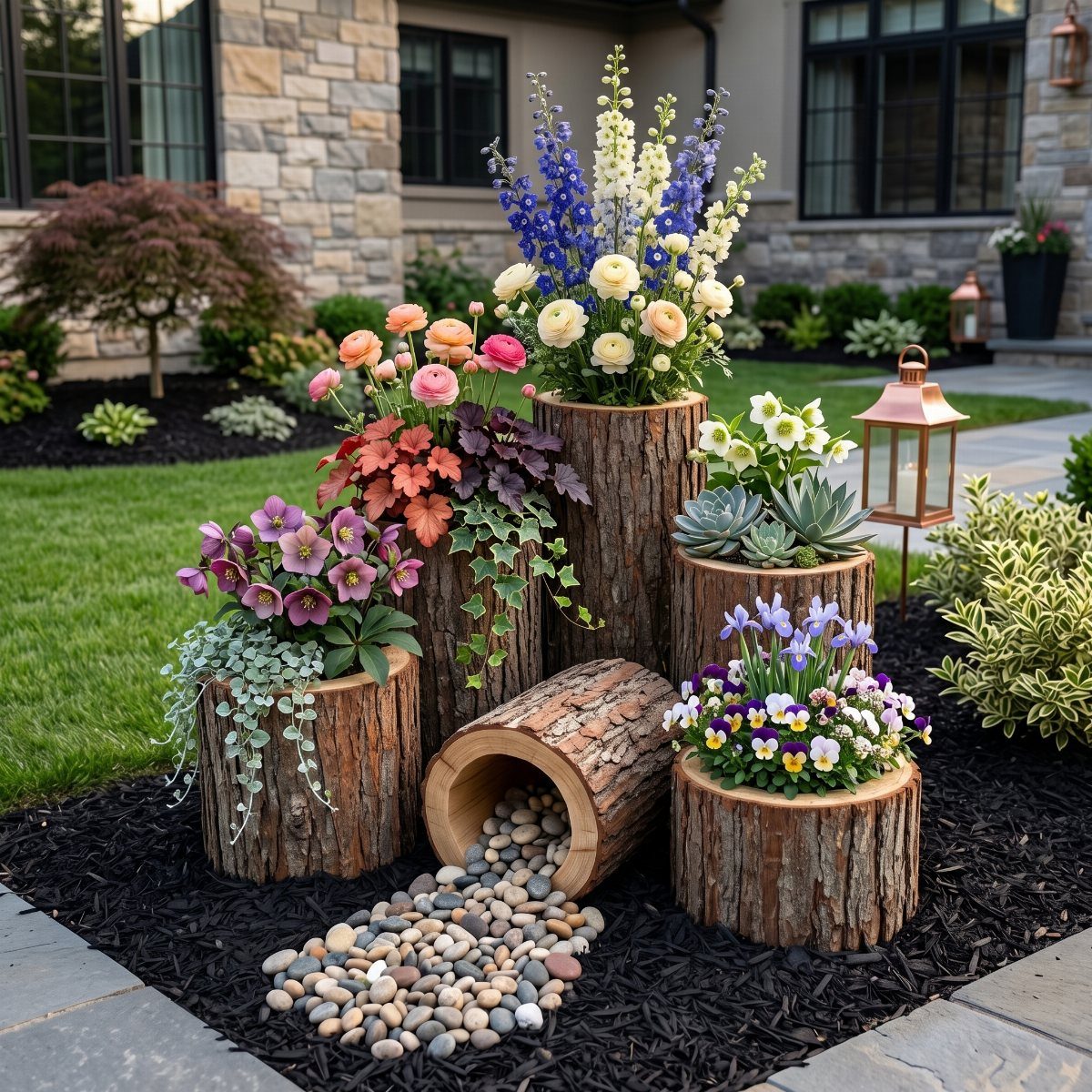
Hollowed stumps as planters and a log spilling river stones turn leftover wood into the garden’s structure.
The stumps need proper drying before hollowing, or they crack and rot fast; buy them cured or wait. Black mulch sets off the pale wood and bright flowers without competing.
I would set the stone-spilling log on a slight grade so the river rocks read as moving, same trick as dry creek beds. The look is informal, naturalistic, closer to a forest floor than a flower border.
Cost stays low if you source stumps from tree removal or storm fall; buying finished planters runs higher. Check that no stump holds active decay or carpenter ants before bringing it near the house.

【More Coverage Than Standard 2 LB Bags】The 3 lb size offers better coverage for planters, small garden beds, and décor projects—fewer refills, cleaner and more finished results.

【Weight & Size】These mexican beach pebbles weigh about 5 pounds and measure about 2-3 inches. The surface of the smooth rocks will attract dust. Please be sure to wash them 2-3 times with water before use.

10-Piece Mini Mushroom Set:Includes 10 colorful mini mushroom figurines in varied shapes and glossy cap designs. A ready-to-use mix for fairy garden decor, mini garden decor, moss landscape decorations, terrarium decorations, bonsai accents, and DIY craft supplies.
11. Desert Landscaping with Cacti
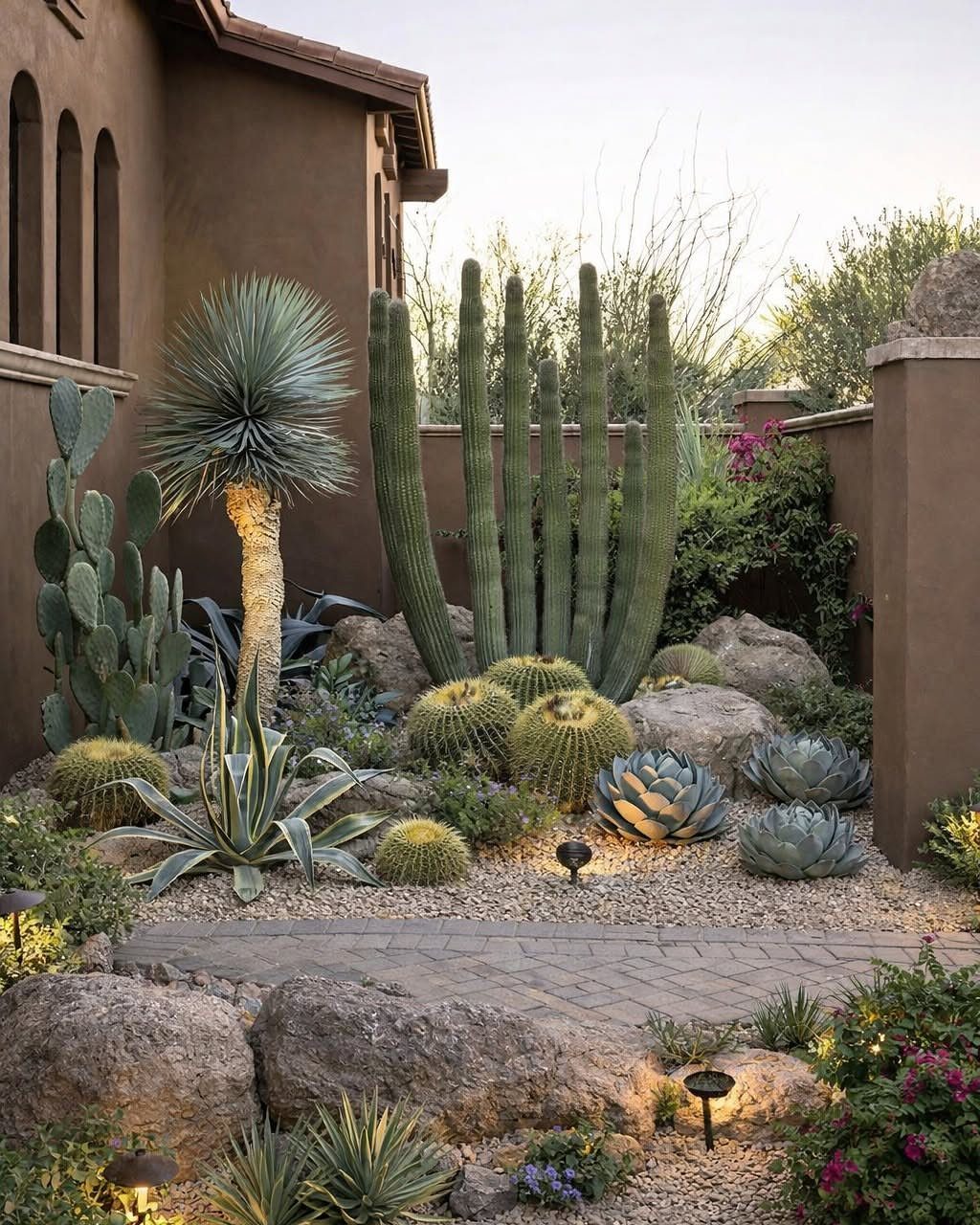
Golden barrel cactus, agave, and boulders on gravel suit the Southwest obviously, but they grow in the Pacific Northwest too, which surprised me.
Drainage matters more than heat; these rot in wet soil, not in humid air. I would check hardiness for your zone before buying, and plant on a ridge or slope even in desert, where water moves away from the crown.
The gravel mulch needs enough depth, coarse enough that it does not hold moisture against the base. Desert landscaping with cacti trades away lawn and seasonal flowers for year-round structure and near-zero water once established.
12. Vertical Garden Ideas
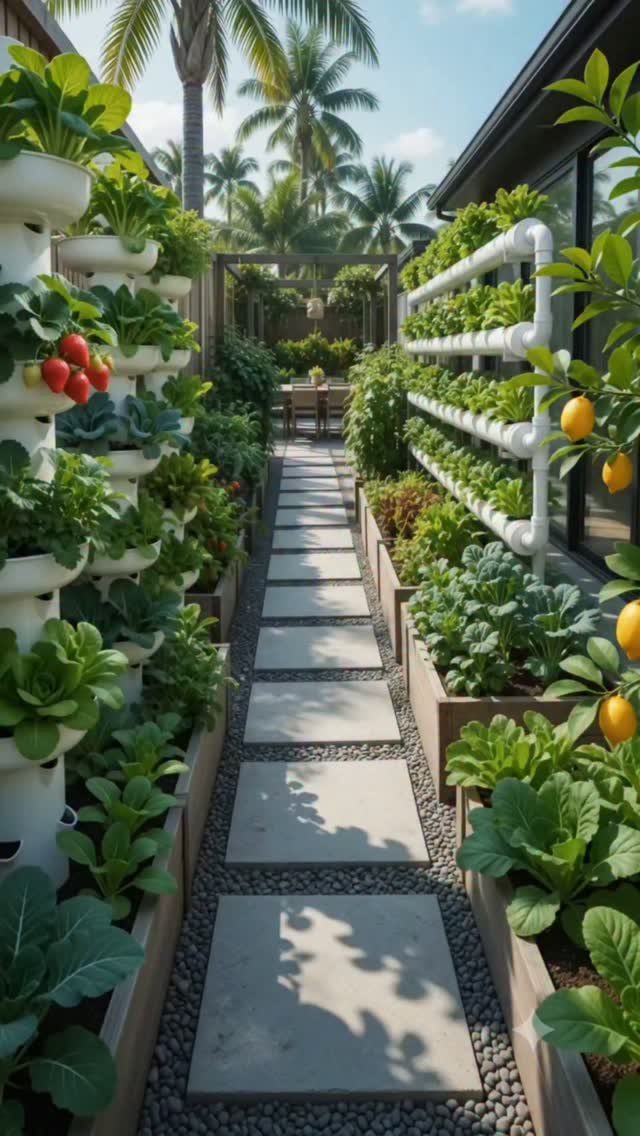
PVC pipes mounted vertically with holes for lettuce, strawberries, and herbs turn a narrow walkway into production space. A hydroponic setup circulates nutrient solution, but a soil version in stacked planters or pocketed fabric works the same for less gear.
I would start with wall-mounted planters or a single tower before plumbing pipes; learn what grows in your light first.
Leafy greens and strawberries handle partial shade; lemon trees want sun and root room that vertical alone may not give. Stone paths stay cleaner than soil paths would.
13. Cottage Garden Ideas
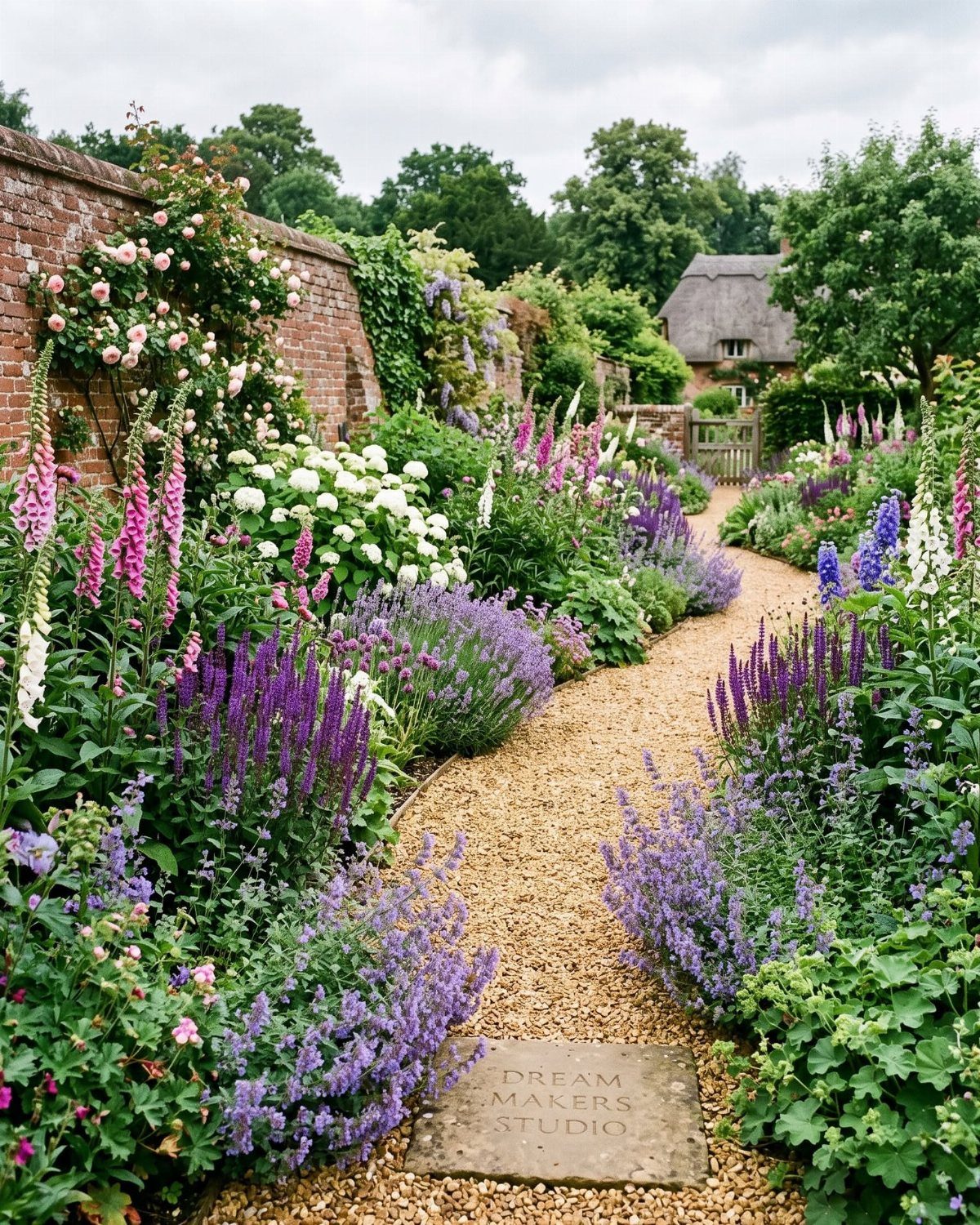
A gravel path winding between dense, self-seeding beds gives the cottage garden its loose, lived-in character.
Brick or stone underfoot stays walkable when rain turns dirt paths to mud. I would mix flowers at shin to thigh height with herbs and a few vegetables, letting plants spill over edges rather than keeping them in lines.
Taller plants belong toward the back or center, not along the path where they crowd the space. A weathered bench tucked under a small tree gives you somewhere to sit, but planting stays the main event.
This style suits anyone who wants color without formal structure; the maintenance is deadheading and dividing, not shearing and edging. Start with a single bed against a wall and let self-seeders fill gaps over two or three seasons.
14. Container Garden Ideas
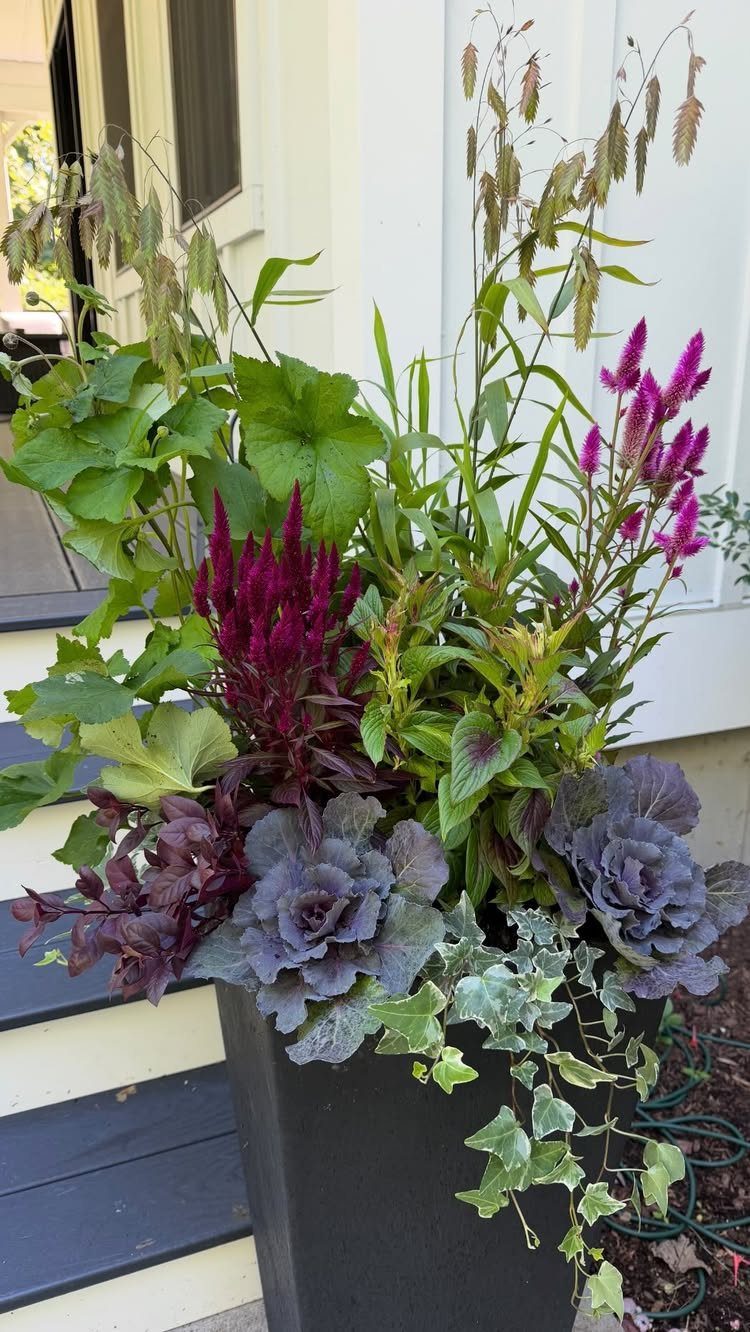
Containers move with the season and with your lease: rearrange when blooms fade, take the best with you when you move.
I would choose one tall element for structure, one filler for bulk, and one trailer to soften the rim, the classic thriller-filler-spiller formula.
Drainage holes matter more than pot material; root rot kills more container plants than cold. Group odd numbers of pots in staggered heights rather than lining them like soldiers.
Herbs, lettuce, and strawberries all grow well in containers if you match the pot depth to the root. A single large planter makes more impact than several small ones fighting for attention.
15. Ponds, Fountains
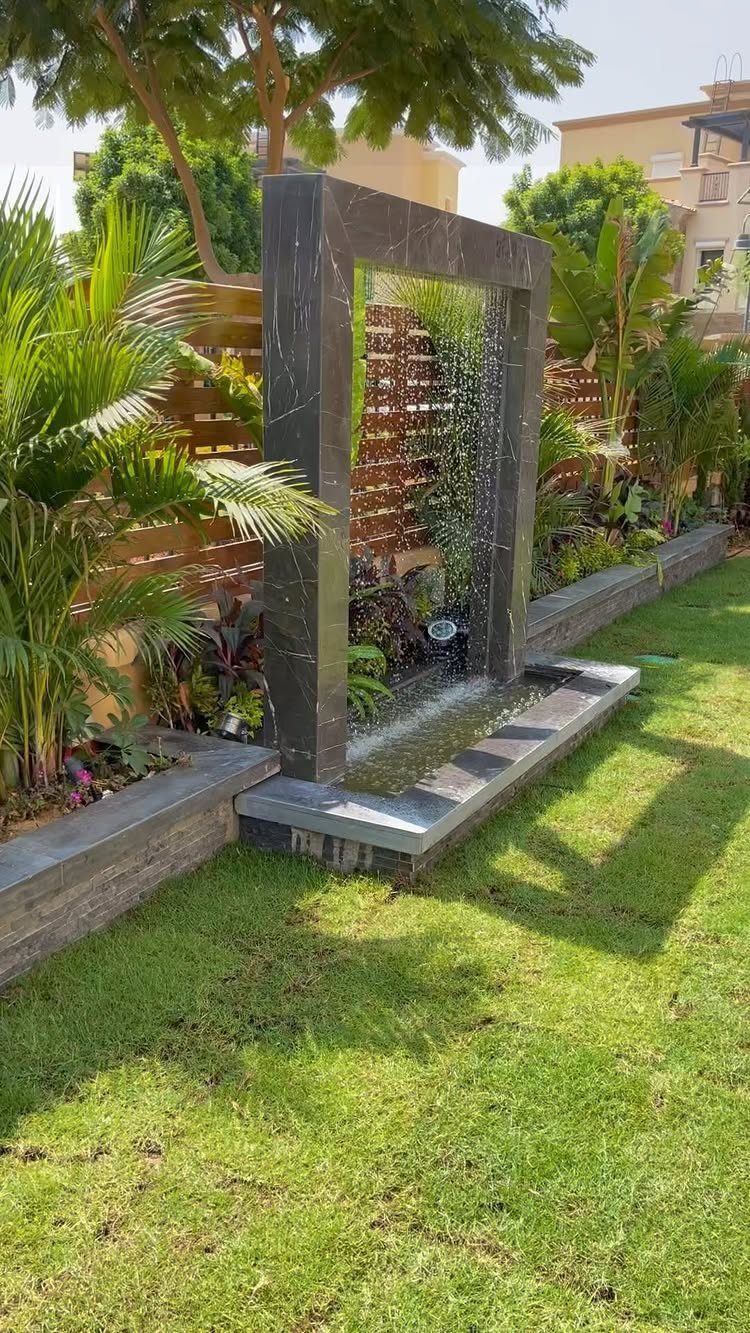
Water in a garden works on sound and stillness both, the splash of a fountain or the flat mirror of a basin.
A modern stone arch spilling into a shallow pool needs no fish, no plants, no pump complexity beyond the basic recirculation.
I would place it where you hear it from a seating area or bedroom window, not hidden where only the lawn benefits.
Solar pumps have improved enough for small features; mains power gives stronger flow and evening reliability. Standing water breeds mosquitoes in warm months, so keep the surface moving or add mosquito dunks.
In small yards, a fountain replaces a pond entirely; the sound carries without the safety concern or the leaf-skimming maintenance. Basins need leveling and a stable base; a half-inch off reads as a mistake, not a design choice.
16. Meadow Gardens
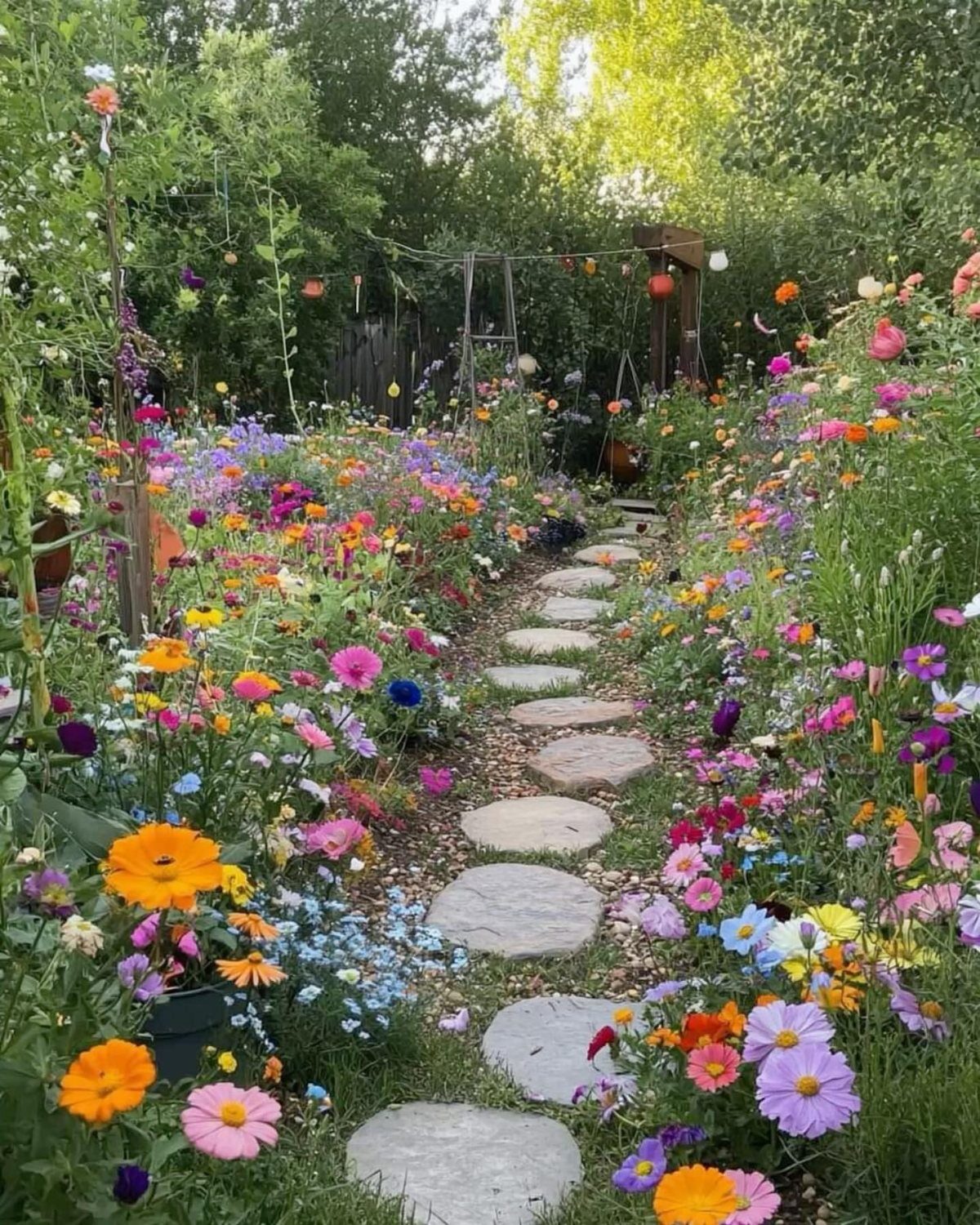
Grasses as backbone, not filler, is the shift in thinking a meadow garden demands. Bouteloua, little bluestem, or switchgrass anchor the design in broad drifts, with wildflowers as accents rather than the main event.
I would cluster single species in masses large enough to read from the driveway, not mix every plant into a blur.
Clean edges, gravel or mown strip, frame the looseness and keep it intentional rather weedy. Native grasses need less water than turf once established and stand through winter for structure.
Start with a corner you are tired of mowing; seed in fall or plant plugs in spring, and expect 2 seasons before the look fills in.
This trades the weekend mowing schedule for one annual cut, timed after seed drop in late winter.
17. Designing with Foliage
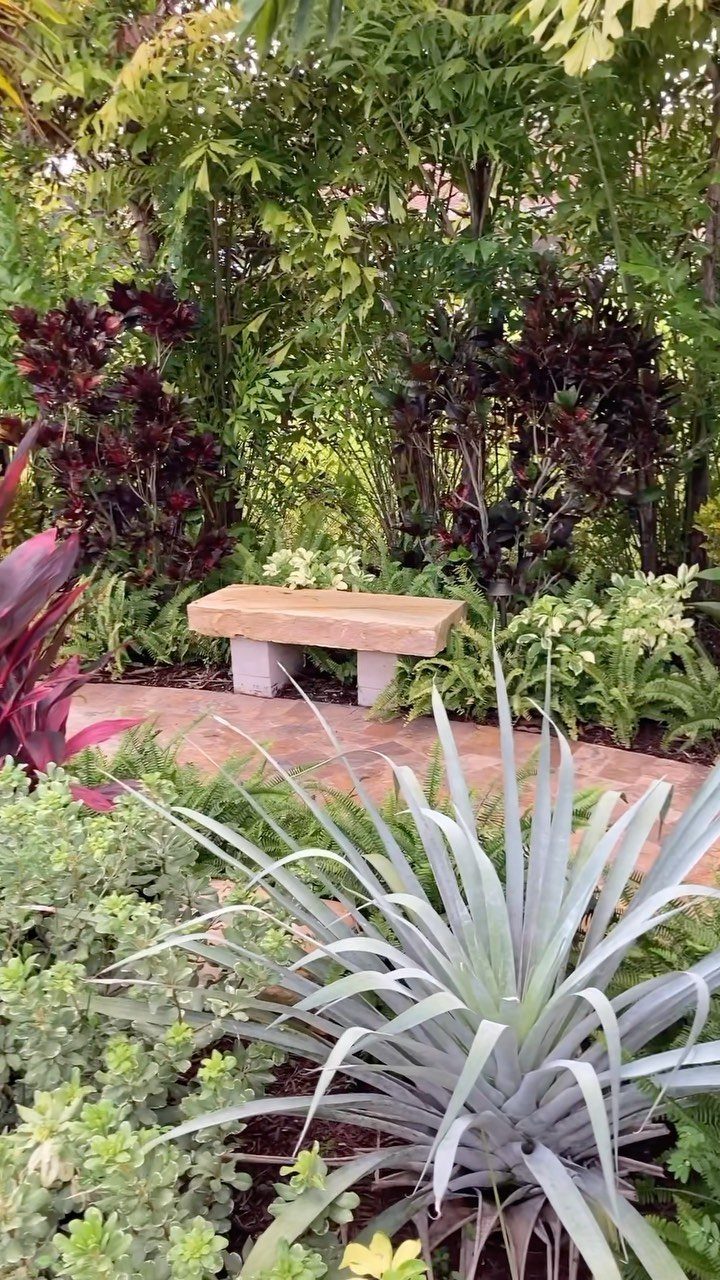
Flowers last weeks; leaves carry a bed through months.
Silver yucca, burgundy ti plant, and green ferns layered together give color without a single bloom. I would place the largest, most architectural leaves first, yucca or cannas, then fill around them with finer textures that contrast rather than match.
Dark foliage recedes and makes space feel larger; silver and variegated types catch light in shade where flowers would struggle.
Evergreen structure matters in winter, when deciduous leaves drop and the garden goes quiet. This approach suits the gardener who travels in July or simply forgets to deadhead; the bed looks tended even when the roses are bare.
Check mature sizes before planting; a yucca that reads as sculpture small becomes a problem once it towers over everything else.
18. Garden Lighting Ideas
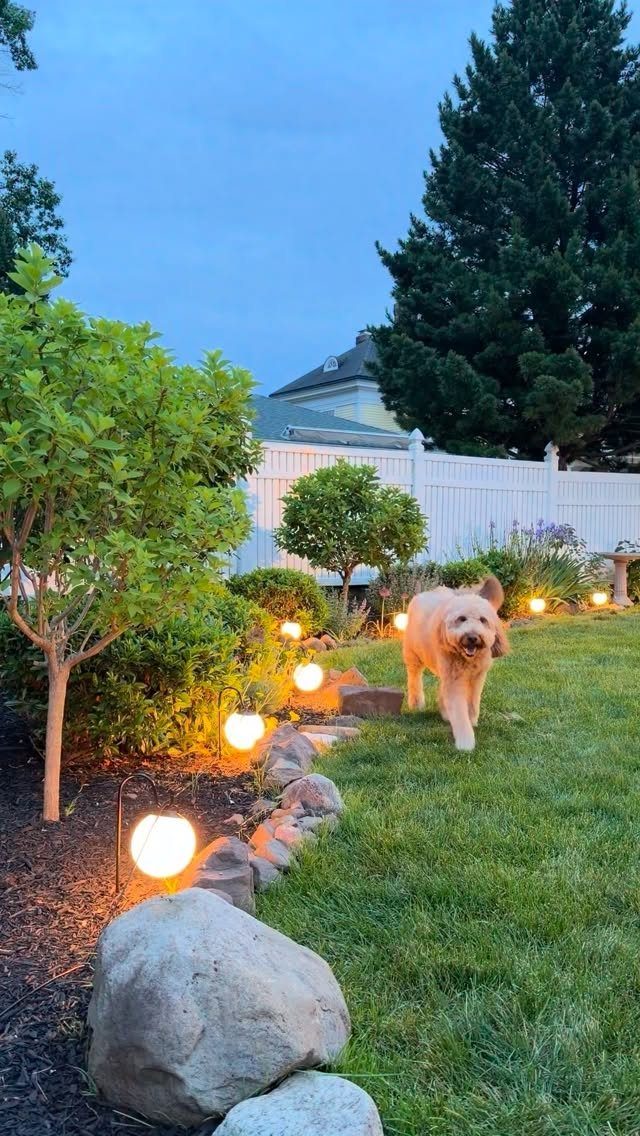
Orb lights on shepherd hooks along a stone border turn a lawn into usable space after sunset without wiring or an electrician.
Solar spots have improved enough to highlight a single tree or shrub; stick them in the ground and move them until the angle reads right.
I would choose warm yellow over bright white, less glare for human eyes and less disruption to moths and night-flying pollinators.
String lights overhead define a seating area; low path lights keep you from tripping on steps. The cheap options are solar and fairy lights; mains-powered fixtures give reliable brightness where you need it for cooking or reading.
Plan the circuit before you buy; daisy-chaining more than the transformer handles gives dim, disappointing results. Start with one zone, the patio or the path you use most, and add only when you know what the darkness actually hides.
19. Peaceful Garden with Comfortable Seating
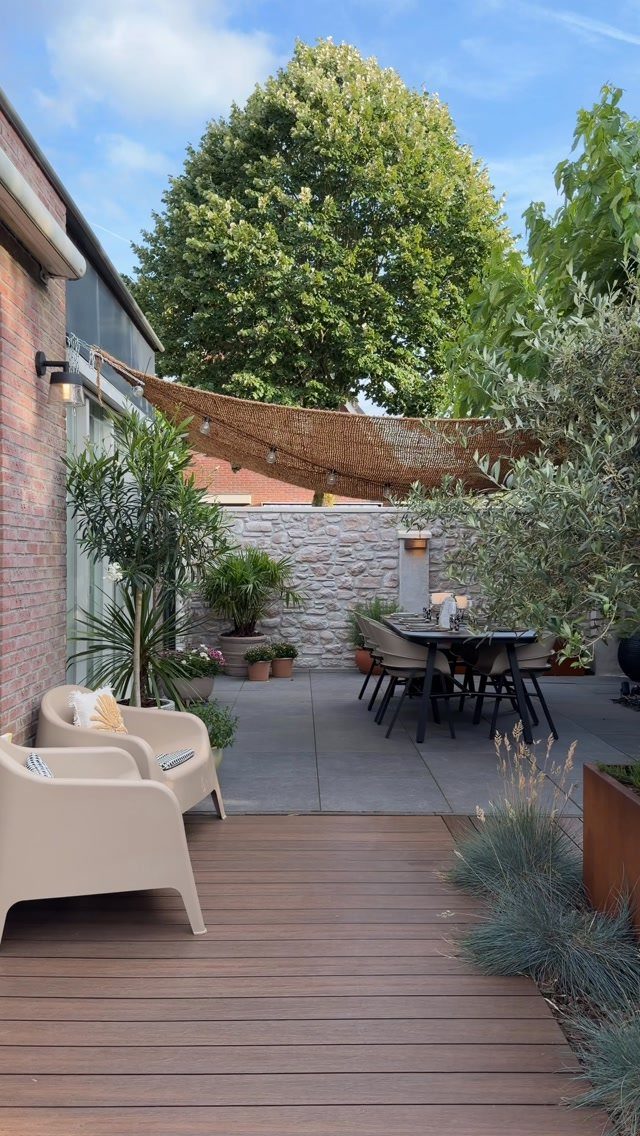
A woven shade sail over a deck turns harsh afternoon sun into filtered light you can sit under without squinting.
I would pair it with low-slung seating, arms wide enough for a coffee cup, and keep the palette to warm neutrals that do not fight the garden.
Stone pavers underfoot stay cooler than concrete and drain after rain. A small fountain or bubbler nearby gives white noise that masks traffic; solar pumps work here since pressure matters less than movement.
Place the seating where you face the garden, not the house, so the view rests your eyes. Storage benches save space in small yards; build them in or buy weatherproof boxes that double as side tables.
Start with the shade structure, then add seating once you know where the light falls at the hour you actually sit outside.
20. Designing with Structure
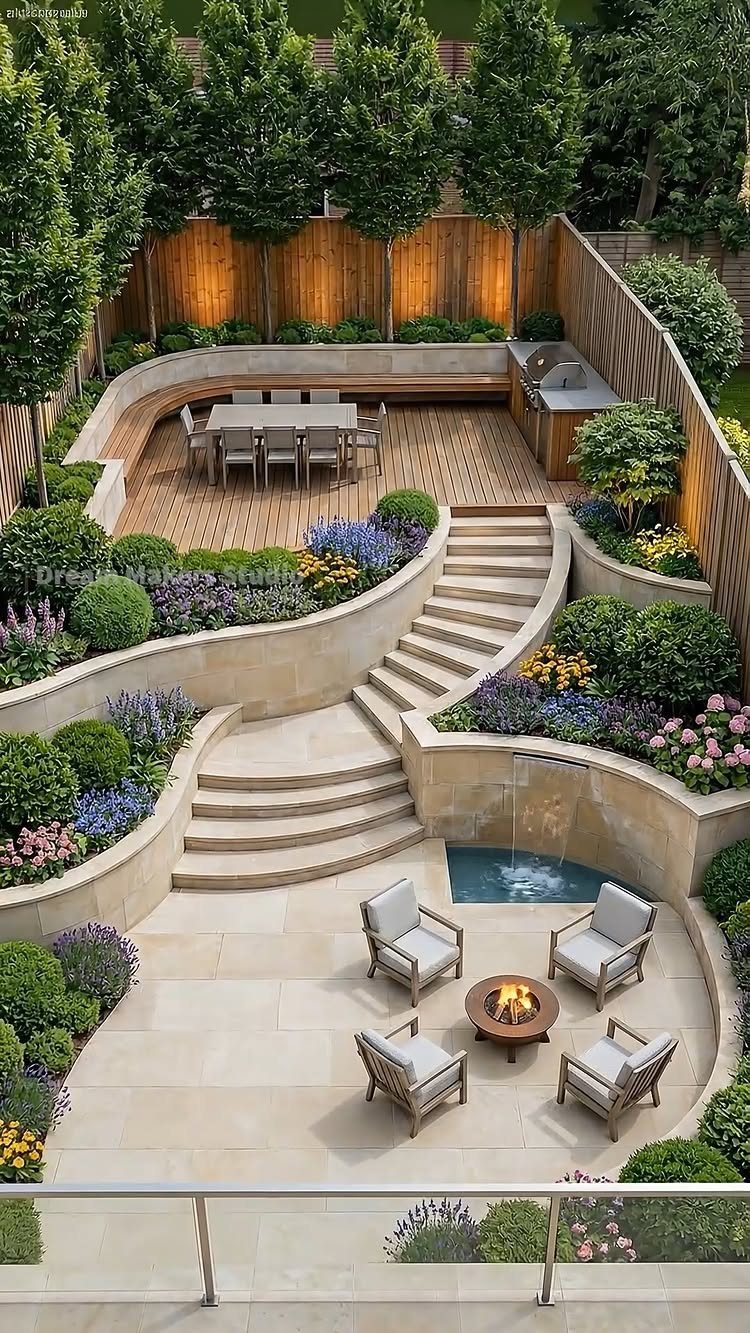
Curved stone walls turn a slope into rooms: each level gets its own purpose, and the walls guide you down without a railing.
I would set the dining deck highest, closest to the kitchen, and drop to a fire pit lower where smoke rises away from guests.
Retaining walls need drainage behind them, gravel and a pipe, or frost heave pushes them out of true within a season.
The materials cost runs high; a single-level garden with one stone wall and a gravel path gives some of the same definition for less.
Trellises and arbors work as lightweight structure where stone is too much, marking entries or screening the compost bin. Check local codes for wall height before you build; many towns want engineering for anything tall enough to matter.
21. Creating a Sensory Garden
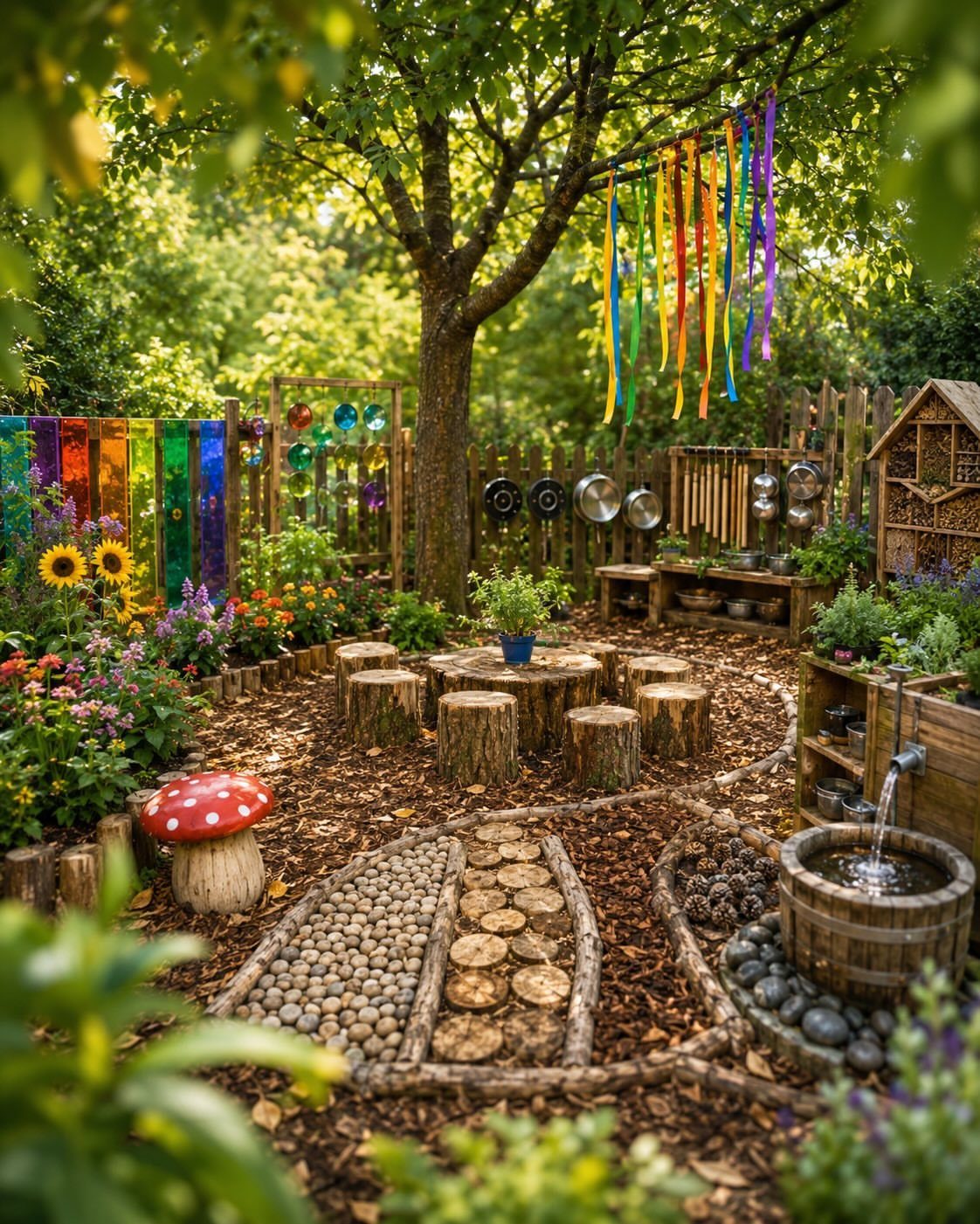
A sensory garden works because it gives the hands something to do, not just the eyes. Smooth river stones, rounded enough to press without cutting, set in sand rather than mortar so they shift slightly under weight.
Wind chimes or tuned pans on a fence give sound that changes with weather, not the constant drone of a fountain.
Fragrant plants belong where you brush them: lavender along the path edge, mint in a pot you touch to release scent. Color comes last, after texture and sound, because bright blooms fatigue faster than rough bark or cool water.
This suits children and anyone whose sight is failing; the garden rewards attention in other channels. Keep water moving or change it weekly; still pools grow algae fast in warm months.
22. Green Roof on Sheds
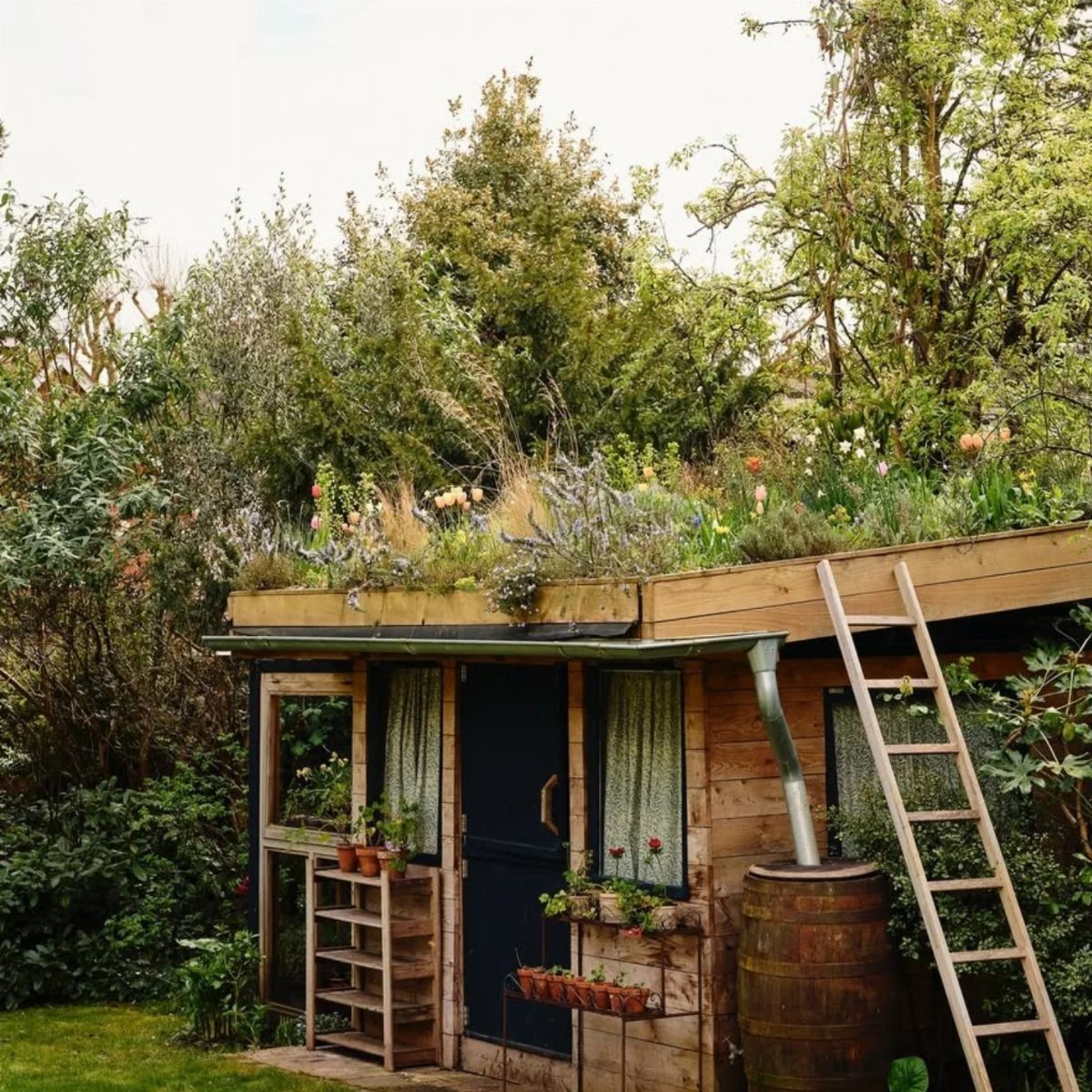
A shed roof is dead space until you load it with shallow soil and sedum. The structure needs checking first: most sheds are not framed to carry wet soil, so add cross-bracing or keep the growing medium shallow.
I would use a liner over the roof, then a drainage mat, then lightweight mix, the same build as container soil but leaner.
Succulents and low grasses handle the heat and drought up there; no need for irrigation if you choose right.
The green roof on sheds hides an ugly view from upstairs windows and adds insulation that keeps the interior cooler in July.
Start with a flat roof; even a slight pitch complicates keeping the soil in place. A ladder leaned permanently against one side turns maintenance into something quick rather than a project.
23. Lush Tropical Garden
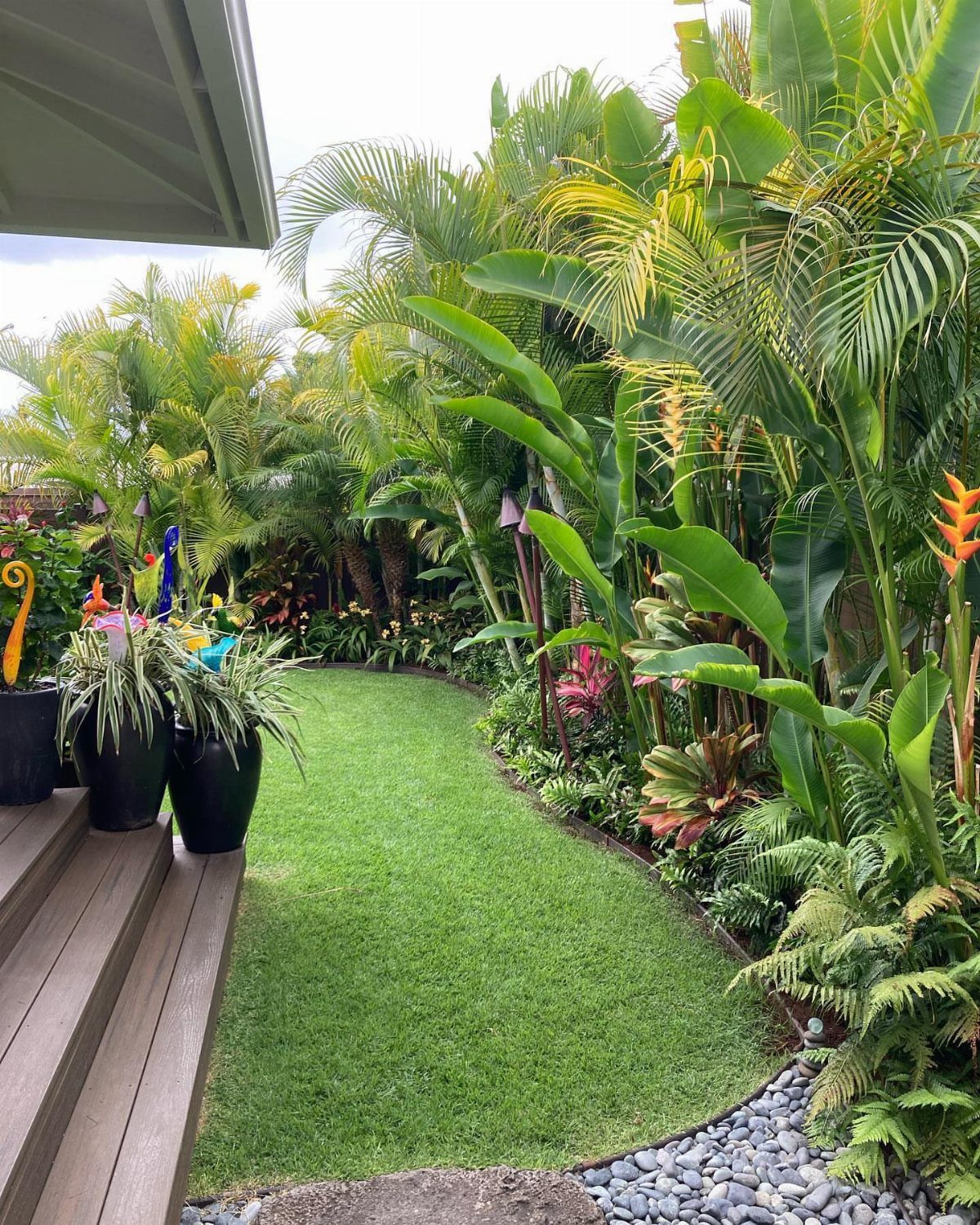
Dense tropical planting reads as lush because nothing shows bare ground; palms, ferns, and bird of paradise layered together fill every vertical layer.
I would place the tallest species, palms or giant bird of paradise, toward the back or center, then work down through ferns to ground-cover that suppresses weeds.
River stones as edging keep lawn grass from invading the bed without a visible barrier.
Many tropical plants want more water than they look like they do; in dry climates, switch to drought-tolerant palms, pineapple guava, and red hot pokers that give the same visual weight with less irrigation.
This style demands space; in a small yard, one large-leafed plant in a pot against a wall gives the suggestion without the jungle. Shade tolerance helps, since many of these evolved under canopy and burn in full desert sun.
24. Decorative Pebble Mosaic Bed
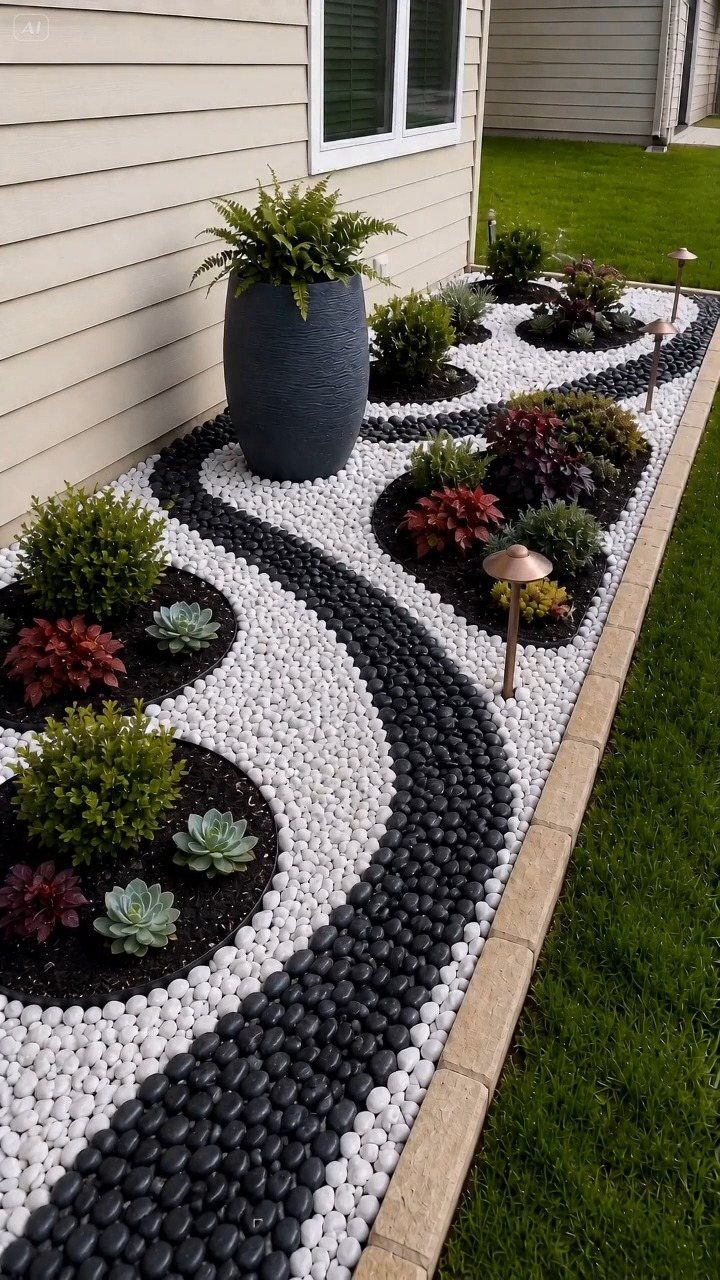
The pattern needs planning: lay it out dry before you set anything in mortar, or the curves fight each other. I would keep the plants low and sculptural, succulents or clipped shrubs, so the stone work stays dominant.
A house wall suits this style; freestanding, it would read as a leftover scrap. Edging matters, steel or concrete, or the lawn swallows the pattern in 2 seasons.
Cost stays moderate if you source pebbles in bulk and lay them yourself; hiring the pattern out multiplies the price fast. Check that drainage runs away from the house wall; a bed this dense against the foundation traps moisture.
25. Spring Tulip Display Under Trees
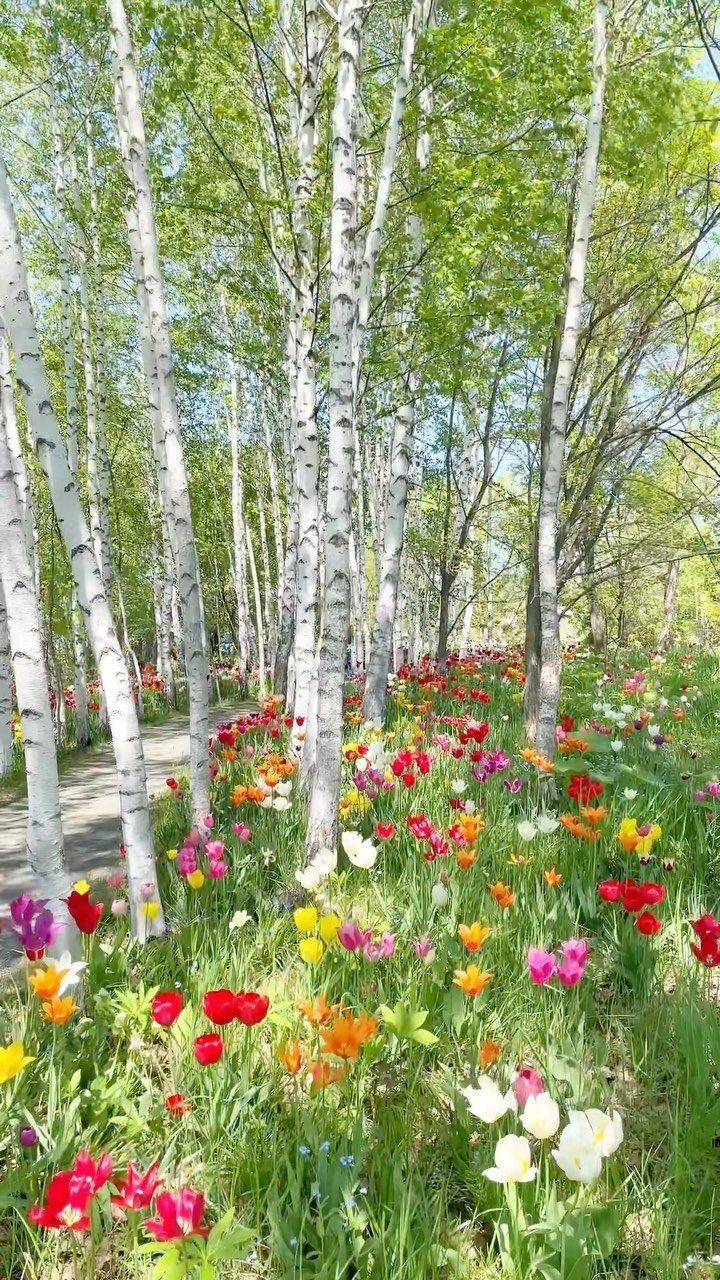
Tulips under birch trees give you a short stretch of color that costs little and asks almost nothing after planting.
I would buy bulbs in fall, 50 or 100 at a time from a bulk supplier, and plant them at spade depth rather than fussing with a bulb planter if the ground is soft.
The birch canopy leafs out late, so the tulips finish before shade deepens.
Mixed colors read as meadow; single colors read as design. I prefer mixed for this setting, the randomness suits the birch bark.
Let the foliage yellow and collapse on its own; tying or cutting early steals next spring’s bloom. Add a small tree with later interest, serviceberry or crab apple, and the corner works from March to October.
26. Pergola with Hanging Baskets
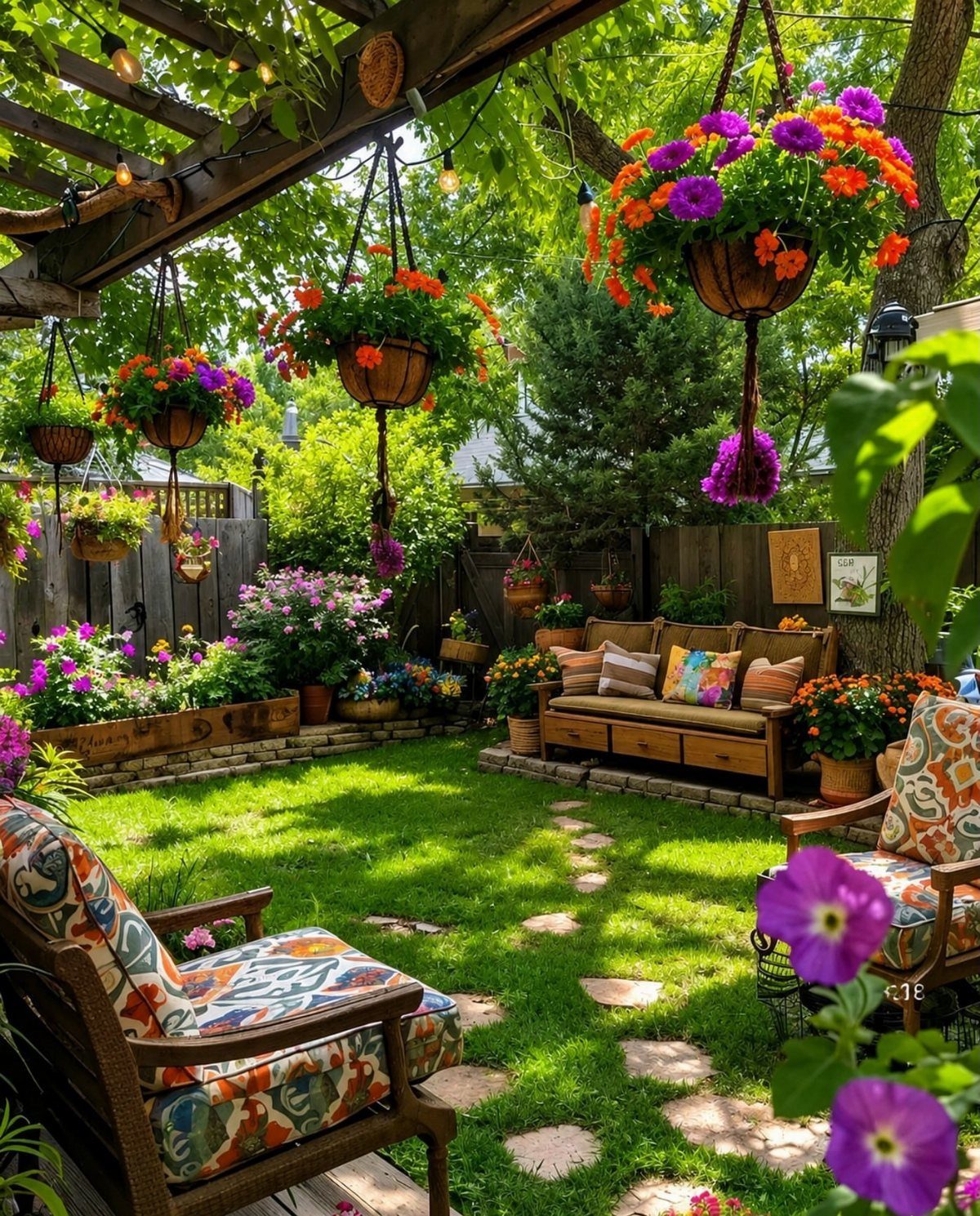
A pergola frames space without enclosing it, and hanging baskets bring the planting up to eye level where you notice it. I would choose self-watering baskets, the kind with a reservoir, because summer heat dries standard baskets out by afternoon.
Begonias, calibrachoa, and bacopa handle sun; lobelia and ferns want the shade side. String lights overhead turn the structure into a room after dark, solar if the panel catches enough sun, mains-powered for reliability.
The wood needs sealing on a regular cycle or it grays to shaggy, which some like and others do not. Check the posts are set below frost line; a pergola that leans reads as failed construction, not rustic charm.
27. Raised Beds for Flowers
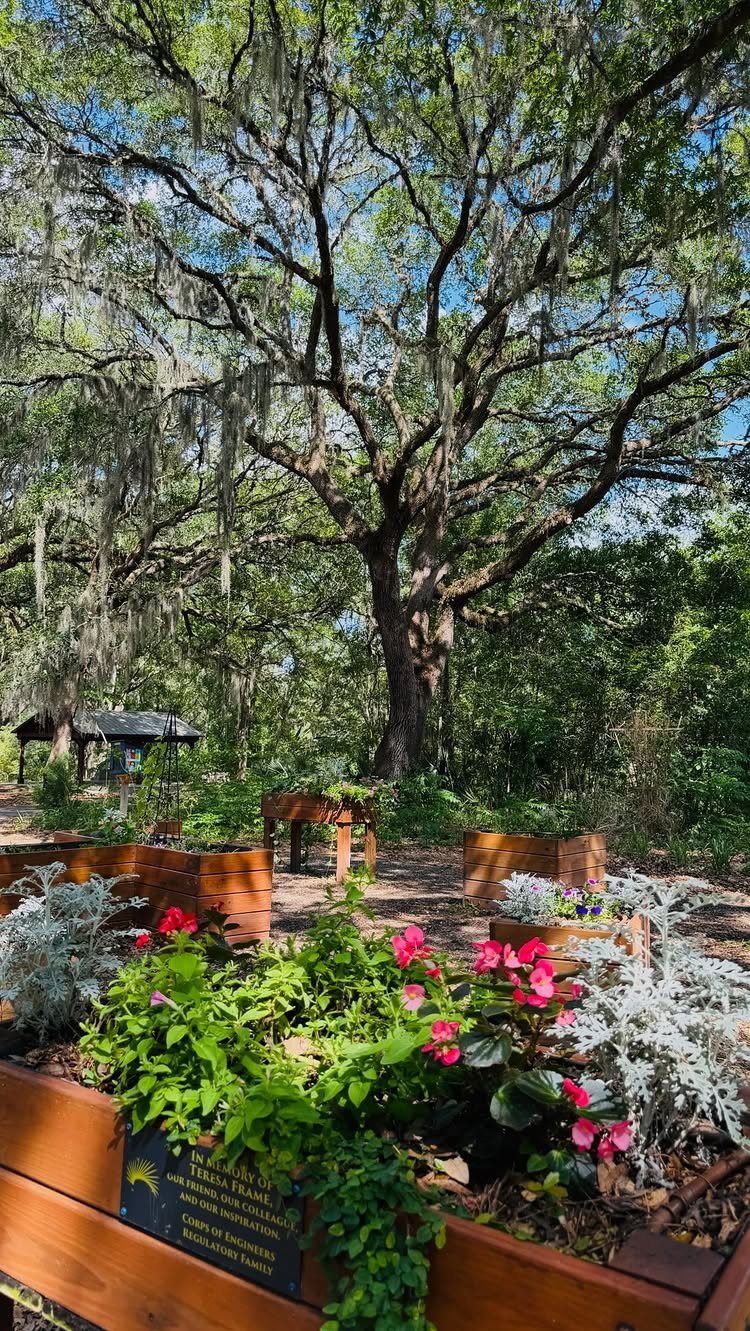
Raised beds lift the planting clear of tree-root competition and give you soil you control rather than what the oak dropped.
I would line the inside with hardware cloth if rabbits or voles are common where you garden; they climb less readily than they dig.
Dusty miller and pink annuals suit the shade and the memorial mood, soft color without loud demand.
Spanish moss tells you the air stays humid, so water when the soil finger-tests dry, not on a schedule. The plaque placement is personal; set it where seated visitors face it, not where it competes with the planting.
Common Garden Design Mistakes
Overcrowding starts at the nursery bench, not in the bed. I have bought plants for the size they were, not the size they would become, and ended up cutting out half a hedge once they hit their stride.
Check mature width before you dig; a plant tag that reads 6 feet means 6 feet, not a suggestion.
Straight paths from door to fence read as utility, not invitation.
A curve that hides what comes next pulls you forward the way a straight line never does. The cost is a few extra pavers and some patience while you walk the route to find where the turn feels natural.
Borders pressed against fences keep you outside looking in.
Bringing planting into the lawn, a bed that juts into the grass or a island you circle, puts you inside the garden instead. The maintenance is higher; the experience is different enough to justify it.
Garden designs for small gardens should aim for a ratio of around 50 per cent planting and furniture to 50 per cent paving or decking. This will help create a patio that is easy on the eye without being overcrowded.
Tips for Designing Outdoor Spaces
A garden you only see by day is half used. I would plan lighting from the start, not add it after the beds are planted and the cable runs would root-prune established shrubs.
Warm yellow solar spots along a stone border need no electrician; mains power gives evening reliability where you dine or read outside.
Water works on sound as much as sight.
A fountain you hear from a window or seat draws you out even when you had not planned to go. Place it for the ear, not the eye alone.
Color theory in planting is not decoration; it is spatial.
Dark foliage at the back recedes and deepens the view; pale paving at your feet lifts the ceiling. I would test combinations at the nursery, holding pots together before committing to a bed.
Advice for Choosing Plants
USDA Hardiness Zones are the floor, not the guide.
A plant rated to zone 6 may survive in zone 5 with protection; it will not thrive. I would match zone to the plant’s preference, not push the margin for a species I want badly.
Soil type matters more than the tag admits. A hydrangea that struggles in clay will run wild in loam; lavender that rots in the Pacific Northwest grows woody and dense in the Southwest.
Test before you buy, or watch the drainage after rain and match what survives there already.
Maintenance level is a honest accounting, not a virtue.
A meadow garden trades weekly mowing for one annual cut; a cottage garden wants deadheading through July. Choose the labor you will actually do, not the labor you imagine yourself doing.
Incorporating Hardscaping
A square yard reads as box unless you break the geometry. Circular paving, a curved border, or a screen set diagonal to the fence interrupts the expectation and gives the eye somewhere to travel.
Climbers on walls do the same work more cheaply, softening boundaries until the garden seems larger than its fence lines.
Paths define use, not just access. A gravel walk wide enough for 2 abreast invites conversation; a stone stepper single file says utility.
Walls and patios cost more than planting and last longer. The mistake is planting first and building after, when heavy machinery tears up established beds and you still do not know where shade will fall.
I would rough in the hardscape, live with the lines one season, then plant to what the space actually does.
Frequently Asked Questions
How do I design my garden layout?
I would start with where you actually walk and sit, not with a shape on paper. A path that curves or meanders draws you through the space better than a straight line from door to fence.
Bring planting into the center of the garden rather than pushing it all to the edges, so you move through color and scent instead of past it.
End the path somewhere you want to stay, a bench or a fire pit, so the garden has a reason to be entered.
What is the 3-5-7 rule in landscaping?
This rule means three types of plants, five of each type, and seven different varieties total. It keeps the planting simple enough to read as intentional rather than chaotic, but varied enough to hold interest through the seasons.
The 3-5-7 rule works because our eyes read clumps, not individuals: three of one plant, five of another, seven of a third, each mass big enough to catch attention from the porch or the window.
What are the golden rules for designing a garden?
Movement, immersion, and destination are the three that matter most to me. A straight path gets you there fast; a bend that hides what comes next makes you slow down and look.
Planting brought into the garden rather than restricted to edge beds surrounds you with atmosphere, color, and scent as you move. A bench or a chair at the far end gives the walk a purpose beyond exercise.
What is trending in garden design?
Native plantings, edible gardens, and whimsical, layered spaces are what I keep seeing. Gravel gardens with local wildflowers and grasses cut maintenance to almost nothing while feeding pollinators.