
These 17 garage man cave ideas run from a free cable reel scrounged from a utility yard to a tricked-out golf simulator, and the one that fits you depends on whether your garage still parks a car or has already been surrendered to the project.
The golf simulator is the ceiling most people will not touch; the pallet wood floor that costs a weekend per bay is where most will actually start.
[link-whisper-related-posts]1. Custom Signs

A painted wooden sign with clean lettering carries more personality than anything mass-produced. Chiseling your own letters into a solid board, painting them afterward or leaving the wood oiled, gives the wall a story no print shop can match.
The simpler method is to draw your letters first, then carve around them so the text stands proud. The harder way, and the one that looks more like traditional sign work, is to cut the letters themselves into the surface.
Either takes patience and a set of chisels you probably do not own yet, so budget for tools or borrow before you commit.
Neon is the other path, and it lights the room at the same time. Small signs fit tight walls; a short phrase or a logo you already own works better than a full sentence.

Light Up Your Wall with Style:This bold LED neon light sign brings instant energy to any space. It's the perfect neon sign for wall decor in your garage, man cave, or office. The clean industrial design works great for mechanic shops, gaming rooms, or bar areas.

【Bright Garage Neon Sign】Features 3 smart buttons to adjust brightness (10%-100%), adapting to task lighting or ambient moods. Memory function retains settings after power cycles.

Garage Sign Versatile for Multiple Settings:This 16x13-inch Dad’s Garage neon sign is perfect for auto repair shops, man caves, and workshops, effortlessly creating a unique ambiance.
2. Beer Tap
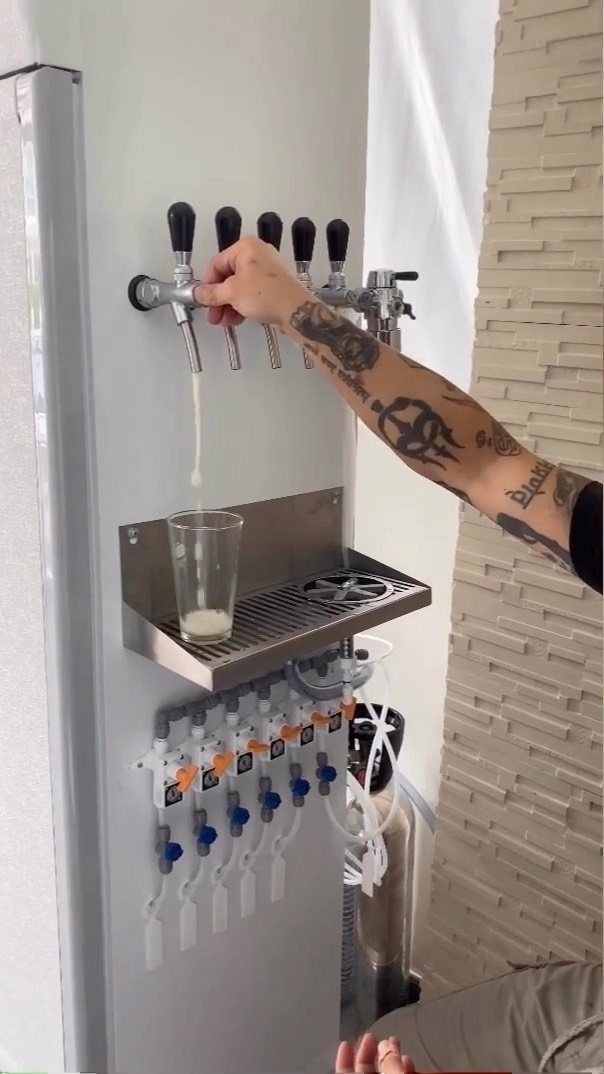
A kegerator with a through-door tap turns a corner of the garage into somewhere people gather without crowding the kitchen.
CO2 lines, manifold, and drip tray all stay exposed in a working setup; hiding them costs more and makes leaks harder to spot.
You can buy a converted refrigerator ready to tap, or build one from a used fridge and a conversion kit. The second route costs less but needs a hole saw for the shank and patience for the gas lines.
Either way, a single tap handles one keg; plan for how many you actually pour in a month before you size the system.
This idea eats floor space and needs a dedicated circuit if the garage gets hot in summer. Skip it if you rarely have company over, or if your budget is already tight from the simulator or the pool table.

All SS 304 Construction: MRbrew beer faucet is in a completely solid stainless steel construction, less susceptible to wear and tear, will not impart unwanted flavors, body, lever, shaft are all made of stainless, stronger against air corrosion, elegant and beautiful surface brilliantly keeps beer faucet always as new. awesome high-grade replacement for old brewing hardware. basic no frills beer tap holds up great for kegerator or jockey box setup in high traffic restaurant or personal homebrew.

1. DUAL GAUGE REGULATOR: This unit weighs about 3 pounds and includes 2 rubber protective covers. It always tell you working pressure and tank pressure with pinpoint accuracy. A convenient knob style pressure dial that can be adjusted without tools. Shutoff valve with built in spring loaded check valve to prevent beer from flowing backward into the gas lines.

CGA-320 Keg Regulator: The Gancowise CO2 regulator is compatible with any CO2 tank equipped with a CGA-320 valve. The dual pressure gauges clearly display pressure, making it easy to manually control the pressure of the entire brewing system. Each dial is equipped with a black rubber protector to prevent damage.
3. The Golf Cave
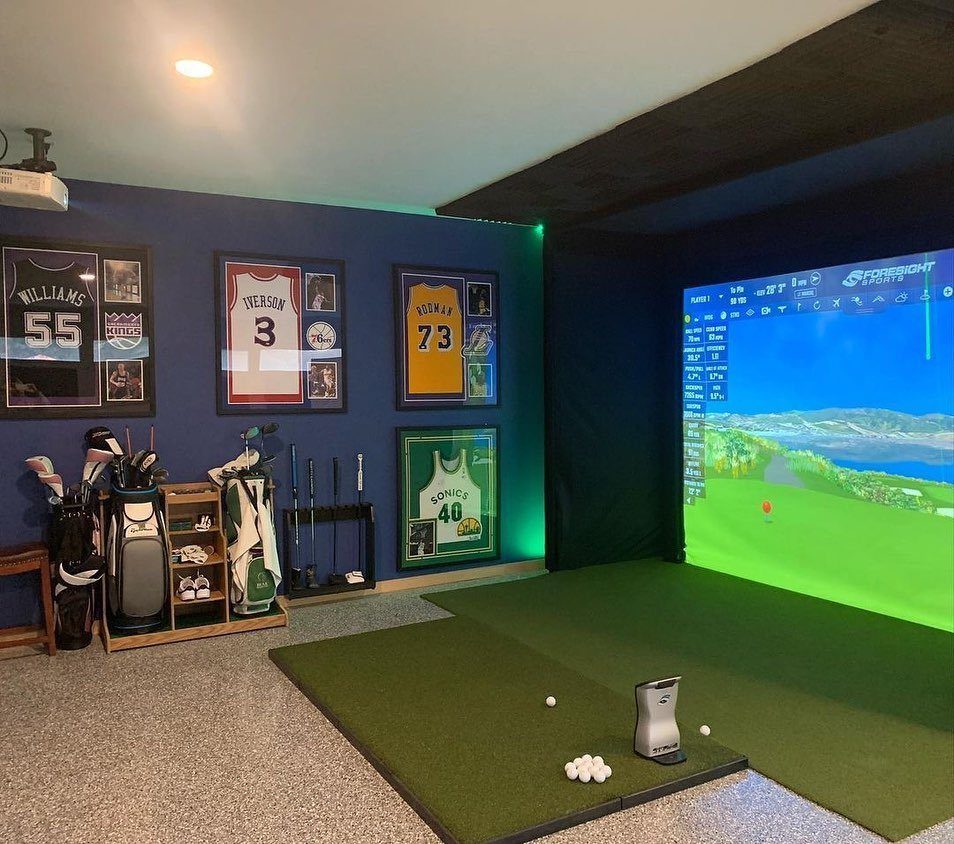
A garage golf simulator needs enough ceiling height for a full backswing, plus depth for the ball to carry and width to stand comfortably. Most two-car garages clear this, but measure before you order anything.
The launch monitor and software run $1,500 to $8,000; the projector, impact screen, and hitting mat add more. A full build lands between $5,000 and $15,000 depending on how current you want the tech.
The putting green strip down the side is the budget stretch that pays off. Real turf under your feet makes the space feel like practice, not just gaming.
The projector doubles as a movie screen when you are not swinging, which matters if this is your only garage and the car still needs to park there sometimes.

This commercial-grade two product CO2 regulator features a multi-stage body that gives you more precise control when making small adjustments to the output pressure

Hold Constant Pressure & Lock PSI Settings: Hilangsan dual stage kegerator co2 regulator reduces the high pressure in two steps for maintaining the constant output pressure, which achieves a stable output pressure. Adjustment knob of the kegerator regulator has a locking nut that locks the PSI to prevent accidental "bumped/turned" from adjusting your PSI. A professional CO2 regulator for draft beer dispenser systems.
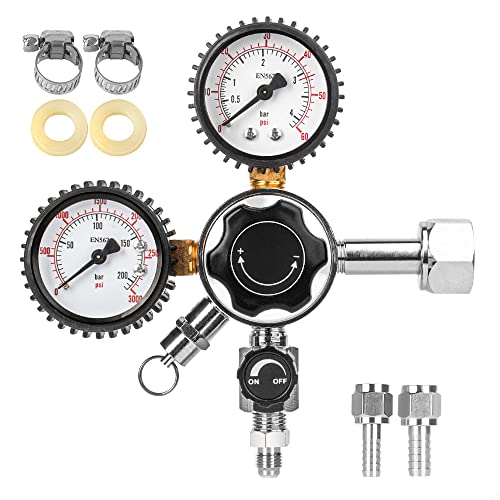
No Leaks: The Gancowise CO2 regulator can work with any CO2 tank that has a CGA-320 valve, and it perfectly avoids leakage and backflow of beer. Each unit is supplied with 2 thick nylon O-ring washers to ensure a tight seal, and the beer line clamps prevent any gas leakage.
4. Dart Board
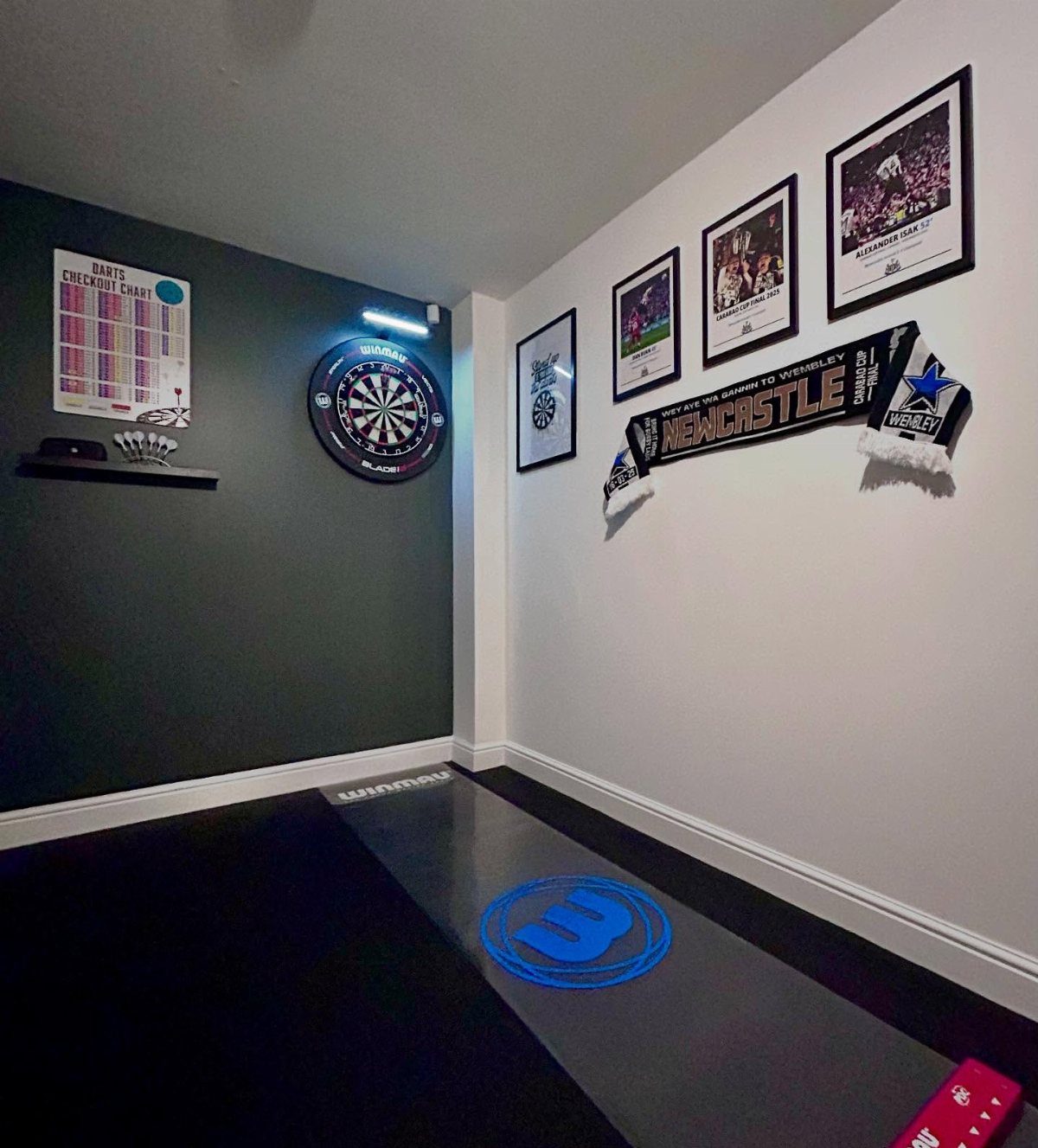
A proper dart setup needs more than a board hung on drywall.
The throw mat marks distance; the shelf holds spare flights and shafts; the checkout chart saves arguments. The Newcastle memorabilia around it shows how the wall becomes a display, not just a target.
A bristle board and cabinet run cheap, or you can build your own from cork and matchstick darts if you want the project itself.
The homemade version: cut cork to shape, paint the colors and numbers with a compass and ruler, then bind four matches with a pin at one end and paper fins at the other.
It works for a weekend, not for league play.
Mounting hardware matters more than the board. A bracket that lets the board rotate wears the face evenly, costs little, and keeps the board alive longer.

COMPLETE GOLF SIMULATOR ENCLOSURE — TRAIN WITH CONFIDENCE – Designed for serious golfers who want a professional-grade practice space at home and beginners looking to practice their swing. This all-in-one golf simulator cage delivers durability, safety, and a clean visual setup—without the complexity or cost of high-end custom builds.

COMPLETE GOLF SIMULATOR ENCLOSURE — TRAIN WITH CONFIDENCE – Designed for serious golfers who want a professional-grade practice space at home and beginners looking to practice their swing. This all-in-one golf simulator cage delivers durability, safety, and a clean visual setup—without the complexity or cost of high-end custom builds.

Large 10 x 13 ft (3 x 4 m) panel for simulator bays Oversized matte black panel sized at approximately 10 x 13 ft (3 x 4 m), giving generous coverage behind your impact screen or along side walls and ceiling in most home golf simulator enclosures.
5. Pool Table
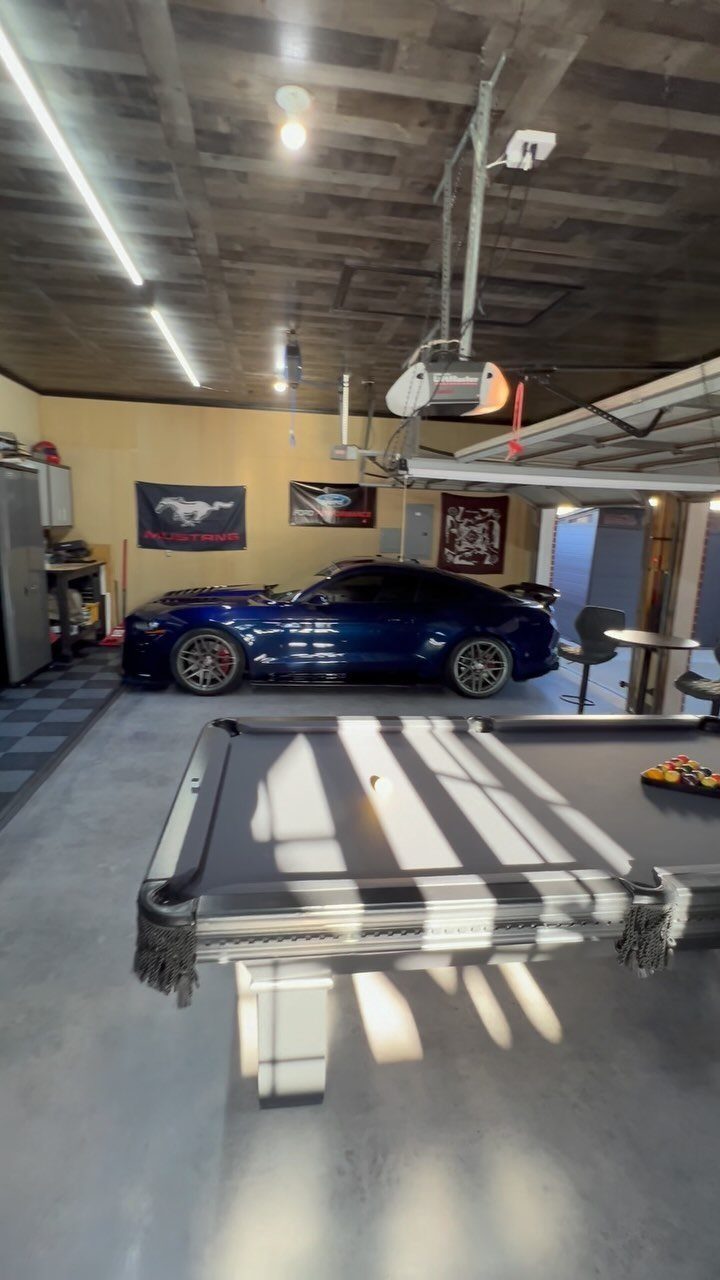
A pool table in the garage means committing the floor space permanently. In a working garage, the table wins or the car parks outside; plan for which one you will actually choose.
Slate beds play true but need professional installation; the weight alone rules out moving it yourself.
MDF beds move and cost less, and for a space that also stores bikes and lawn equipment, the lighter table is the smarter compromise. Felt color is personal, but gray or olive hides chalk dust better than green or blue.
Light is the detail most people miss. A single overhead fixture leaves shadows across the rails; 2 shorter fixtures running the length of the table cost little and make the games playable after dark.
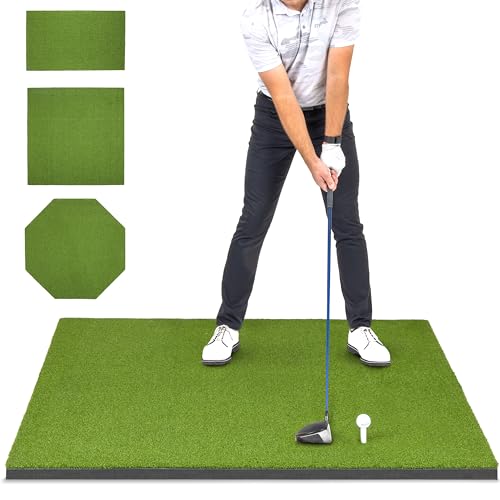
ELITE TURF PERFORMANCE: This premium golf hitting mat features commercial-grade synthetic turf that closely replicates the feel of real fairway grass; Engineered for durability and consistent ball feedback.
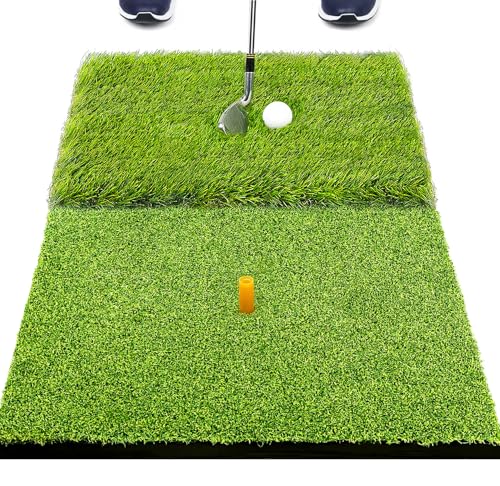
【LARGE SIZE FOR PRACTICE】Each turf is nearly 40% LARGER than a 3-in-1 collapsible mat, providing you a confident space to practice driving, chipping and putting

GS PRO TURF: The commercial grade synthetic turf is designed to feel like real grass turf while providing for maximum longevity
6. Foosball Table
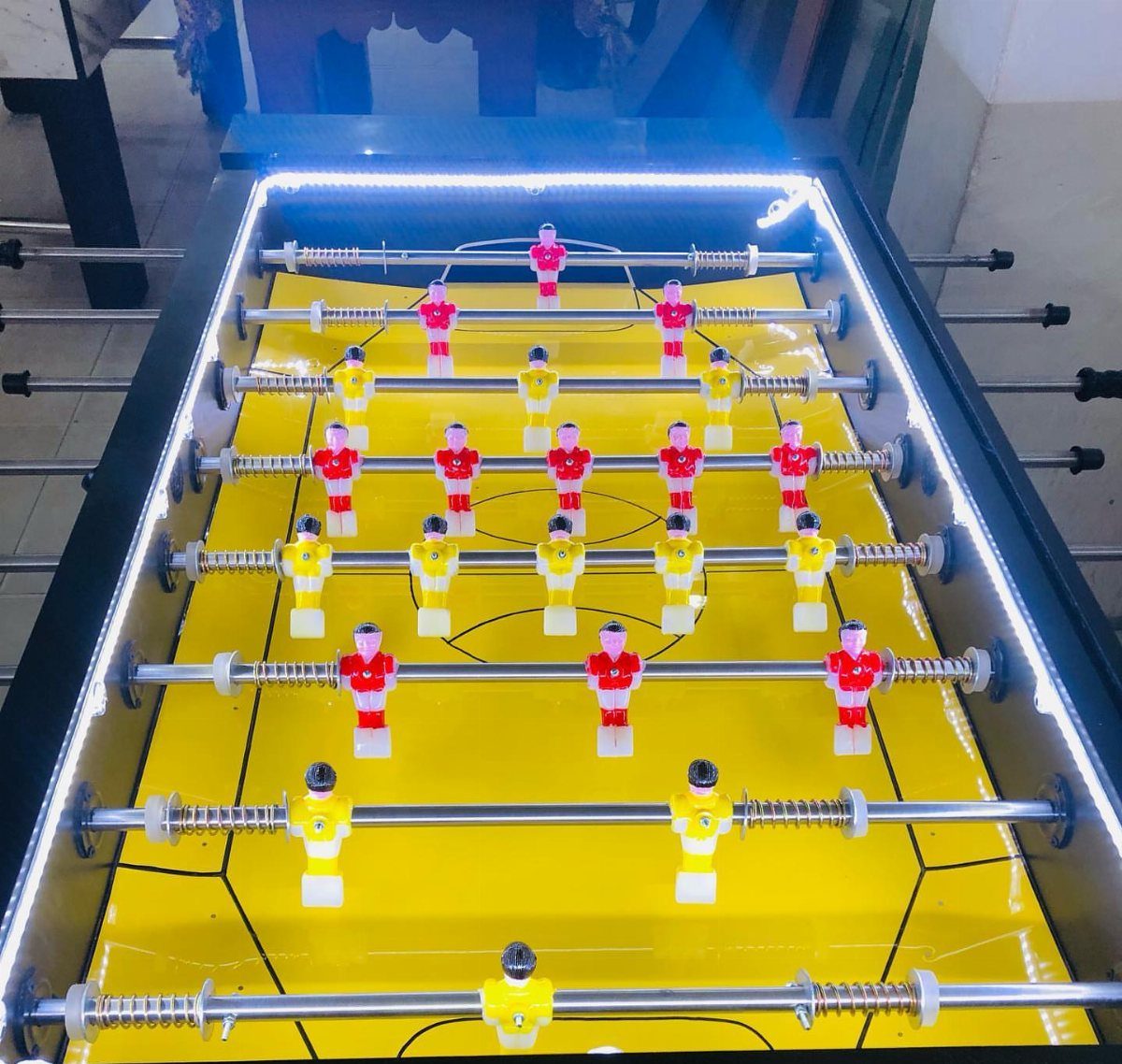
Foosball rewards the player who learns to bank, not just slam. Most tables do not ship with LED strip lighting; adding it yourself is a Saturday project if you want the same look.
Measure your space before you buy.
A regulation table runs long, and you need serious clearance on every side for elbow room and pulled-back rods. The floor space for comfortable play is more than most people guess; measure your bay before you order.
Used tables flood the market from basements that flooded or kids who left for college.
Check the rods for bend, the men for crack, and the bushings for slop before you pay. A warped playing surface never plays flat, no matter how cheap the price.

WELCOME MAN CAVE:Transform your space into the ultimate guys' retreat with this Man Cave Neon Sign featuring bold "WELCOME MAN CAVE" . The cool-tone illumination creates a modern, inviting garage wall decor or home bar ambiance—perfect for signaling that this is officially a man cave zone for relaxation and entertainment.

𝑨𝑻𝑻𝑹𝑨𝑪𝑻𝑰𝑽𝑬 𝑫𝑬𝑪𝑶𝑹𝑨𝑻𝑰𝑶𝑵 : This neon sign features bright LED lights in fun and colourful ways to create a unique look, ideal for wall decorations in bedrooms, bars, hotels, parties, clubs, offices or anywhere you want to create a glamorous atmosphere.

Garage Neon: Garage neon sign design is stylized as the character “Hot Rod Garage”. Repair neon light adds entertainment to the space.
7. Sound System
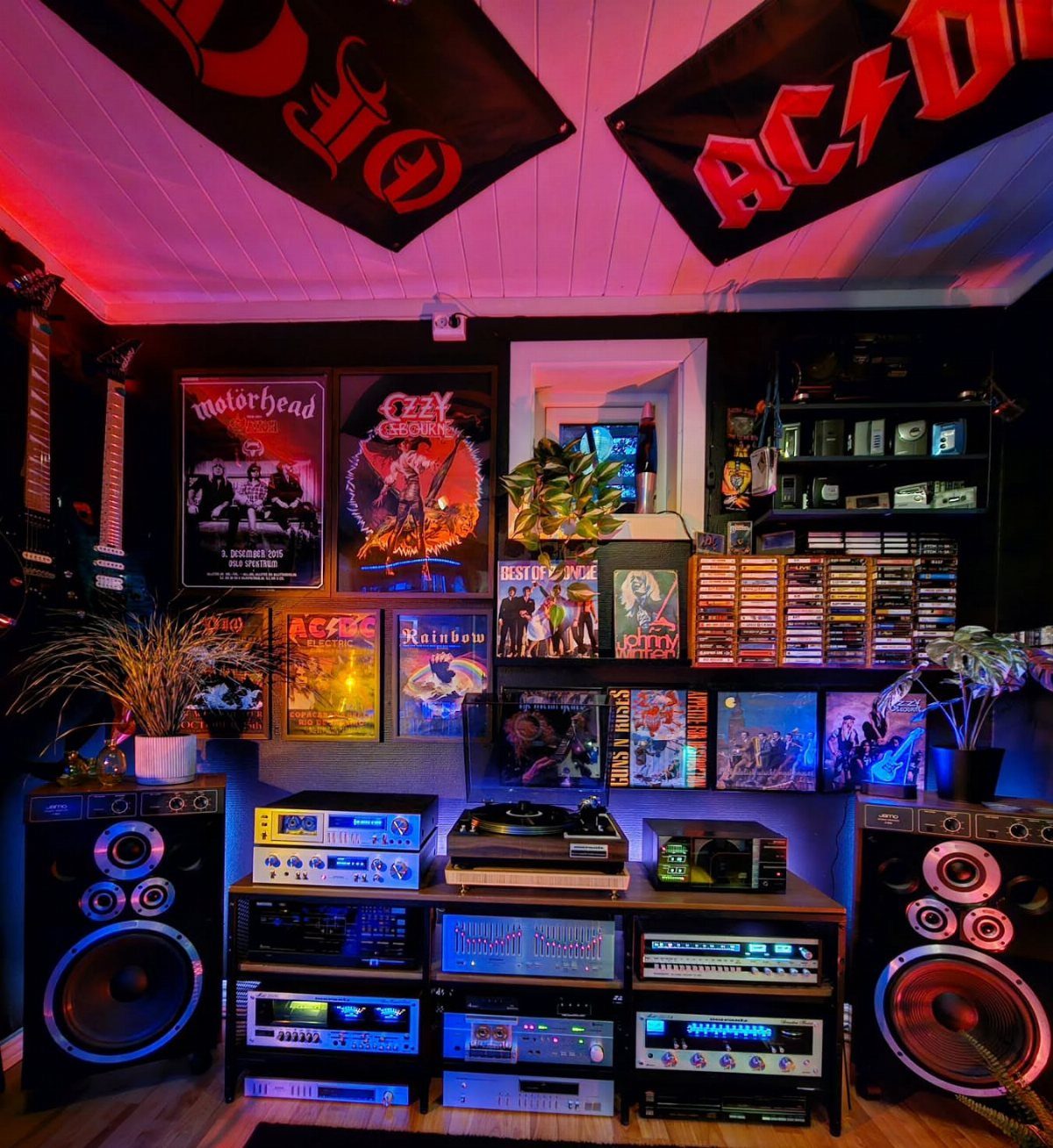
Vintage amps and floor-standing speakers turn a garage into a room you want to sit in. The rock posters and vinyl stacked nearby show this is a listening space, not background noise for chores.
Start with what you already own.
A phone and a decent pair of powered speakers beat a half-built surround system you never finish. Add a turntable only if you have records to play; the gear is cheap, the habit of buying vinyl is not.
Wiring runs along joists and down walls.
Plan the path before you buy cable, and leave extra length at both ends. The garage door opener shares the same circuit on most houses; if the lights dim when it runs, run the amplifier somewhere else.

BUILT FOR YOUR BAR - Measuring 48.8" W x 24.4" D x 35.6" H, this beer kegerator can tuck neatly under a bar counter, or serve as counter-height. The front-venting compressor requires no rear clearance, the self-evaporating water tray means no floor drain is required, and the unit runs on a standard 15-amp plug, meaning no specialist electrical work.
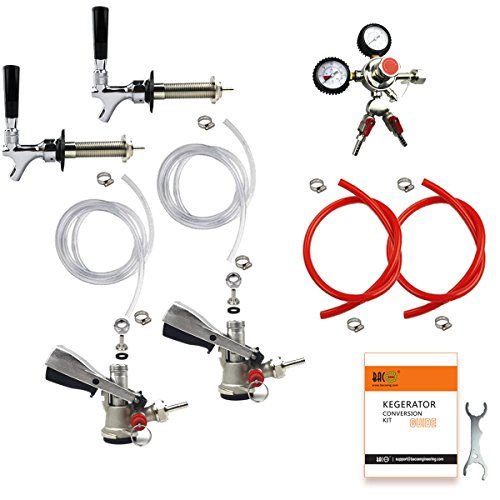
1. DUAL GAUGE REGULATOR: It comes with an appropriate pressure dial that features the style of a knob for regulating pressure. With a weight of 3 pounds, the unit comes with rubber covers for protective purposes. You can use the gauge to know the pressure outside and inside the CO2 tank –you will not have to be worried that your gas might run out. It also has a shutoff valve that features a built-in spring for preventing the backflow of beer. Pressure Relief Valve Releases at 45PSI.

【ENOUGH QUANTITY OF 6+6+3】Package includes 6 pieces of black faucet cap brushs, 6 pieces of rubber tap soother sanitary covers, 3 pieces of long cleaning brush, enough and reusable, no need to purchase replacement frequently, save your wallet!
8. Sports Memorabilia Display
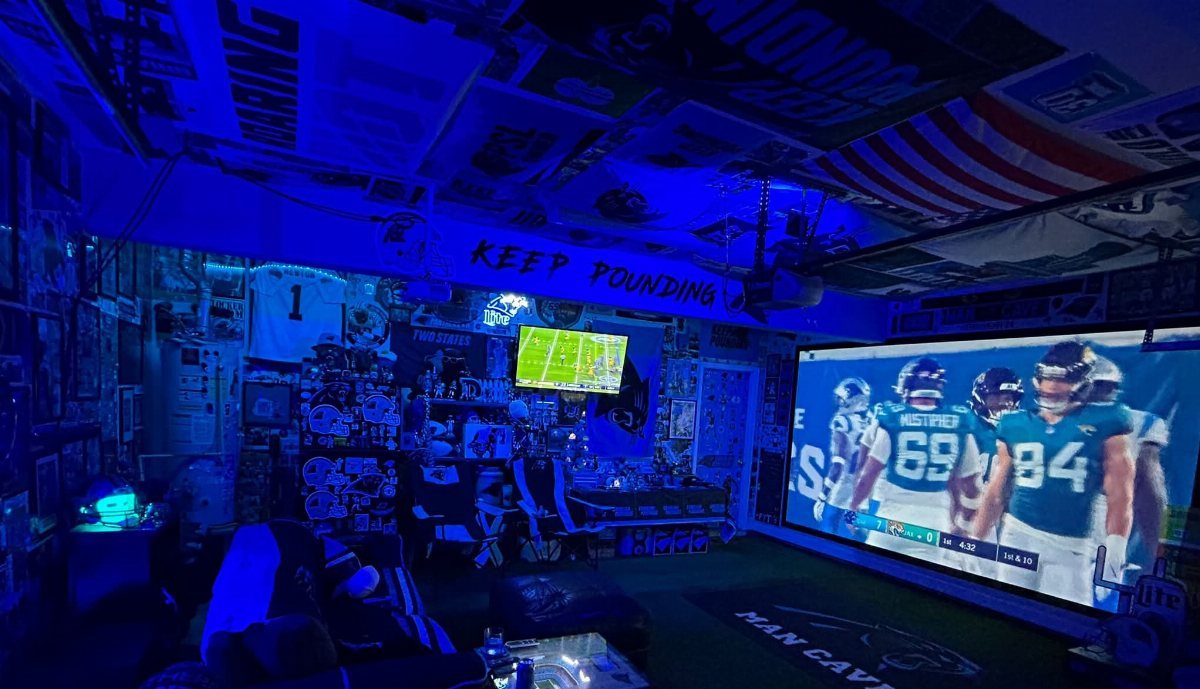
Blue light and a team slogan on the wall turn team color into room color. The projector running football above the jerseys ties the display to what you are actually doing in the space.
Framing a jersey is straightforward; shadow boxes for balls or ticket stubs cost more and need deeper walls.
Shelves for loose items collect dust and get knocked when people move around. I would hang the jersey and frame the flat pieces, leaving the balls in a cabinet with a door.
Paint the wall before you mount anything. Painting one blank rectangle and hanging after beats touching up around every hook.

►【2 SWIVEL NUT BARB FOR QUICK DISCONNECT】This keg regulator outlet end has threaded end fitting with 1/4'' swivel nut, comes with 2 swivel nut barb, which allows CO2 regulator to be used with I.D 1/4" and I.D 5/16" gas line hoses, threaded setting makes disconnection between regulator and gas hoses a great breeze!

【Rich Package】:Beer Keg CO2 Regulator CGA320, 5ft Red Gas Line,5ft Transparent Beer Line ,4* Worm Clamps 3/16" Swivel Nuts, 5/16" Swivel Nuts, Ball Lock Gas Disconnect MFL,Ball Lock liquid Disconnect MFL;

【Overpressure Protection】 Safety relief valve auto-activates at 50-55 PSI (below the 60 PSI gauge limit) to prevent gauge damage and internal spring fatigue from sustained high pressure.
9. Wall-Mounted Bottle Opener
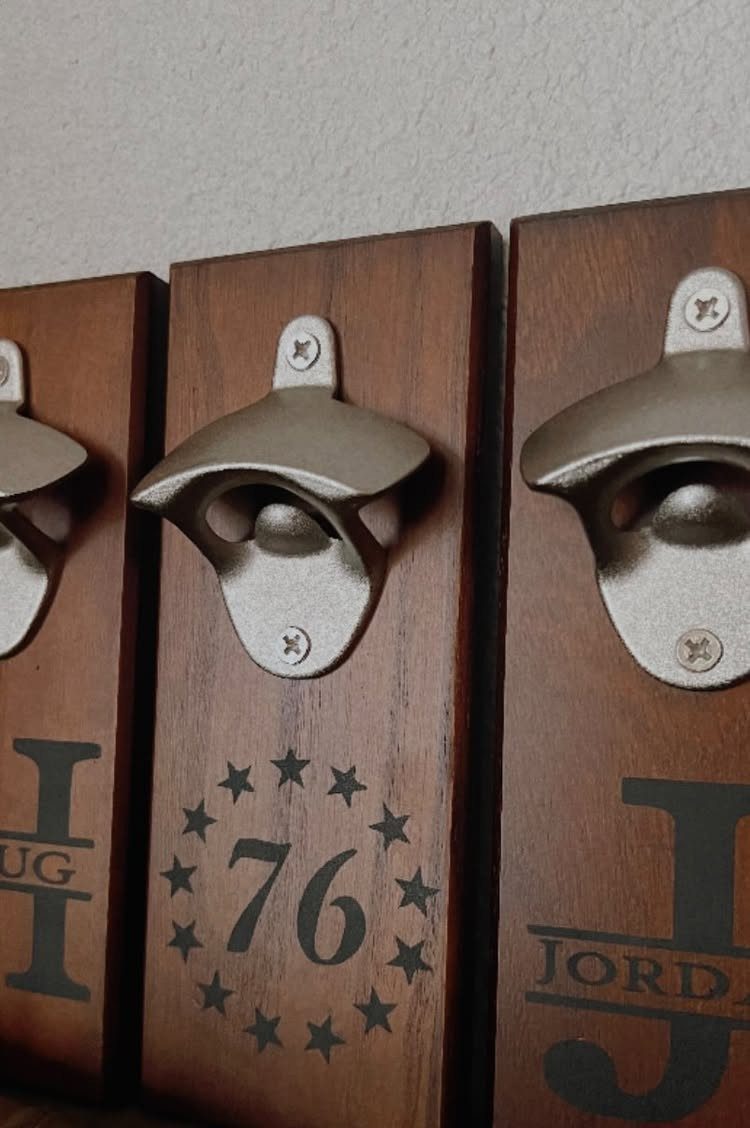
3 wooden plaques with metal openers and custom lettering show the small detail that makes a bar corner feel finished.
The caps fall somewhere; the photo does not show where, so build the catcher yourself or buy an opener that includes one.
A box below with a slot sized to the cap is a Saturday project.
Sand the inside smooth or the caps jam; paint the outside to match the plaque or stain it darker than the wall. A router or a steady hand with a woodburning pen gets you custom lettering on wood openers.
Skip the collector if you do not drink bottled beer often enough to fill it. A wall opener without a box still opens bottles, and the floor is already concrete.

ENCLOSED NET CAGE FOR FULL SWING PRACTICE: Complete golf net cage with side and top netting helps contain high-speed shots, allowing confident driver, iron, and wedge practice without chasing balls or worrying about mishits

Golf Hitting Net with Impact Screen - Master your full swing in our spacious golf hitting cage (10' L x 8' W x 5.5' H), featuring an golf impact screen (Projector not included) for a realistic experience. It fits perfectly in most home settings, such as garages, basements, or backyards. For safe indoor use, we recommend maintaining 1 ft of clearance around the net to prevent balls from rebounding off walls

COMMERCIAL GRADE HEAVY DUTY IMPACT SCREEN: Built to withstand high speed golf ball impacts for lasting durability; Multi layer design reduces rebound and provides a smooth projection surface for all major launch monitors
10. Home Gym
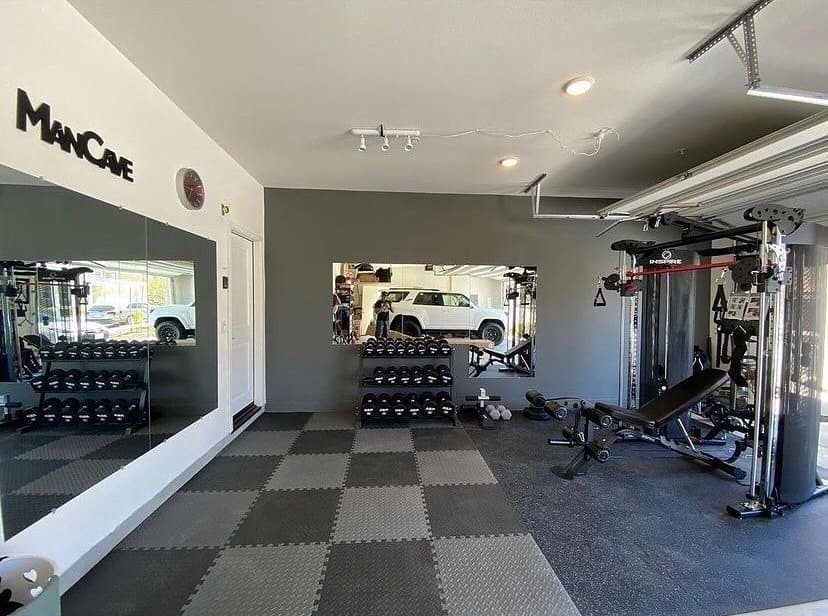
The mirrors and "MAN CAVE" lettering on the wall make it feel intentional, not temporary.
Start with the floor. Mats protect concrete and your joints; 3/4 inch rubber is the minimum worth buying, and interlocking edges let you expand or move the layout.
Free weights and a bench cover most workouts; the cable machine is a luxury that needs height and width most single bays cannot spare.
A TV and sound system turn rest between sets into something you look forward to.
The garage door opener noise and summer heat are the real enemies; a fan mounted to the wall costs less than air conditioning and moves more air than a box fan on the floor.

【2 YEARS AFTER-SALE SERVICE】Our golf hitting mat comes with 2 years after-sale service for any reason. If you need replacement parts, you can reach out to us via your Amazon order detail page (Go to Your Orders>Problem with order>Contact Seller). We hope your consistent practice with this golf practice mat will result in longer drives and better swing technique.

XL 24 x 24in HITTING AREA: Extra Large golf practice mat gives golfers a comfortable stance for full swings with irons, wedges, and drivers; ideal home golf hitting mat for backyard practice, garage training, and indoor golf setups

CONVENIENT BALL TRAY: Built-in tray holds up to 100 golf balls right next to your hitting area. Keeps balls neatly organized and within easy reach, saving your back and keeping your swing rhysthm uninterrupted.
11. Board Game Library

Board games become color blocks when you stand vintage editions upright and treat them as objects. The brass rail and bowl below suggest a bar cart or serving station nearby, which matters more than most people plan for.
Choose games you will actually play.
A shelf of untouched boxes is clutter; titles that hit the table monthly are a collection. Vertical storage needs shelves deep enough for the box height and a rail or lip to stop tipping.
Storage is the decision that makes or breaks this idea.
A closed cabinet hides the color and the titles; open shelves invite dust. I would use a glass-front cabinet if the garage is also workshop, or open shelves with a duster kept nearby.
12. The Car Cave
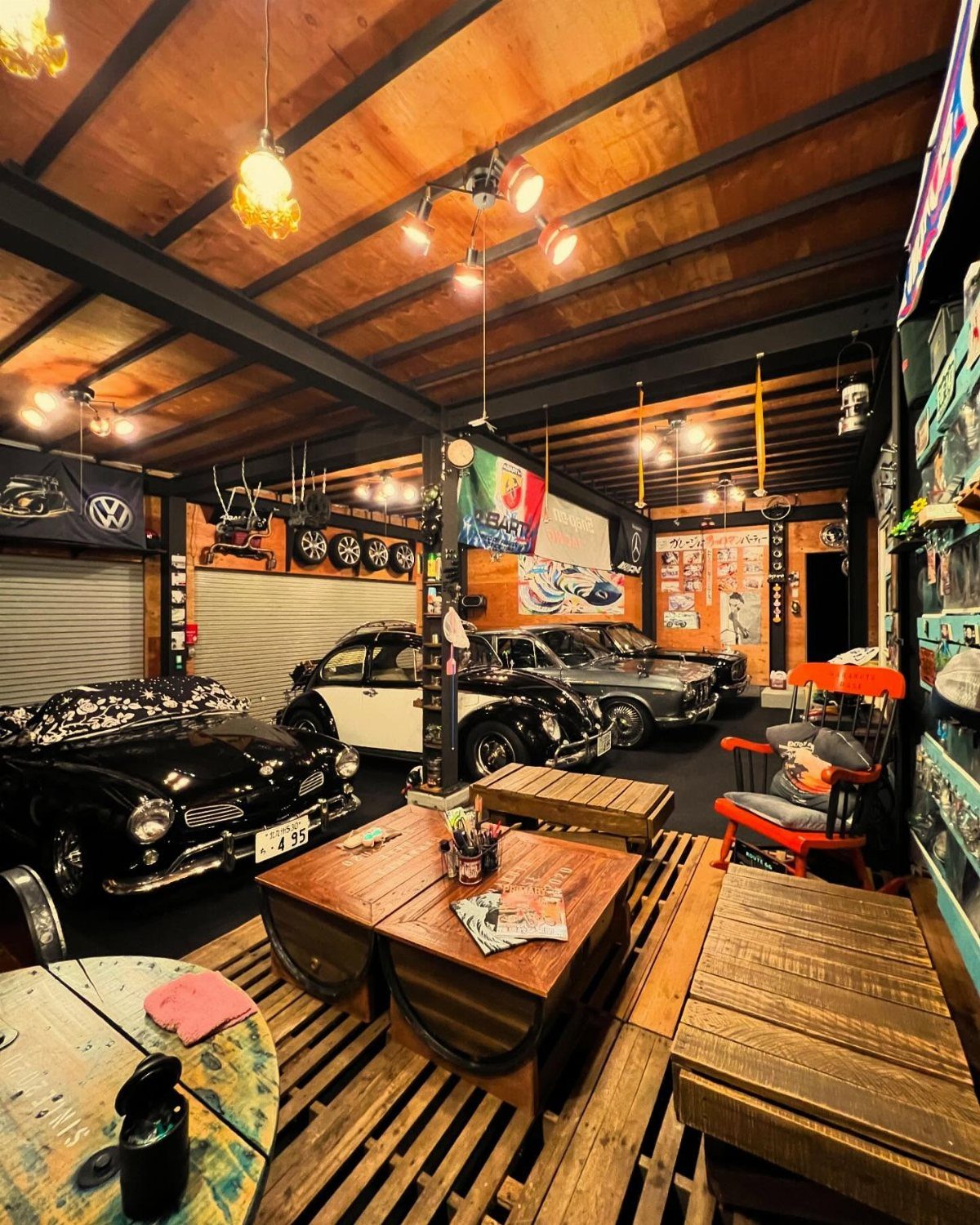
A Karmann Ghia and a Beetle on pallet wood flooring, with coffee tables and hanging lights between them, show a garage that treats cars as furniture. The automotive flags on the wall finish the look without competing for attention.
Pallet wood is cheap and reads as rustic, but it splinters and gaps unless you plane and seal it.
Sanded smooth and stained dark, a finished garage floor budget a weekend per bay. Climate control keeps the cars and the people comfortable; without it, this is a summer-only room in most of the country.
This idea needs space.
Two cars with walking room between them, plus seating, plus a pool table, means a three-car garage or a willingness to park outside. Measure the bay with the cars in it before buying a single couch.
13. Music Lovers Garage

A music room in the garage starts with the wall that holds the guitars. Brick or painted cinder block reads as stage or club; drywall needs the posters and the amps to give it character.
Oversized letters in plywood or metal, lit from behind with LED strips, make the statement; the size matters more than the font.
Records need climate control. Vinyl warps in summer heat and the garage hits that in most states by June, so plan for climate control.
A window unit or a mini-split is not optional if the collection matters; budget for cooling you will not regret. The turntable itself sits on something solid, not the washing machine or the workbench, because footfall travels through concrete.
The Marshall stack is visual weight even when silent. A small tube combo does the actual playing at neighbor-friendly volume; the full stack is for the look and for the one night a year the band comes over.
14. Mini Fridge
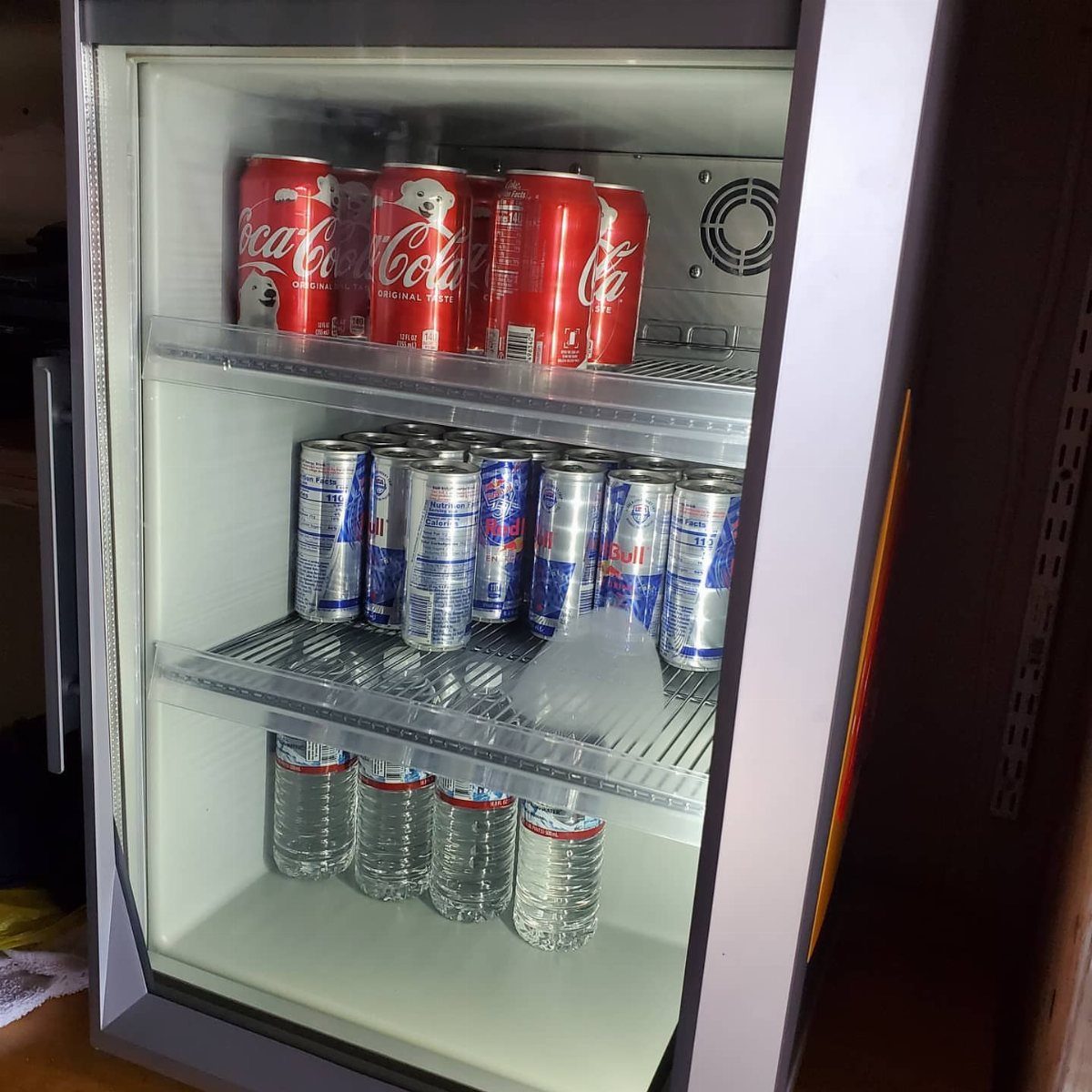
A mini fridge in the garage keeps the kitchen from becoming the social center every time someone wants another drink. Cans on top, bottles below, and a shelf you can reach without crouching.
Check the insulation rating before you buy.
Garage temperatures swing wider than the kitchen, and a cheap unit runs constantly in August. Energy Star models cost more up front; the difference pays back in a year if the garage is uninsulated.
Measure the depth with the door swing, not just the box; a fridge that blocks the workbench or the car door earns curses.
Capacity is the spec people get wrong.
A 1.7 cu. ft. unit holds a twelve-pack and little else; 3.3 cu. ft. fits snacks, mixers, and the backup supply. I would size up unless the space is genuinely tight.
15. DIY Thunder Cloud Ceiling

A thunder cloud ceiling turns the garage into something that does not feel like a garage. The skateboards on the wall below show this is a room someone lives in, not a display piece.
Polyester fiberfill holds shape better than cotton and does not yellow. Build the frames from wire coat hangers or light-gauge garden wire, shape them in graduated sizes, and layer the fill until the light diffuses evenly.
The LED controller needs smart-home compatibility if you want the lightning flicker; basic strips give steady glow only.
The fishing line is the detail that fails.
Monofilament yellows and frays; fluorocarbon lasts longer and costs more. Hang from eye screws in the joists, not the drywall, because a wet batting frame weighs more than it looks.
16. Cable Reel Table
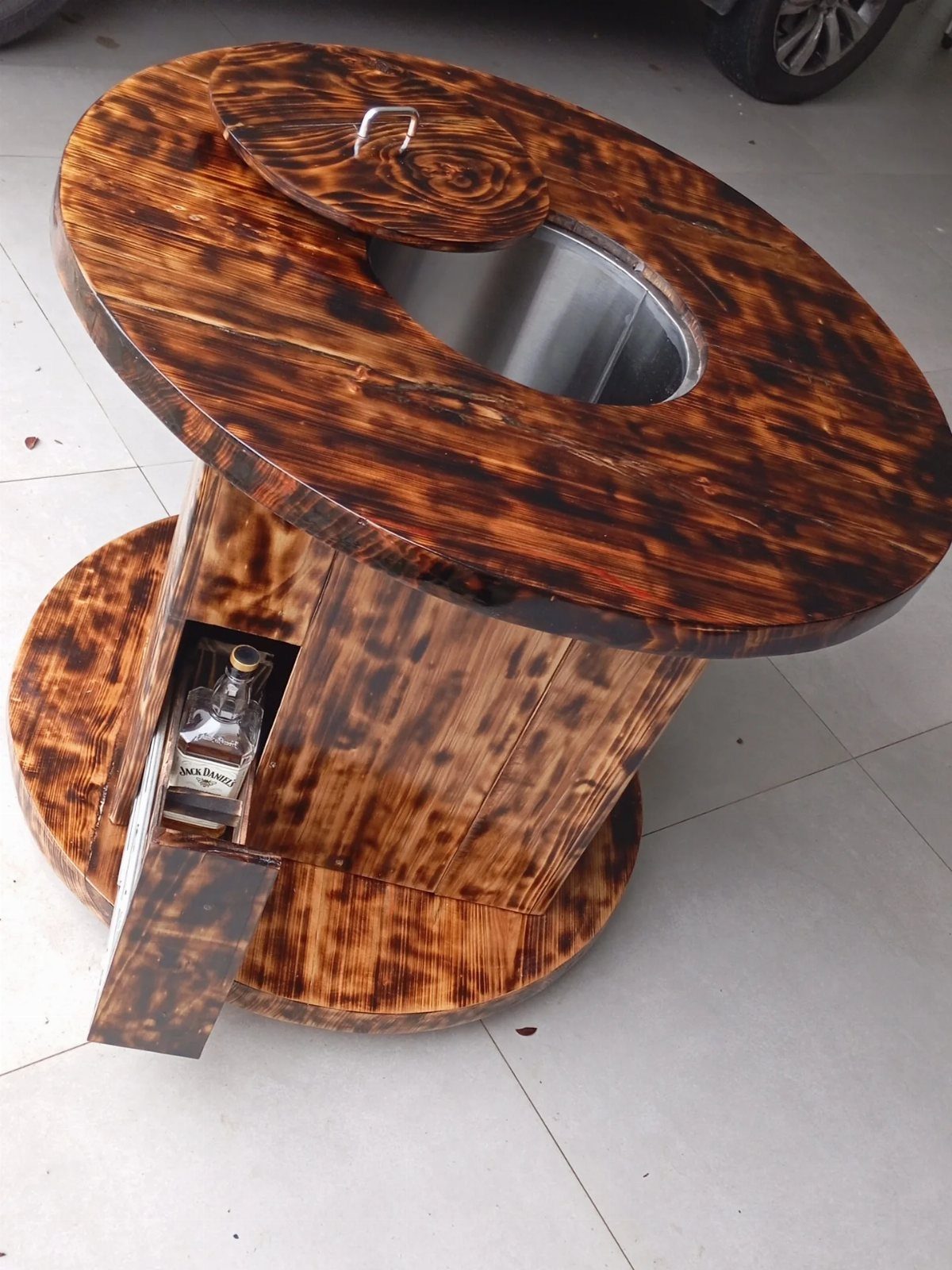
A cable reel table is the project that costs near nothing and still gets comments. A reel sanded dark, fitted with a metal cooler insert and a drawer for the bottle, loses its original industrial markings to stain and use.
Finding the reel is the work. Electrical contractors, utility yards, and industrial auctions are the sources; online marketplaces price them as "rustic furniture" now and charge accordingly.
A reel that held heavy cable will have oil stains and splinters; sanding is not optional, and a belt sander saves hours over hand work.
The cooler insert is a later addition, not part of the reel.
A hole saw and a jigsaw open the center, then a stainless bucket or a purpose-built insert drops in. The drawer below is shop-built or scavenged; a pull-out that holds a single bottle is style, not storage.
17. Workbench and Tools
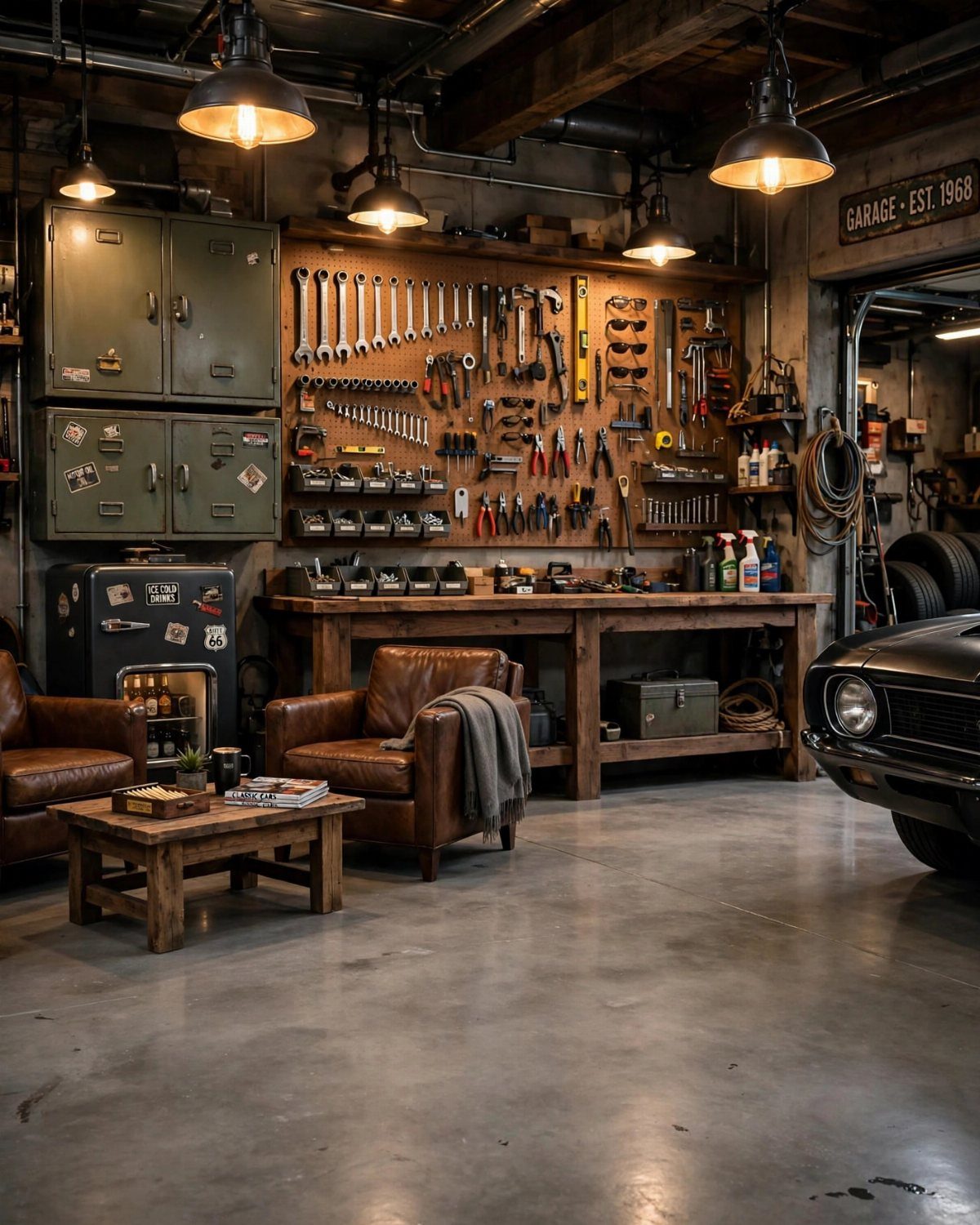
A workbench in the man cave is the honest admission that the garage still works for a living. A pegboard that holds hand tools in outline marks each one by absence if borrowed and not returned.
The "GARAGE • EST. A dated sign places the space in an era, real or chosen.
The bench itself needs 8 feet if you work on anything larger than a sawhorse project; 6 feet is the minimum for a single car bay that still parks the car.
Hardwood tops take abuse and can be resurfaced; MDF or particleboard swells with the first spilled finish and never recovers.
Height matters more than most people plan for; standard is a start, but a bench you stand at for hours wants to match your wrist when your arm hangs loose.
Pegboard is the cheap option. French cleats or a slatwall system cost more and hold heavier loads without the hooks walking out.
Leather chairs are the signal that this is also a sitting room; place them outside the arc of a swinging project or the stain jumps from work clothes to upholstery.
Budget-Friendly Tips
Start with what people already want to get rid of. Estate sales and neighborhood Facebook groups move furniture for a quarter of retail, and the sellers often deliver if you ask.
Refinishing a solid wood piece takes a weekend: strip, sand, and stain dark to hide the wear. Paint is faster but reads as newer; stain keeps the age that fits a garage.
A sharp eye for secondhand treasures saves money everywhere.
Old kitchen cabinets become the bar back; a solid-core door on sawhorses becomes the bar top. The work is in sanding flat and sealing against beer rings, not in buying something finished.
Online marketplaces now price "rustic" and "industrial" as styles, not as used.
Search by object name instead: workbench, locker, hospital cabinet. The seller who does not know the trend name charges less.
Space Utilization
A single-car garage gives 180–240 square feet. That is enough for one primary use only; everything else is storage or it is gone.
Wall-mounting is not a preference here, it is the only way the space works. Bikes vertical, tools on a pegboard, the dartboard on a bracket that folds flat when you need the wall for something else.
The center stays clear for whatever the room is actually for: the throw line, the cue stroke, the chair you sit in.
A fold-down workbench like the Gladiator 42" Wide model opens for projects and closes to keep the floor open. Mount it high enough that the car hood still clears if the garage has to work as a garage again.
In a two-car bay, the same rule applies to half the space. The car side stays car; the man cave side commits to one activity and mounts everything else.
Theme Selection
A theme is not decoration, it is a filter.
Every purchase passes through it: does this belong in a sports bar, a cabin, a garage? Without that filter, the room collects mismatched pieces that each looked good alone.
Sports is the easy default because the gear is already owned.
Team colors on the wall, framed jerseys, and a mini fridge for drinks are the easiest way to make the space feel like yours instead of a storage unit with a couch.
The harder part is stopping before the room becomes a team store display. One wall of concentration, the rest supporting color.
The vintage garage or auto shop theme uses what the space already is.
Metal shelving, old license plates, a bar cart from a tool chest: these read as intentional because they belong in a garage. The car cave entry in the list goes further, treating the cars themselves as furniture.
Movie theater and gaming themes need the garage door dealt with first. Light and temperature control matter more than the posters.
Insulation and Climate Control
Without insulation, any heat or AC you pay for slips right out through the walls and the garage door, and the money you spent on that new TV or sound system starts to feel like a mistake.
Insulate the walls with R-13 batts, the ceiling with R-19 or better, and the garage door with a kit that runs $50–$150 and installs in under an hour. Without this, the space is seasonal only.
Climate control after insulation is the choice that determines budget.
A mini-split at $1,500–$3,500 installed heats and cools without floor space and runs quiet enough for a listening room. On a tighter budget, a $50–$100 space heater and a $150–$400 portable AC handle most weather, though the noise and the cords matter.
Garage insulation and climate control are solved here first, before the decor budget starts.